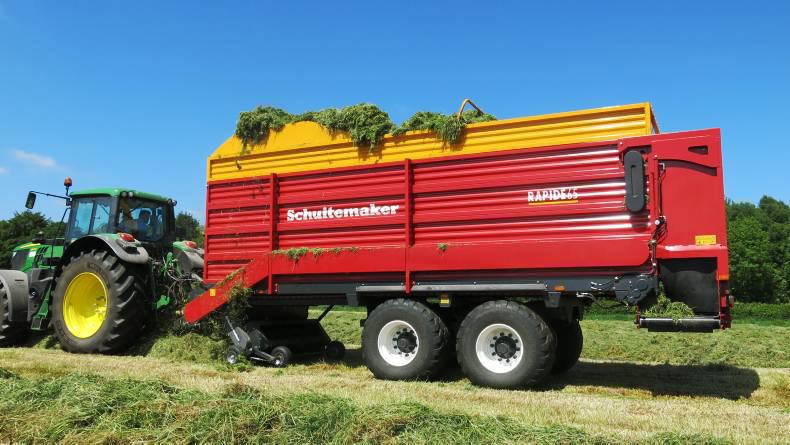
The Schuitemaker Rapide 65V was on display at Grass & Muck this year, and after that TFM were appointed as the exclusive dealers for Ireland while DA Forgie is the dealer in Northern Ireland.
The Rapide has been produced for over 30 years and features different models, offering sizes from 27m³ to 6m³. In total, there are 11 different sizes, most with three model options – S (standard), W (with beaters) and V (with rear discharge cross conveyor belt and beaters) for feeding or zero-grazing.
The Rapide wagons have a robust and compact build. The side panels are galvanised and powder-coated, offering good protection against rust. The cage construction is strong and well engineered.
ADVERTISEMENT
Company history
Schuitemaker was established in 1918 in Rijssen, the Netherlands, where it manufactures all its own equipment in its factory, which encompasses an area of 46,000m2.
The main success of Schuitemaker began in the 1950s, when Johan Schuitemaker Jr designed a new type of spreader wagon, with the well-known oil sump. This spreader wagon – the SMS-3000 – became the showcase for Schuitemaker and for many years formed the starting point of what has become a success story. In 1963, Schuitemaker moved to its current location in Rijssen, where the brand name SR Holland was born. In 1986, it started producing the Rapide loader wagon.
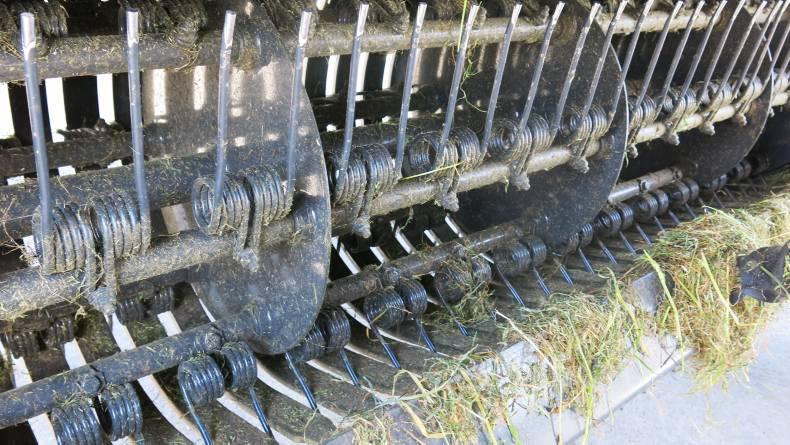
Trailing pick-up
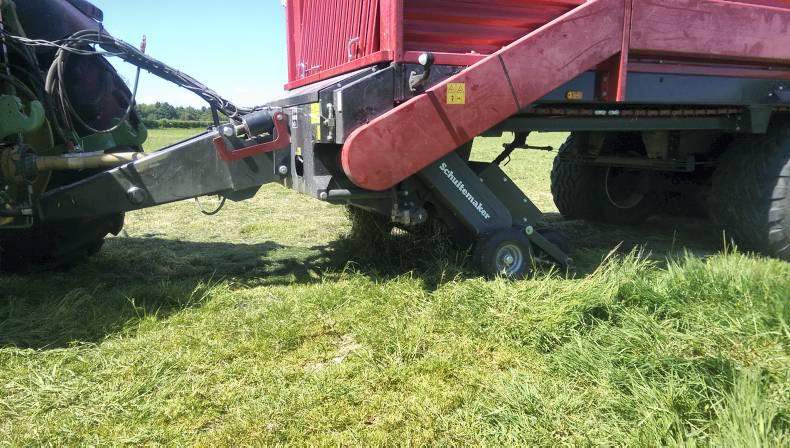
A really unusual feature is the pick-up which is located underneath the wagon. Driving it for the first time, I did have concerns about visibility and noticing lumps building on the corner of the reel. It was not a problem at all – after a couple of swaths picked up, it was clear that the pick-up was very easy to navigate around corners due to its position on the wagon.
For the test, the silage was raked into 20ft swaths and the test was carried out in near-perfect conditions for grass silage in excellent weather. The wagon had no problem gobbling this up a speed of up to 11km/h.
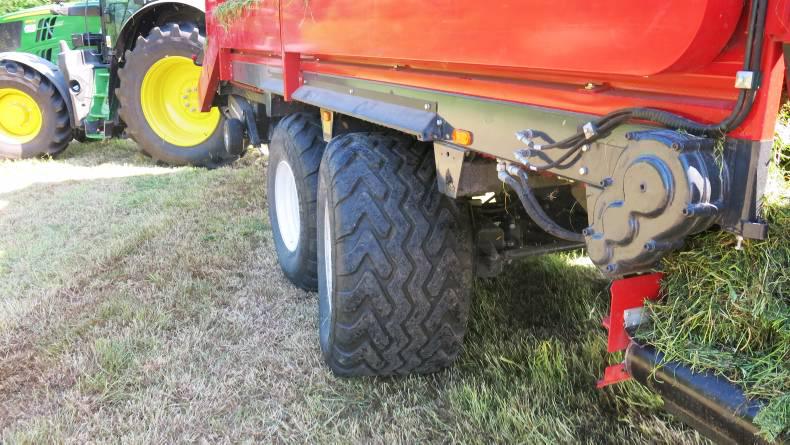
The floating design is achieved with the trailing pick-up system. The pick-up runs on a tandem wheel axle and so a steady run is achieved. It did seem to float effortlessly over the ground contours. The 1.8m pick-up is the full width of the feed rotor. A real effort had to be made to block the machine.
According to Richard Massey from Schuitemaker, while a pick-up placed in front of the wagon will occasionally bite into the ground if the surface is uneven, the trailed pick-up runs over it smoothly and avoids obstacles. This avoids unnecessary wear on the pick-up.
Richard added that another advantage of a trailing pick-up is that the wagon is built in a compacter form but with the same capacity. Anyone who has changed the tines on ta pick-up reel will appreciate the design of this system, as the area behind the reel is open, allowing for a lot of extra space. This is achieved by the design of machine which lifts the grass vertically into the wagon.
The vertical crop flow lifts the grass directly up from the pick-up in to the feed rotor and knife bank. An optional hydraulically driven feed roller was fitted to the wagon.
Cutting system
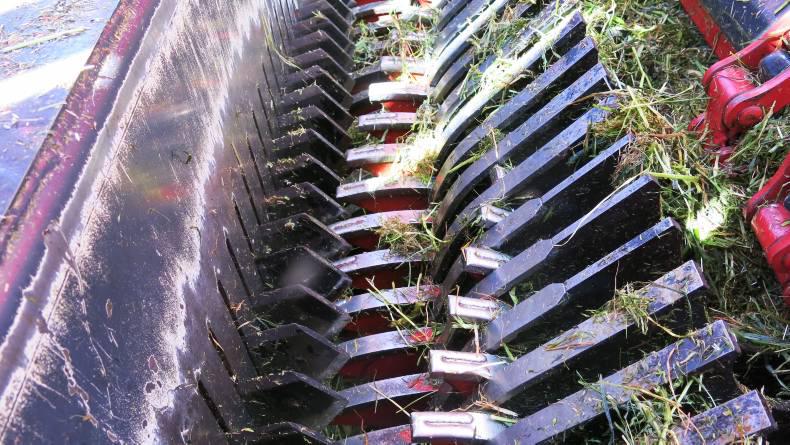
The cutting system on the Rapide precision chop loader wagon has a maximum of 39 knives, giving a theoretical a cutting length of 440mm. This will depend on how the grass is presented from the rotor through the knife bank. The standard three-section knife bar is made of Hardox steel.
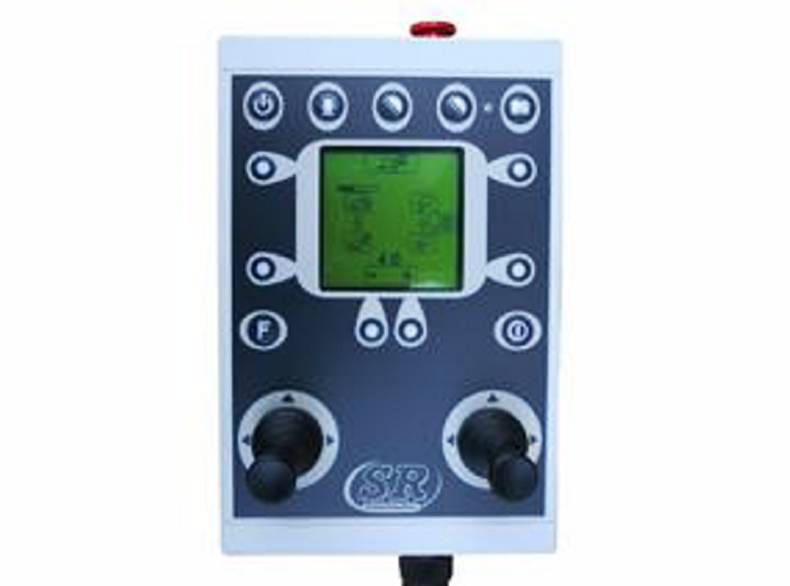
The grass is cut using the same principle as most wagons, and the knives are held under pressure hydraulically. For different grass crops, the pressure on the knives can be adjusted from the control box so that less pressure can be used for light grass and thus unnecessary wear on the knives can be avoided. The rotor is Hardox-tipped.
Whenever the knives move from their working position, a signal is given on the control box. Unlike curved and toothed knives, the knives from Schuitemaker are sharpened on both sides.
Unblocking
Blocking the machine is never good news. When the situation occurs it is nice to know it is easily remedied. Pushing the wagon to the limit under the power of the John Deere 6195M pushing out close to 200hp, the intake did block. The slip clutch engaged as expected to protect the drive line. To sort the problem, the knives were retracted using the control box, reversed back out of the lump and the PTO was engaged slowly. The wagon lifted the lump in and it was all systems go with about two minutes of downtime.
Performance
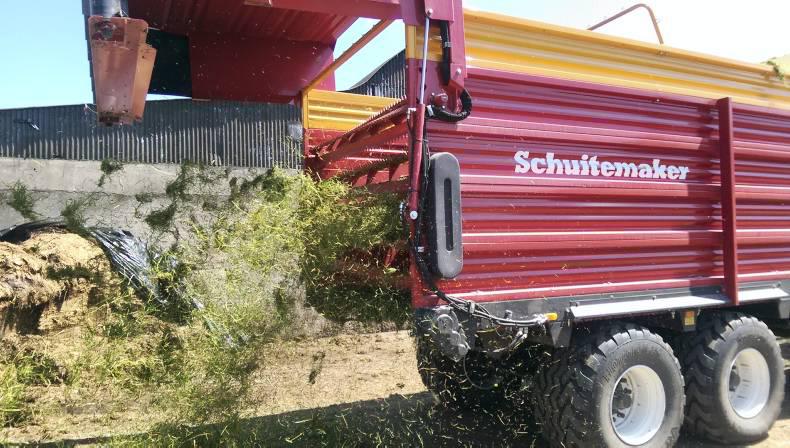
The output from the wagon is good. It had no problem in what was a relatively heavy crop in very good conditions. The tractor and wagon cruised along at 10km/h comfortably. The tractor appeared to be fully loaded at 12 and 13km/h. This is relatively good considering the number of knives engaged and the swath width. The machine on test was fitted with three rear-distribution beaters, not all that common in Ireland. From looking at the grass being discharged using the beater system, it definitely reduced the lumps of grass, making life on the pit easier for the loader operator.
It did slow down the unloading time by around 30 seconds. Examining the chop length, the consistency appeared to be good, allowing for grass that was raked in. The knife box/cabinet is located in the front top side of the wagon, allowing for easy access.
Changing the knives only takes a matter of minutes, as the knife bank is retracted hydraulically and each individual knife can be manually taken out. Each knife has an auto release for protection. The sloped floor with the hydraulically loaded knife bank and rotor seemed to work well in combination when loading the machine. The test machine did not have an auto load function and the operator controlled the loading manually from the joystick control in the cab.
A pressure switch on the rear door alerted the driver when the wagon was loaded. The rotor is chain driven as with the drive to the pick-up. The floor on the wagon is made of steel, with double scraper chain hydraulically driven from both sides.
Power testing
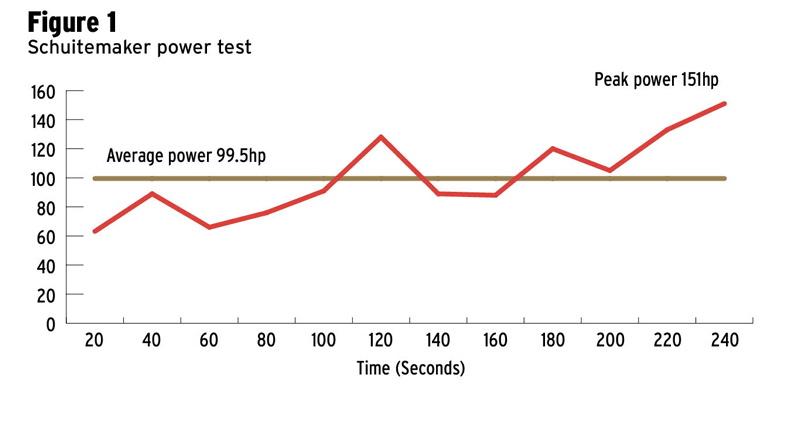
On the test, the power requirement to load the wagon was measured using the Irish Farmers Journal inline torque transducer. The wagon required an average of 99hp to load 38m³ capacity. The power demand peaked at 151hp. If the wagon was further loaded, this figure would be likely to increase. The power requirement is in line with the other machines we have tested. That said, in wet weather and hilly fields the requirement on power could go to 180hp in the extreme.
Plus
Compact design.
Easy maintenance.
Smooth pickup.
Dealer back up.
Minus
Lack of automation in control box.
Entrance in to the floor area.
Additions.
A nice camera system to switch between loading and reversing would make the operator’s life a lot easier.
Register for free to read this story and our free stories.
This content is available to digital subscribers and loyalty code users only. Sign in to your account, use the code or subscribe to get unlimited access.
The reader loyalty code gives you full access to the site from when you enter it until the following Wednesday at 9pm. Find your unique code on the back page of Irish Country Living every week.
CODE ACCEPTED
You have full access to the site until next Wednesday at 9pm.
CODE NOT VALID
Please try again or contact support.
The Schuitemaker Rapide 65V was on display at Grass & Muck this year, and after that TFM were appointed as the exclusive dealers for Ireland while DA Forgie is the dealer in Northern Ireland.
The Rapide has been produced for over 30 years and features different models, offering sizes from 27m³ to 6m³. In total, there are 11 different sizes, most with three model options – S (standard), W (with beaters) and V (with rear discharge cross conveyor belt and beaters) for feeding or zero-grazing.
The Rapide wagons have a robust and compact build. The side panels are galvanised and powder-coated, offering good protection against rust. The cage construction is strong and well engineered.
Company history
Schuitemaker was established in 1918 in Rijssen, the Netherlands, where it manufactures all its own equipment in its factory, which encompasses an area of 46,000m2.
The main success of Schuitemaker began in the 1950s, when Johan Schuitemaker Jr designed a new type of spreader wagon, with the well-known oil sump. This spreader wagon – the SMS-3000 – became the showcase for Schuitemaker and for many years formed the starting point of what has become a success story. In 1963, Schuitemaker moved to its current location in Rijssen, where the brand name SR Holland was born. In 1986, it started producing the Rapide loader wagon.
Trailing pick-up
A really unusual feature is the pick-up which is located underneath the wagon. Driving it for the first time, I did have concerns about visibility and noticing lumps building on the corner of the reel. It was not a problem at all – after a couple of swaths picked up, it was clear that the pick-up was very easy to navigate around corners due to its position on the wagon.
For the test, the silage was raked into 20ft swaths and the test was carried out in near-perfect conditions for grass silage in excellent weather. The wagon had no problem gobbling this up a speed of up to 11km/h.
The floating design is achieved with the trailing pick-up system. The pick-up runs on a tandem wheel axle and so a steady run is achieved. It did seem to float effortlessly over the ground contours. The 1.8m pick-up is the full width of the feed rotor. A real effort had to be made to block the machine.
According to Richard Massey from Schuitemaker, while a pick-up placed in front of the wagon will occasionally bite into the ground if the surface is uneven, the trailed pick-up runs over it smoothly and avoids obstacles. This avoids unnecessary wear on the pick-up.
Richard added that another advantage of a trailing pick-up is that the wagon is built in a compacter form but with the same capacity. Anyone who has changed the tines on ta pick-up reel will appreciate the design of this system, as the area behind the reel is open, allowing for a lot of extra space. This is achieved by the design of machine which lifts the grass vertically into the wagon.
The vertical crop flow lifts the grass directly up from the pick-up in to the feed rotor and knife bank. An optional hydraulically driven feed roller was fitted to the wagon.
Cutting system
The cutting system on the Rapide precision chop loader wagon has a maximum of 39 knives, giving a theoretical a cutting length of 440mm. This will depend on how the grass is presented from the rotor through the knife bank. The standard three-section knife bar is made of Hardox steel.
The grass is cut using the same principle as most wagons, and the knives are held under pressure hydraulically. For different grass crops, the pressure on the knives can be adjusted from the control box so that less pressure can be used for light grass and thus unnecessary wear on the knives can be avoided. The rotor is Hardox-tipped.
Whenever the knives move from their working position, a signal is given on the control box. Unlike curved and toothed knives, the knives from Schuitemaker are sharpened on both sides.
Unblocking
Blocking the machine is never good news. When the situation occurs it is nice to know it is easily remedied. Pushing the wagon to the limit under the power of the John Deere 6195M pushing out close to 200hp, the intake did block. The slip clutch engaged as expected to protect the drive line. To sort the problem, the knives were retracted using the control box, reversed back out of the lump and the PTO was engaged slowly. The wagon lifted the lump in and it was all systems go with about two minutes of downtime.
Performance
The output from the wagon is good. It had no problem in what was a relatively heavy crop in very good conditions. The tractor and wagon cruised along at 10km/h comfortably. The tractor appeared to be fully loaded at 12 and 13km/h. This is relatively good considering the number of knives engaged and the swath width. The machine on test was fitted with three rear-distribution beaters, not all that common in Ireland. From looking at the grass being discharged using the beater system, it definitely reduced the lumps of grass, making life on the pit easier for the loader operator.
It did slow down the unloading time by around 30 seconds. Examining the chop length, the consistency appeared to be good, allowing for grass that was raked in. The knife box/cabinet is located in the front top side of the wagon, allowing for easy access.
Changing the knives only takes a matter of minutes, as the knife bank is retracted hydraulically and each individual knife can be manually taken out. Each knife has an auto release for protection. The sloped floor with the hydraulically loaded knife bank and rotor seemed to work well in combination when loading the machine. The test machine did not have an auto load function and the operator controlled the loading manually from the joystick control in the cab.
A pressure switch on the rear door alerted the driver when the wagon was loaded. The rotor is chain driven as with the drive to the pick-up. The floor on the wagon is made of steel, with double scraper chain hydraulically driven from both sides.
Power testing
On the test, the power requirement to load the wagon was measured using the Irish Farmers Journal inline torque transducer. The wagon required an average of 99hp to load 38m³ capacity. The power demand peaked at 151hp. If the wagon was further loaded, this figure would be likely to increase. The power requirement is in line with the other machines we have tested. That said, in wet weather and hilly fields the requirement on power could go to 180hp in the extreme.
Plus
Compact design.
Easy maintenance.
Smooth pickup.
Dealer back up.
Minus
Lack of automation in control box.
Entrance in to the floor area.
Additions.
A nice camera system to switch between loading and reversing would make the operator’s life a lot easier.
If you would like to speak to a member of our team, please call us on 01-4199525.
Link sent to your email address
We have sent an email to your address. Please click on the link in this email to reset your password. If you can't find it in your inbox, please check your spam folder. If you can't find the email, please call us on 01-4199525.
ENTER YOUR LOYALTY CODE:
The reader loyalty code gives you full access to the site from when you enter it until the following Wednesday at 9pm. Find your unique code on the back page of Irish Country Living every week.





SHARING OPTIONS