



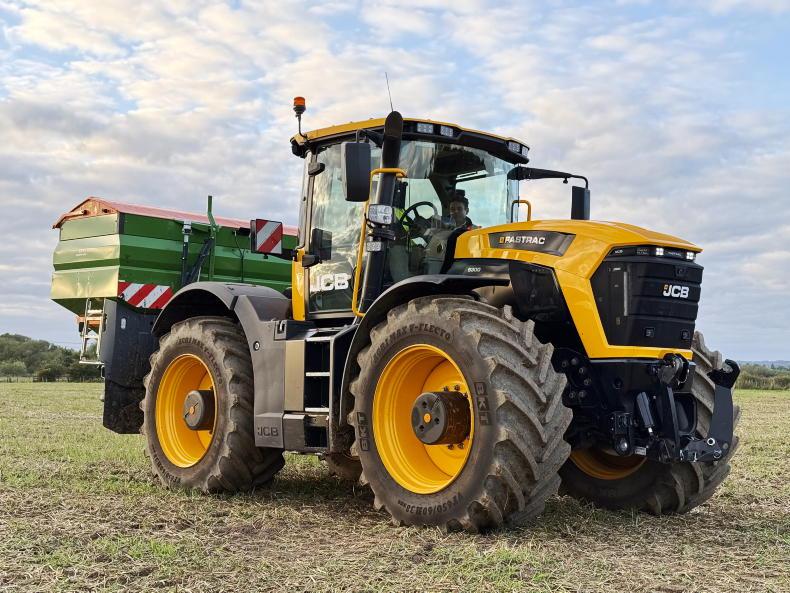
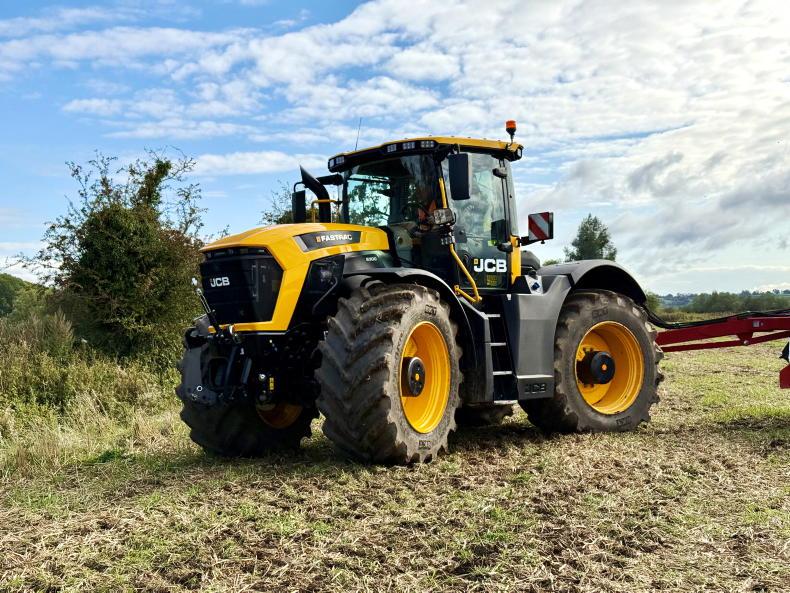
In recent years, the 250hp to 330hp power band is one that all tractor manufacturers have put a particular focus on, driven by increased customer demand for relatively compact, high horsepower all-round tractors.
After years of anticipation and a notable void in its range, JCB has responded to customer demand for a platform that could offer slightly more power than what the 4000 could, but in a more usable envelope to the 8000.
In the same way that the 6000 series name fits perfectly between 4000 and 8000, the new series aims to do the very same.
Starting at 284hp, the series picks up from the 4000 series, which peaks at 240hp and crosses over with the 306hp to 348hp 8000 series.
Fastrac general manager Greg Fittion explained that the gap filled by the 6000 series represents a global opportunity of 12,000 machines, valued at over $3.3bn.
In development for more than five years and testing for three, the 6000 series is JCB’s largest-ever tractor project, built from the ground up and sharing nothing only the iCON cab frame with the current ranges.
Chassis and powertrain
The new series includes two models: the 6260 at 284hp and 6300 at 335hp (no power boost).
Model badges are now placed on the bonnet side panels, with the designated 6260 and 6300 numbering referring to the relevant PTO power outputs of 260hp and 300hp.
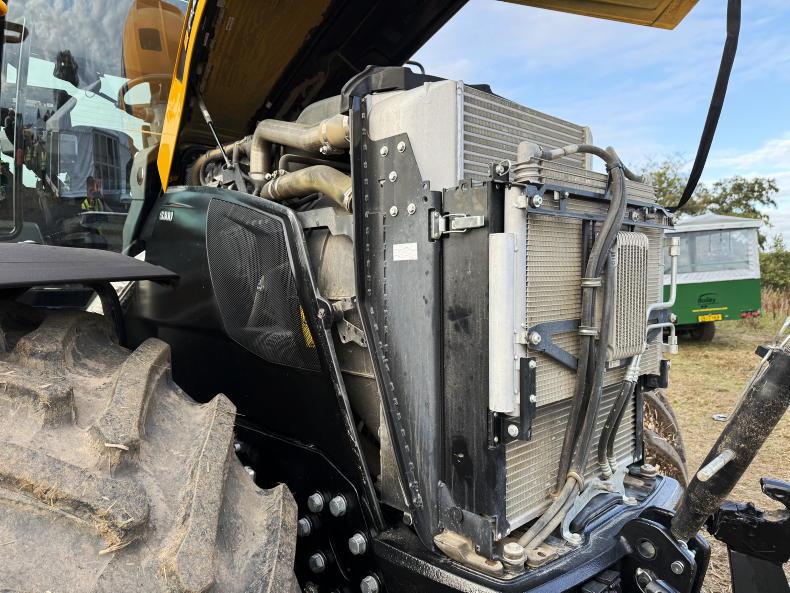
The 6000 series moves away from AGCO Power engines and the AGCO ML stepless CVT transmissions. Instead, it has partnered with FPT to use its NEF 6.7l engine, which engineers describe as the best fit both literally and from a performance aspect. Engine service intervals are stretched out to 1,000 hours.
Peak torque is delivered at 1,400rpm, which in the 6260 reaches 1,275Nm and 1,400Nm in the 6300. At least 95% of the maximum torque output is delivered across a 600rpm band from 1,200 to 1,800rpm.
The front half of the chassis in which the engine sits is now manufactured from cast steel and fabricated steel from there back. The casting has been sculpted to allow the tightest possible steering angle.
The new motor has been paired with a ZF Eccom 3.1 CVT transmission offering speeds up to 66km/h in one continuous range, with no switching from field to road mode.
Inside the unit, there are four auto-shifting ranges which provide a high proportion of mechanical drive efficiency at key speeds. Both the engine and transmission are governed by JCB’s smart transmission control.
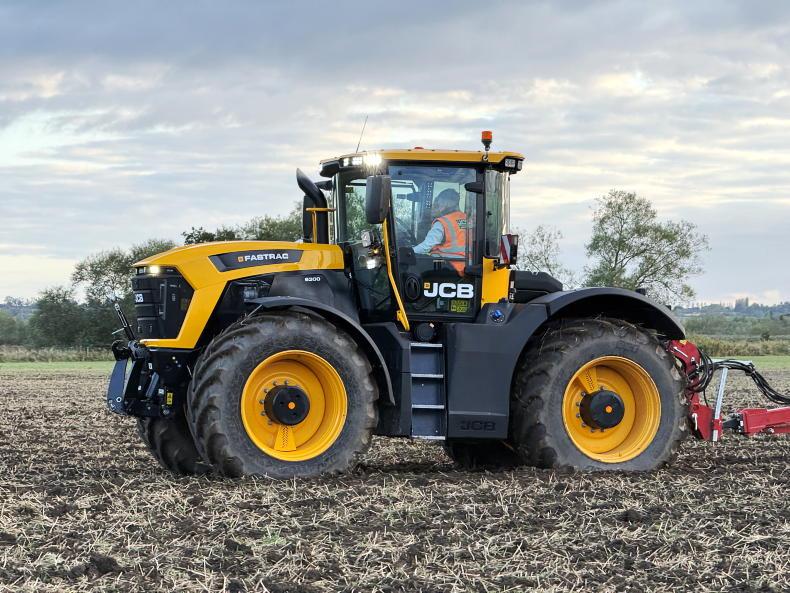
Moving away from JCB’s own axles in the 4000 series, the complete axle and hub assembly has been sourced from Dana for the 6000 series. These are notably heavier duty than those found in the 4000 series.
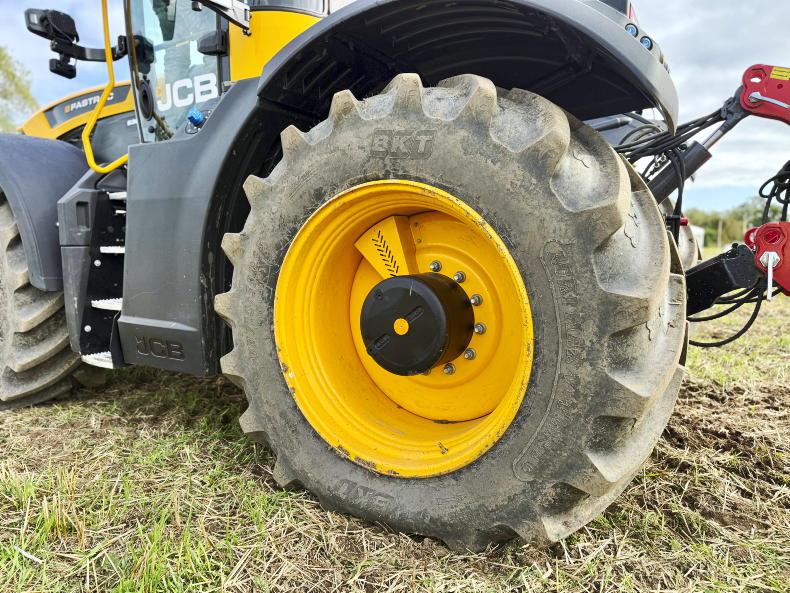
The 6000 series supports larger 38in rims (34in on the 4000). The largest tyre combination without fitting duals is 710/55 R38.
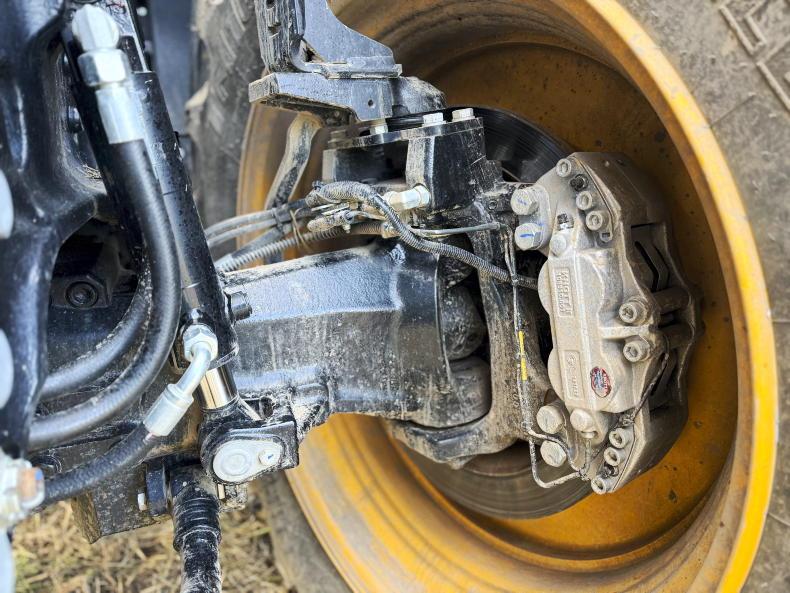
In terms of brakes, ABS remains standard. However, there has been a move back to a large single-brake caliper instead of two calipers per disc. Brake pad wear indicators have now been fitted too. Discs are mounted on the reduction hubs to reduce maintenance and not behind the hub, as done on the current generations.
Lift capacities and hydraulics
The 6000 series retains JCB’s unique self-levelling suspension and 50:50 unladen weight distribution. Aside from using the rear deck for demount applications, it can be used to carry up to 1,600kg of deck weights to increase ballast.
The rear three-point linkage is rated to lift 11,000kg, up from 8,000kg in the 4000 series, and to the surprise of many, 1,000kg more than the 8000 series.
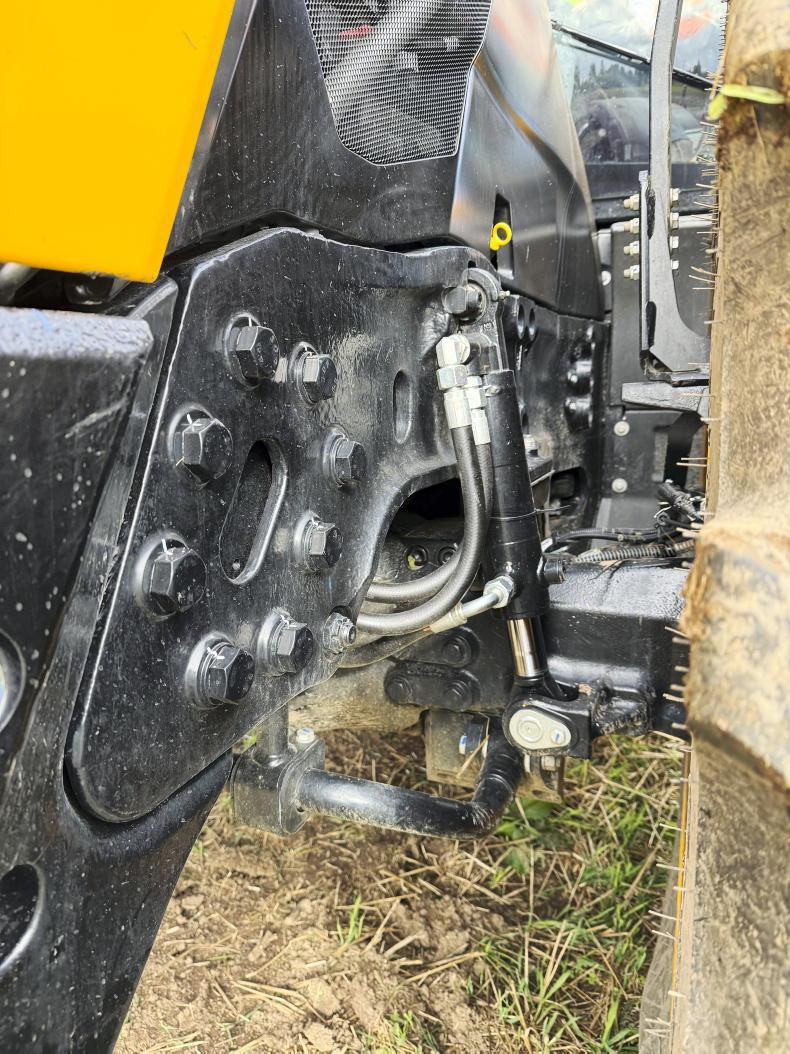
To improve its four-wheel steering lock, a new cranked link arm has been used. Front lift capacity is rated at 5,000kg, which is also ahead of the current generations, which are rated for 3,500kg.
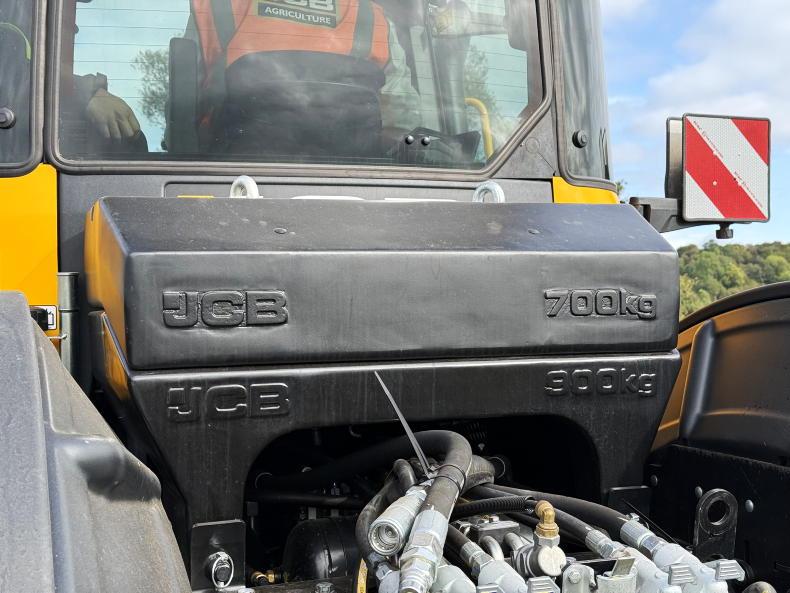
The 6000 series outperforms its existing siblings in terms of hydraulic output too.
The hydraulic pump is completely dedicated to auxiliary oil and as standard offers a flowrate of 205l/min, which can be optionally doubled up into a twin pump configuration to churn out a considerable 410l/min for high-demand applications. This is up from 195l/min pump in the 4000 and 178l/min pump in the 8000 series.
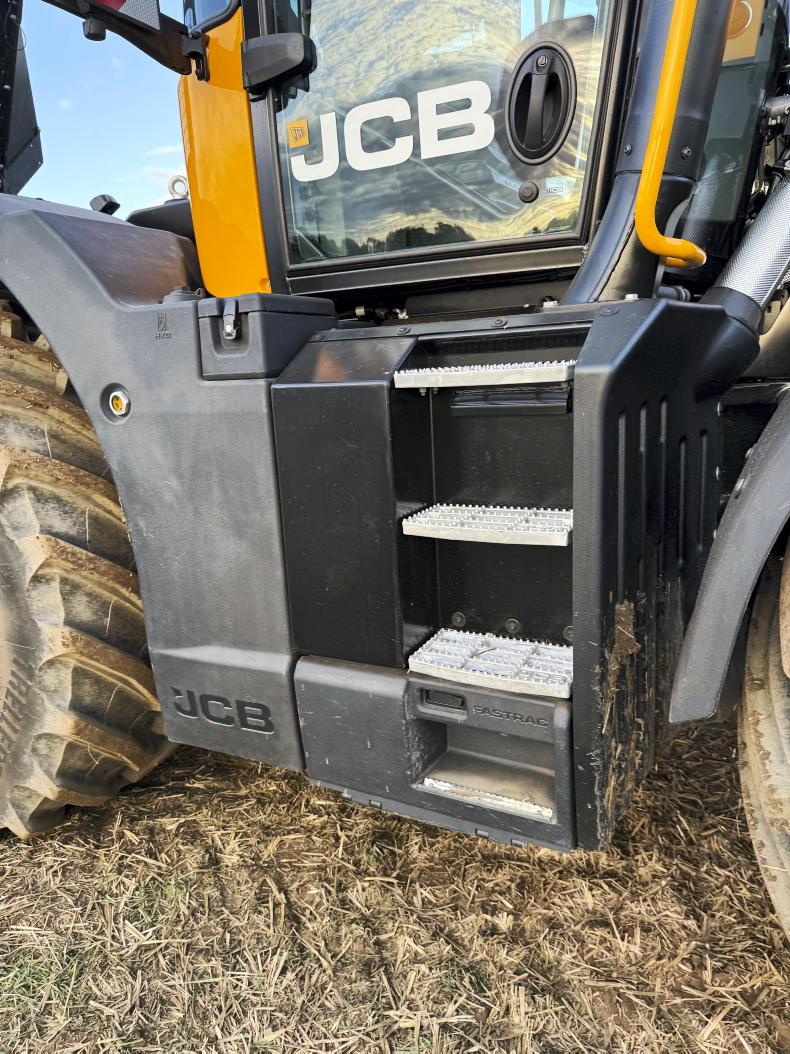
Fully separate from the transmission oil, the hydraulic oil reservoir dipstick is now conveniently located under the cab beside the steps.
The rear valve block has also been updated and up to six spools are now possible. Lever-operated push-out and pull-in couplings are now used.
In a double pump configuration, one pump caters for the left-hand bank of spools and the other caters for the right-hand bank.
There is now the option for ¾ couplers for increased flow for high-demand machines.
The base weight (without front linkage) for the 6000 is 11,000kg, just 250kg less than the 8000 series base weight. For contrast, the 4000 has a base weight of 7,575kg.
Intelligent steering
JCB has updated its established four-wheel steering system, which now uses a hydraulic locking system rather than mechanical, for smoother transitions between two-wheel and four-wheel steering modes.
Several modes of four-wheel steering are engaged through iCON display and when travelling at road speed, four-wheel steering automatically reduces in proportion to forward speed before disengaging completely, to ensure stable and predictable characteristics in two-wheel steer. It then reverts to four-wheel steer for roundabouts and junctions.
True tracking and rear delay functions are helpful when spreading and spraying in tramlines or crops grown in rows and beds, especially when turning in and out at the row ends.
The rear delay function delays the steering of the rear axle so that the implement such as a sprayer can better follow the tractor and tramline.
Twin Steer is another feature available through JCB’s own NovAtel GPS system, an area JCB feels it has made huge advancements in. It now features two roof-integrated receivers (left and right). The two receivers talk to the same satellite for improved accuracy.
Twin Steer offers individual control of the front and rear axles so that the tractor can dog-walk to avoid the front and rear axle travelling on the one pass or allows one of the axles to be corrected on a side slope in order to keep an implement on track. JCB claims this will remove the need for side shift mechanisms on specialised implements.
iCON technologies and cab
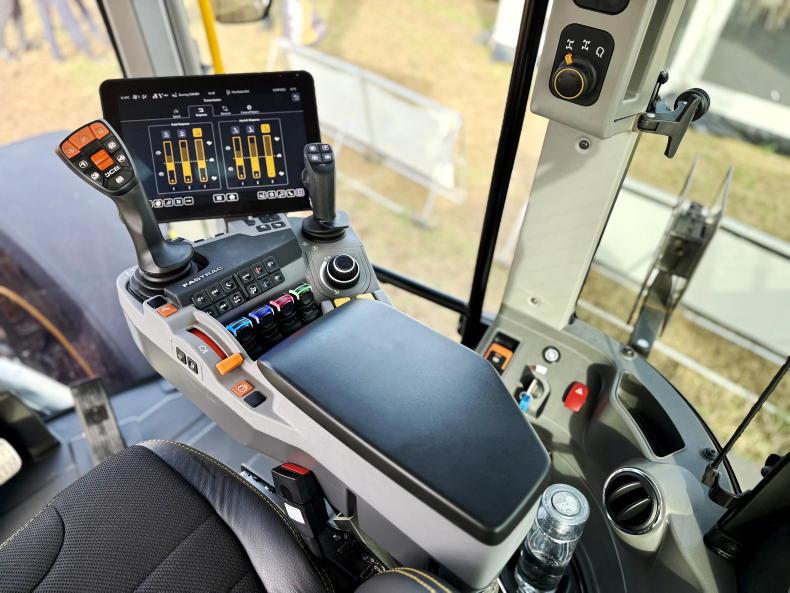
Inside the cab, everything looks familiar. However, under the surface lies a new generation of ECUs.
The iCON display software has been enhanced in some areas to improve operator experience. Operators can now more easily populate screens with relevant content and create multiple profiles for control setups and tractor or implement settings.
Beyond straight-line and curve guidance, the system now offers selectable headland turn pathways for added convenience. A second 12-inch display is also available to show more tractor and implement data.
Following automotive trends, JCB has moved to an immobilised recognition key and push button start, as well as an electric handbrake.
There is also a built-in start-stop function whereby the tractor’s engine will cut off after a set idle time, while keeping functions such as GPS booted. Idle time is adjustable via the iCON display. The audio system has also been upgraded and now features larger speakers.
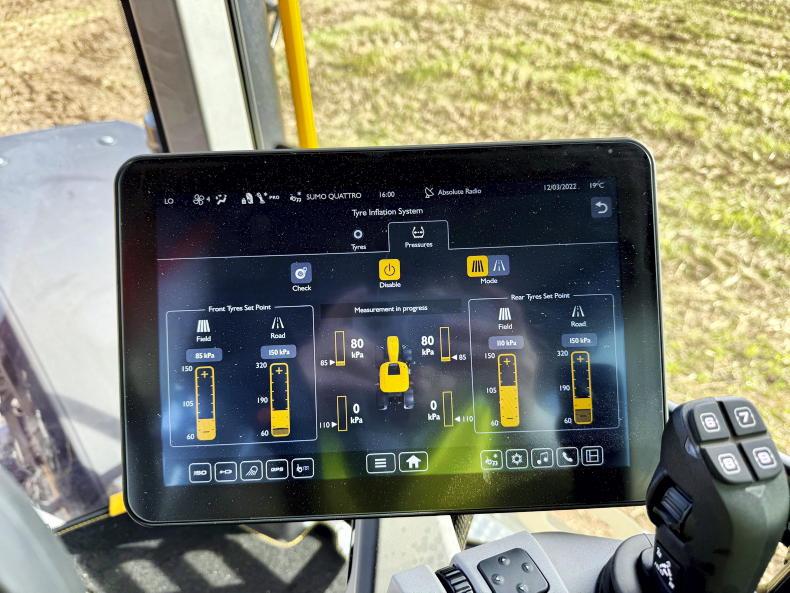
Another key feature available on the 6000 series is the option of a central tyre inflation system from factory.
Unlike many competitors, JCB opted to go single-line instead of dual-line. Not only is it simpler, but it believes that there is less risk of contamination during the deflation stage, as air and any debris within the tyre cannot be transported back into the system. Instead, air is exhausted at the rim valve.
Two 315cc compressors deliver up to 600l/min, inflating four 650/60 R38 tyres from one bar (14.5psi) to two bar (29psi) in just over four minutes and deflating in under a minute, all controlled via the iCON display.
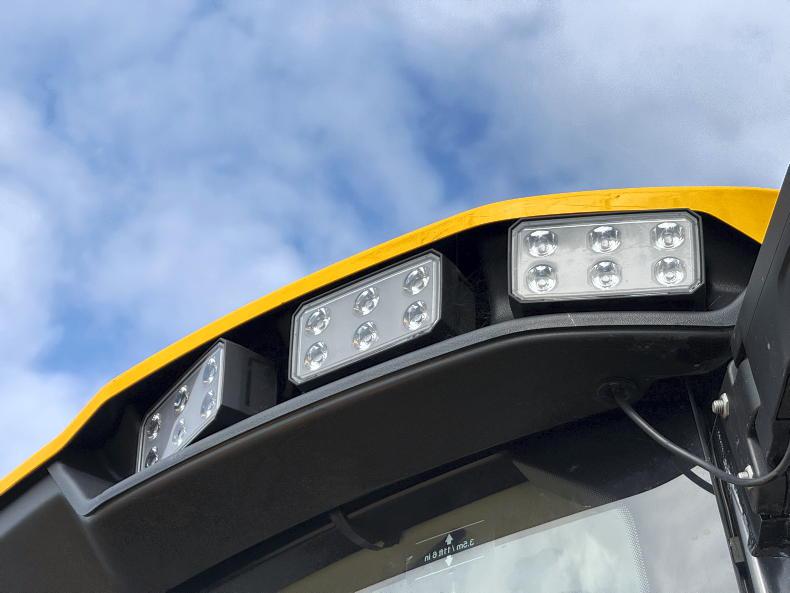
A full LED light package is offered as standard. New rectangular lights around the roof, grille and cab A post offer 360-degree illumination. A trailer hitch camera is standard, with optional front and rear cameras offering 180- and 120-degree views respectively.
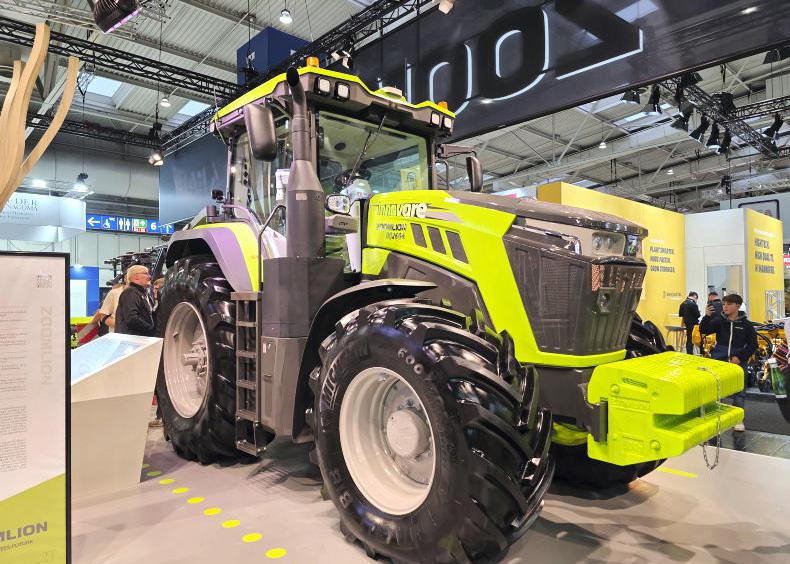
The Fastrac 6000 series will make its public debut at Agritechnica show in Hannover, Germany, this coming November.


SHARING OPTIONS