




Kia has launched its updated Rio for the Irish market with new styling for the fourth generation of the popular supermini car. In Ireland, the Rio has been an important car for Kia and sales topped 550 in 2016.
Kia believes that the new Rio stands out thanks to its progressive design, class-leasing practicality and safety technologies, new connectivity features and more engaging ride and handling.
The new Rio comes with a 10mm longer wheelbase, a more upright C-pillar, and a shorter rear overhang. Overall, the new car is 15mm longer than its predecessor. The Rio has a new modern cabin, with dashboard itself is now angled towards the driver. At the centre of the dashboard is a floating HMI (human-machine interface), available with a high-resolution touchscreen. The centre console features fewer buttons, with more ergonomic, concave switches and rotator dials below to control the heating and ventilation.
Kia will offer six models from launch with one 1.2-litre (85bhp) petrol engine and two 1.4-litre diesel units (77bhp and 90bhp). Kia will introduce a new 100bhp, one litre turbo-petrol engine later in the year.
The petrol engine variants range from the entry level L model priced at €15,950, to the volume model EX model costing €18,150, and a top-of-the-line Platinum model costing €20,450 and which comes with Sat Nav and Android Auto.
The two diesel models on offer are the LX costing €17,750 and the EXE model priced at €19,950, powered respectively by 77bhp and 90bhp 1.4 turbo-diesel engines.
The 1.2 petrol unit has a CO2 emission figure of 109g/km and an annual road tax charge of €190, while the diesel models are rated at 92g/km and 98g/km each with €180 annual road tax charge.
James Brooks, managing director at Kia Motors Ireland said: “This segment is extremely competitive both in Europe and in Ireland but we are confident that this new model can make an impact in the Irish market.
“Though most of our customers are buying bigger cars, Rio is a particularly iconic model that has helped introduce the Kia brand to Irish consumers since we first entered the Irish market some 13 years ago.”
Toyota is claiming another significant increase in hybrid sales in Ireland in 2017, signifying that hybrid is now moving towards mainstream popularity. The hybrid technology that, unlike electric vehicles, you don’t have to plug in, has seen Toyota experience a 128% increase in sales of hybrid vehicles in 2017 compared with last year.
Toyota claims to have sold more than 1,300 hybrid vehicles since the start of 2017. It is reporting that diesel car sales have dropped from 71% to 66% of the market.
Over 70% of orders for Toyota’s new C-SUV, the C-HR which launched in the Irish market in November 2016 are hybrid, while 40% of Toyota Auris and 35% of Toyota Yaris sales in 2017 have been hybrid vehicles.
This latest announcement comes a week after Toyota revealed that global sales of hybrid cars has surpassed 10m units, further enhancing Toyota’s leadership in hybrid technology. In Ireland, hybrid vehicles now make up a total of 3.5% of the market, up from 1.5% last year. In tandem, sales of diesel vehicles have dropped, this year accounting for 66% of the market – down from 71% last year.
Toyota claims that by combining a petrol engine and an electric motor, hybrids can deliver very low emissions without the compromise of range anxiety that comes with a pure electric vehicle. In addition, Toyota hybrid claims to emit up to 90% less NOX emissions, compared with a diesel.
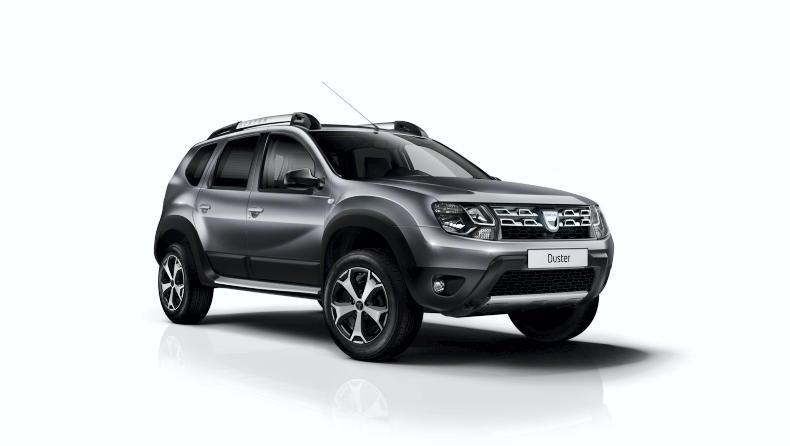
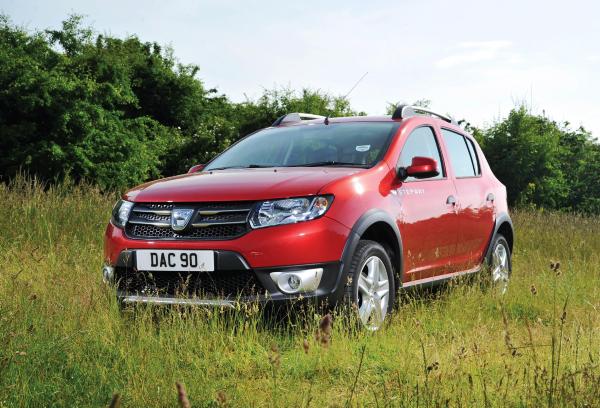
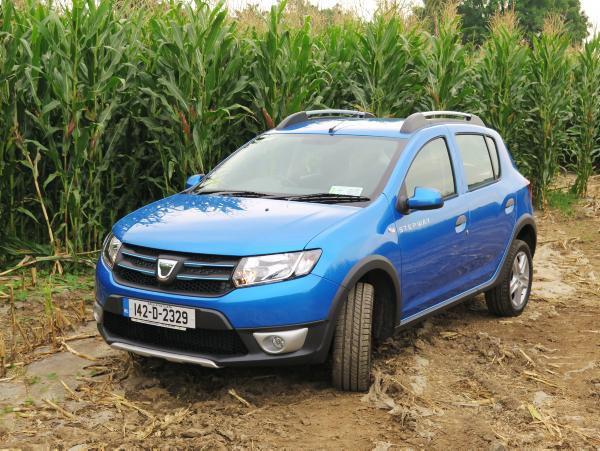
Dacia will launch a new special edition version for the Duster, Sandero Stepway and the New Logan MCV Stepway at next week’s Geneva International Motor Show. The Summit special editions will be based upon the highest equipment level and will stand out in particular through two exclusive exterior colour options: Nordic Grey or Magma Orange (Sandero Stepway only). In the Stepway range, these new colours will be complemented by 16-inch Grey Flex wheels, while the Duster will sport 16-inch diamond-cut black Cyclades alloy wheels.
Inside the cabin, these special edition models boast exclusive dual-material upholstery. The seats are instantly recognisable thanks to their Burnt Orange piping and top-stitching, plus the word Stepway embroidered into the fabric in the same colour. The carpet mats are similarly finished with Burnt Orange top-stitching.
The same Burnt Orange detailing is to be found on the centre console cover and air vent surrounds. These special editions include air conditioning, Media Nav Evolution multimedia system, rear parking sensors, DAB radio and cruise control with speed limiter.
The Duster also features wheel arch guards and protective side mouldings.
The Summit special editions will be available with the same engines as the Stepway and Duster ranges. Pricing for the Summit special edition range will be announced closer to the on sale date in Ireland over the coming weeks.
This week we give you some easy-to-follow tips to help you to save fuel as petrol prices are getting precariously close to the €1.40/litre price level. These tips will also reduce your risk on the road.
For all driving situations, fuel-efficient driving goes hand-in-hand with improving your driving skills and boosting road safety, as well as reducing emissions and pollution. Efficient driving strategies are also less stressful.
Here are some useful driving tips:
1 Choose a more relaxed approach to acceleration. Using brakes wastes fuel, so try to anticipate what’s happening as far ahead as possible. Try to make the best use of your car’s energy by adopting a safer, lower-risk style of driving.
2 Slow down. Most cars are at their most efficient around 80km/h (50mph), and for every 10km/h over 95km/h (60mph) that you drive, you will lose around six per cent of your fuel economy.
3 Use the gears. Aim to get into a high gear promptly (but not so quickly that you strain the engine). This helps reduce your car engine’s thirst.
4 Check your tyres. Keep them properly inflated and make regular checks on their condition. Even a slight reduction in pressure will lead to greater resistance on the road, meaning you will spend more on fuel and on tyres.
5 Switch it off. Don’t let your engine sit running on idle if you’re sitting in a queue or waiting for someone for more than 30 seconds, switch the engine off.
6 Treat your car well. A properly maintained car will drive more economically.
7 Know where you’re going. Don’t waste fuel by being lost in your car. Journeys will take less time if you plan your route.
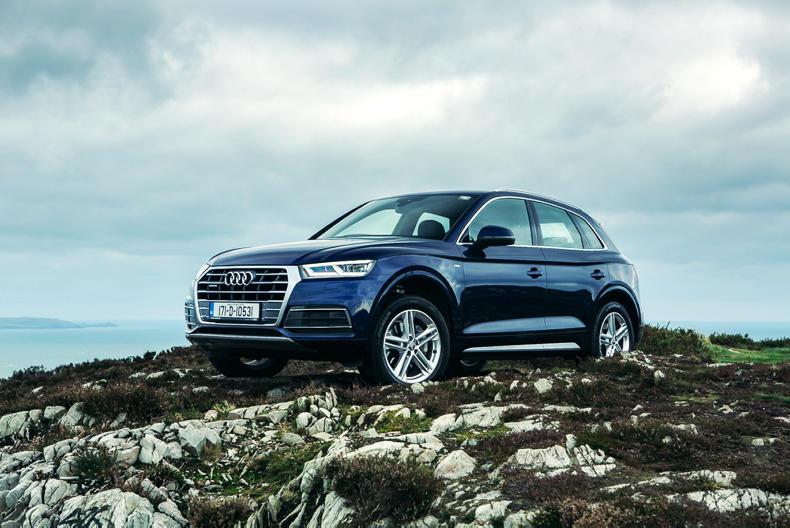
The new Audi Q5 SUV has been awarded five stars in the Euro NCAP crash testing programme, which is the organisation’s highest rating for safety. The top score confirms that Audi’s best-selling SUV model is also among the safest automobiles in its class.
The Audi Q5 showed off its strengths in every aspect of the assessment programme. The new Q5 scored points for occupant protection, child safety and pedestrian protection.
Also contributing to the SUV’s five-star rating were the driver assistance system, which comes as standard and includes pre-sense city, an emergency braking system that reacts to vehicles up ahead of the car and to pedestrians.
The Q5 scored highly for crash safety, even though its overall weight has been reduced by up to 90kg (198.4lb).
The outstanding NCAP test results underscore the high standards the Audi brand upholds in the areas of active and passive safety, and in lightweight construction. Entry prices for the new Audi Q5 start from €48,350.
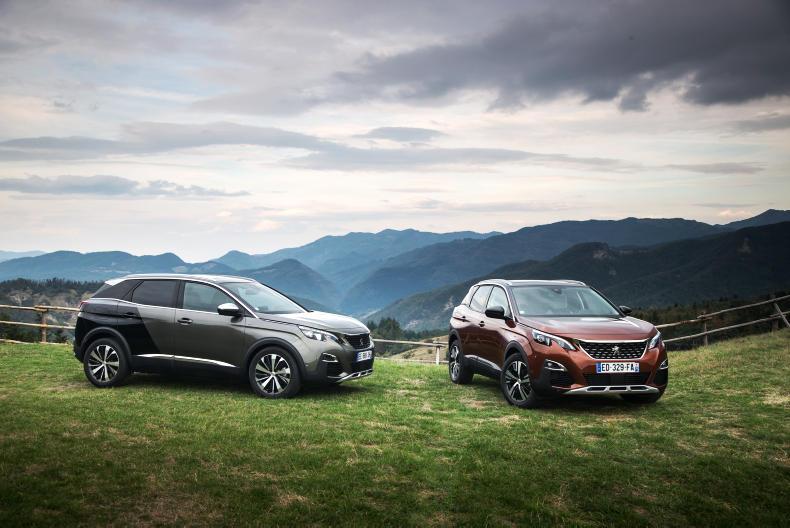
Peugeot joins the SUV market with new 3008
Peugeot’s new generation 3008 SUV has hit Irish shores and will be in dealerships across Dublin City from this week. The impressive new SUV features the latest generation Peugeot iCockpit with digital instrumentation as standard across the range. The range pries starts from €25,995 plus delivery related charges for the entry level model, the Access 1.2 130bhp PureTech petrol version.
The new 3008 comes with a choice of five trim levels, to include Access, Active, Allure, GT Line and GT versions, a wide range of both petrol and diesel engines is available. The 1.2-litre PureTech 130bhp turbo petrol engine, with CO2 emissions from just 117g/km, was voted International Engine of the Year in its category for the second-year running, earlier in 2016. This engine is available with a 6-speed manual gearbox or with Peugeot’s latest generation EAT6 6-speed automatic transmission. The 1.6 THP petrol 165bhp EAT6 6-speed automatic has emissions from 129g/CO2.
Four BlueHDi diesel engines are available, trim dependent, with CO2 emissions from 103g/km, and power ranging between 100, 120, 150 and 180bhp. The 2.0 litre BlueHDi 150bhp version is matched to a 6-speed manual gearbox, whilst the 1.6 BlueHDi 120bhp version is available with a choice of a 6-speed manual or a 6-speed EAT6 automatic gearbox.
And this week the new Peugeot 3008 was named the 2017 Car of the Year at the Geneva Motor Show by a judging panel, comprising 58 European experienced journalists from 22 countries. The judging panel acclaimed its style, interior design and performance.
This prestigious trophy joins the twenty other international prizes the new Peugeot 3008 has already won. The 3008 is the fifth Peugeot to win Car of the Year and the first SUV honoured in the history of the COTY prize.
Peugeot claims to have 100,000 orders for the new 3008 SUV has since launch in October 2016 with 84% choosing level three Allure, GT Line or GT trims, contributing to the move upmarket of the Lion brand.
Caption: The new Peugeot 3008 SUV recently introduced to Ireland, has been named the 2017 Car of the Year at the Geneva Motor Show.
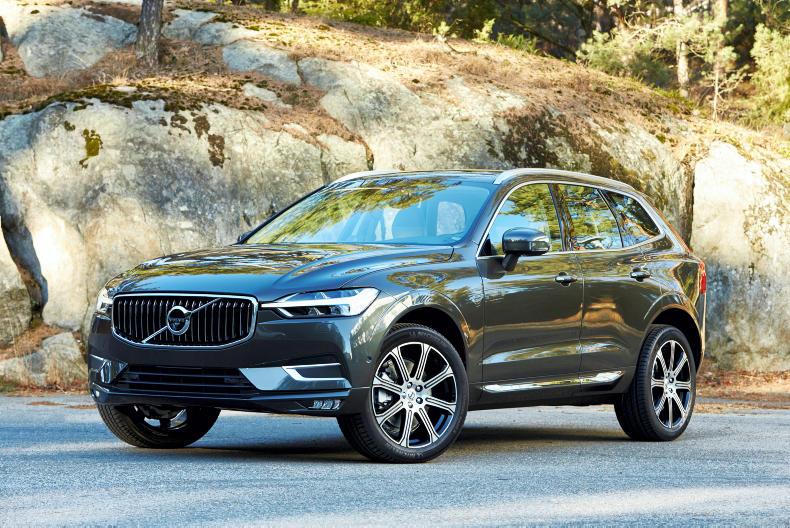
Volvo Cars reveals new XC60 premium SUV
Volvo Cars revealed the new XC60 premium SUV at the Geneva Motor Show. The new car replaces Volvo’s original XC60, which in the nine years since its launch became the best-selling premium mid-sized SUV in Europe with nearly a million units sold globally. The XC60 today represents around 30% of Volvo’s total global sales.
Volvo claims that the new XC60, one of the safest cars ever made and it is fully-loaded with new technology. Steer Assist has been added to the Volvo City Safety system. A new safety system called Oncoming Lane Mitigation uses steer assist to help mitigate head-on collisions, while Volvo’s Blind Spot Indication System (BLIS) now uses Steer Assist functionality to reduce the risk of lane-changing collisions.
Pilot Assist, Volvo’s advanced semi-autonomous driver assistance system, which takes care of steering, acceleration and braking on well-marked roads up to 130 km/h, is available in the new XC60 as an option.
The new XC60 will be available with Volvo’s T8 Twin Engine petrol plug-in hybrid at the top of the range, delivering 407 hp and acceleration from 0-100 Km in just 5.3 seconds. The new XC60 will be initially launched with the diesel D4 engine at 190 hp and the D5 with PowerPulse technology delivering 235 hp.
Volvo’s new XC60 claims to deliver a healthy performance. The new CleanZone four-zone climate system claims to remove harmful pollutants and particles from outside the cabin to deliver Scandinavian-fresh air on the inside.
Volvo Cars’ driver infotainment and connected services offer, Sensus, and the Volvo On Call app both receive a graphical update with improved usability. As in the 90 Series cars, smartphone integration with CarPlay and Android Auto is also available.




SHARING OPTIONS