The Efficient20 project is a European-funded initiative to help farmers, contractors and forest machinery operators to reduce their fuel usage by 20%.
It is now recognised that fuel used in farming machinery represents more than 50% of the energy consumed in agriculture, so introducing fuel saving measures brings significant cost savings to farming businesses.
It is also predicted that diesel fuel prices will continue to rise, adding to the costs of farm production.
Since the project’s launch in 2010, pilot groups of farmers from Britain, Austria, Belgium, France, Germany, Italy, Poland, Slovenia and Spain have been monitoring their tractor and self-propelled implement fuel usage during their daily work.
Guidelines and training events on fuel efficiency have been offered to a pilot group of farmers, contractors and forest machinery operators, highlighting the most significant factors that lead to lower fuel consumption, such as:
Well maintained engines
Correct tyre pressures and equipment settings
Appropriate matching of tractor with machinery
Eco-driving techniques.
Following the training, machinery operators have tried implementing some of these fuel-saving techniques to assess their effectiveness.
The general approach has been to record fuel consumption for a specific activity (such as ploughing), working in the farmer’s usual way, to record a baseline fuel consumption and then to repeat the measurement (ideally working under identical conditions) while using a specific fuel saving technique (eg adjusting tyre pressures).
Comparison of these before and after fuel consumptions can then be used to assess the effectiveness of each fuel saving technique. The collection of case studies Put your tractor on a diet! illustrates how farmers have made savings. The Efficient20 group has developed an online fuel consumption database to record all the fuel measurements from pilot group farmers.
Not only does this enable data from across all pilot groups to be analysed, the database also provides a way for farmers, contractors and forest machinery operators to monitor their own progress and to compare their fuel consumption with that achieved by other farms.
The database is available at www.efficient20.eu for any farmer, not just pilot group members. To register for access, complete the sign-up form.
Is saving fuel worth the effort?
The greatest incentive for farmers and contractors is the almost certain reduction in fuel costs that they will experience through applying simple fuel efficiency measures. With an annual fuel consumption of 20,000 litres per year, a 20% reduction would save over €4,000 per year at current Irish tractor diesel prices. With fuel prices likely to continue to rise (they are reported to have increased by 29% in 2011), lowering fuel consumption is an effective way of preventing input costs from eroding your farm’s profitability.
Proportion of fuel of tractor costs
At a price of €0,90 per litre (excluding VAT) diesel costs represent more than a third of the total costs that have to be spent for a tractor. When the diesel price is rising to more than €1, diesel costs represent even more than 40% of the total costs. This is why the reduction of the fuel consumption has a strong economic significance on the overall costs.
Farmers seeing real fuel savings
Farmers taking part in Efficient20 pilot groups met in Austria to compare notes on the fuel savings that they have achieved. Simple changes to working practice and equipment set-up have helped reduce tractor fuel consumption by up to 25%, bringing substantial savings to the bottom-line, as well as reducing CO2 emissions.
Pilot group members have all taken part in fuel-efficiency training, highlighting the importance of good tractor maintenance, eco-driving (driving at lower rpm to keep on the efficient side of the engine’s power/torque curve) and correct equipment set-up in improving fuel economy.
While last year was a very challenging summer weather wise, the farmers involved had managed to try out a variety of fuel saving techniques, some on forage and cereals harvesting, others on soil cultivation and some on road transport too.
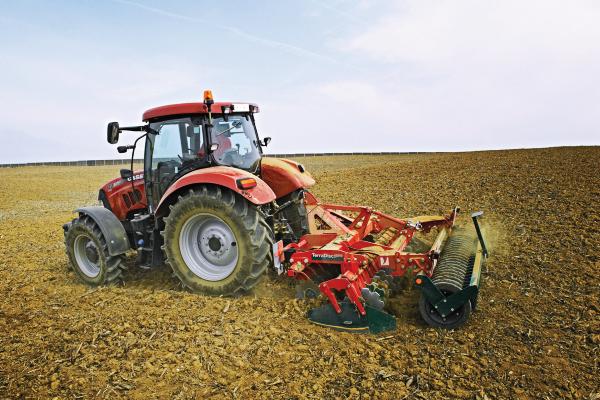
Lowering tyre pressures and adjusting ballast for soil cultivation work seems to have brought the biggest savings for most farmers, with one UK farm reporting a 15% reduction in fuel per hectare for ploughing. Another saw a 26% saving simply by adjusting the working depth of their stubble cultivator according to the job that they are doing (prior to this they never adjusted the depth). One farmer who had tried power harrowing at different forward speeds had found that driving faster reduced the litres/hectare by 11%.
Saving fuel with reduced engine speed
Livestock farmers can also achieve significant fuel savings by simple management strategies and more sensible use of their tractor’s features.
Running the feed mixer wagon at the recommended mixing speed is essential for the mixing quality and working time requirement for mixing.
The efficiency of a feed mixer wagon is determined by its construction, the characteristics of the feed, the filling level, maintenance of the cutting tools and the speed of the mixing tools.
However, when using a powerful tractor for a trailed mixer wagon, the recommended mixing operating speed can be reached at a relatively low engine speed by using the 1,000 or ECO power take-off setting.
The effect of reduced engine speed was tested with an eight cubic metre feed mixer wagon driven by a 120hp tractor on a dairy farm with 50 dairy cows and 60 calves and heifers.
The feeding mixtures consisted of maize silage, grass silage, straw, malt spent grain and concentrates.
The manufacturer of the feed mixer wagon recommended a power take-off speed of 540rpm.
Originally, this speed was achieved by using the 540 power take-off at an engine speed of 1,960rpm.
The average fuel consumption amounted 2.6 litres per batch mixed.
Alternatively, the ECO power take-off at an engine speed of 1,560rpm was used for achieving 540rpm at the power take-off. This brought an average decrease of 0.4 litres or 18% per batch.
Overall, the reduction of the engine speed for preparing total mixed rations saved about 220 litres diesel per year on the pilot farm.
“I was totally surprised that the effect is so large and I can reduce the fuel consumption without additional expenses and at the same quality of the work,” said a trial farmer.
The Efficient20 project is a European-funded initiative to help farmers, contractors and forest machinery operators to reduce their fuel usage by 20%.
It is now recognised that fuel used in farming machinery represents more than 50% of the energy consumed in agriculture, so introducing fuel saving measures brings significant cost savings to farming businesses.
It is also predicted that diesel fuel prices will continue to rise, adding to the costs of farm production.
Since the project’s launch in 2010, pilot groups of farmers from Britain, Austria, Belgium, France, Germany, Italy, Poland, Slovenia and Spain have been monitoring their tractor and self-propelled implement fuel usage during their daily work.
Guidelines and training events on fuel efficiency have been offered to a pilot group of farmers, contractors and forest machinery operators, highlighting the most significant factors that lead to lower fuel consumption, such as:
Well maintained engines
Correct tyre pressures and equipment settings
Appropriate matching of tractor with machinery
Eco-driving techniques.
Following the training, machinery operators have tried implementing some of these fuel-saving techniques to assess their effectiveness.
The general approach has been to record fuel consumption for a specific activity (such as ploughing), working in the farmer’s usual way, to record a baseline fuel consumption and then to repeat the measurement (ideally working under identical conditions) while using a specific fuel saving technique (eg adjusting tyre pressures).
Comparison of these before and after fuel consumptions can then be used to assess the effectiveness of each fuel saving technique. The collection of case studies Put your tractor on a diet! illustrates how farmers have made savings. The Efficient20 group has developed an online fuel consumption database to record all the fuel measurements from pilot group farmers.
Not only does this enable data from across all pilot groups to be analysed, the database also provides a way for farmers, contractors and forest machinery operators to monitor their own progress and to compare their fuel consumption with that achieved by other farms.
The database is available at www.efficient20.eu for any farmer, not just pilot group members. To register for access, complete the sign-up form.
Is saving fuel worth the effort?
The greatest incentive for farmers and contractors is the almost certain reduction in fuel costs that they will experience through applying simple fuel efficiency measures. With an annual fuel consumption of 20,000 litres per year, a 20% reduction would save over €4,000 per year at current Irish tractor diesel prices. With fuel prices likely to continue to rise (they are reported to have increased by 29% in 2011), lowering fuel consumption is an effective way of preventing input costs from eroding your farm’s profitability.
Proportion of fuel of tractor costs
At a price of €0,90 per litre (excluding VAT) diesel costs represent more than a third of the total costs that have to be spent for a tractor. When the diesel price is rising to more than €1, diesel costs represent even more than 40% of the total costs. This is why the reduction of the fuel consumption has a strong economic significance on the overall costs.
Farmers seeing real fuel savings
Farmers taking part in Efficient20 pilot groups met in Austria to compare notes on the fuel savings that they have achieved. Simple changes to working practice and equipment set-up have helped reduce tractor fuel consumption by up to 25%, bringing substantial savings to the bottom-line, as well as reducing CO2 emissions.
Pilot group members have all taken part in fuel-efficiency training, highlighting the importance of good tractor maintenance, eco-driving (driving at lower rpm to keep on the efficient side of the engine’s power/torque curve) and correct equipment set-up in improving fuel economy.
While last year was a very challenging summer weather wise, the farmers involved had managed to try out a variety of fuel saving techniques, some on forage and cereals harvesting, others on soil cultivation and some on road transport too.
Lowering tyre pressures and adjusting ballast for soil cultivation work seems to have brought the biggest savings for most farmers, with one UK farm reporting a 15% reduction in fuel per hectare for ploughing. Another saw a 26% saving simply by adjusting the working depth of their stubble cultivator according to the job that they are doing (prior to this they never adjusted the depth). One farmer who had tried power harrowing at different forward speeds had found that driving faster reduced the litres/hectare by 11%.
Saving fuel with reduced engine speed
Livestock farmers can also achieve significant fuel savings by simple management strategies and more sensible use of their tractor’s features.
Running the feed mixer wagon at the recommended mixing speed is essential for the mixing quality and working time requirement for mixing.
The efficiency of a feed mixer wagon is determined by its construction, the characteristics of the feed, the filling level, maintenance of the cutting tools and the speed of the mixing tools.
However, when using a powerful tractor for a trailed mixer wagon, the recommended mixing operating speed can be reached at a relatively low engine speed by using the 1,000 or ECO power take-off setting.
The effect of reduced engine speed was tested with an eight cubic metre feed mixer wagon driven by a 120hp tractor on a dairy farm with 50 dairy cows and 60 calves and heifers.
The feeding mixtures consisted of maize silage, grass silage, straw, malt spent grain and concentrates.
The manufacturer of the feed mixer wagon recommended a power take-off speed of 540rpm.
Originally, this speed was achieved by using the 540 power take-off at an engine speed of 1,960rpm.
The average fuel consumption amounted 2.6 litres per batch mixed.
Alternatively, the ECO power take-off at an engine speed of 1,560rpm was used for achieving 540rpm at the power take-off. This brought an average decrease of 0.4 litres or 18% per batch.
Overall, the reduction of the engine speed for preparing total mixed rations saved about 220 litres diesel per year on the pilot farm.
“I was totally surprised that the effect is so large and I can reduce the fuel consumption without additional expenses and at the same quality of the work,” said a trial farmer.







SHARING OPTIONS