We have been running a food production business for over 30 years, and over time, we have moved from largely manual processes to a semi-automated production floor. The business has grown steadily, but space is now very tight.
Staff are harder to find, and margins feel under constant pressure. We are proud of how far the business has come, but we are unsure what the next step should be. Should we be looking at further automation? Is there any real, practical benefit from AI in a business like ours, or is it just hype?
ANSWER: This is a very real consideration for many Irish food producers in 2026. After decades of steady growth, businesses that have evolved from manual to semi-automated systems now face familiar challenges: limited space, difficulty recruiting staff, rising costs, and tighter margins.
Automation can deliver real benefits when approached as a business decision rather than a technology upgrade. AI can also add value, typically in a supporting role behind the scenes, not as a replacement for people.
Before looking at robots or software, the first step is to identify what is holding the business back. In most established food businesses, the constraints tend to be one or more of the following: labour availability or reliability, space limitations, equipment breakdowns and management fire fighting rather than planning.
The real benefits of automation
Automation works best when it removes a specific constraint, not when it simply replaces staff. It is also worth reviewing why attracting and retaining employees has become difficult.
Further automation typically delivers benefits in four main areas:
1. Employment efficiency: instead of replacing the need for people, it allows your business to:
Produce more with the same staff numbers.Reassign skilled staff to higher-value roles.Reduce the continuous need for additional staff.This is particularly important where recruitment and retention are ongoing risks.
2. Consistency and waste reduction: automated systems tend to be more consistent than manual processes. This can lead to:
Less product wastage.More consistency in the quality of your food products.More predictable yields.Even small improvements can have a significant impact on margins in a higher-cost environment.
3. Throughput and planning: automation reduces variability. When output becomes more predictable, planning improves:
Your business can accept more orders.Overtime and last-minute changes should not be required.Customer service improves overall.This stability is often underestimated but has a real financial value as customer satisfaction affects future business.
4. Management time saved: less time spent managing staffing issues, training new hires and dealing with equipment breakdowns allows managers to focus on growth, customers, and strategy.
Space constraints
Space is one of the biggest concerns for growing Irish food businesses. Importantly, automation does not always mean bigger machines.
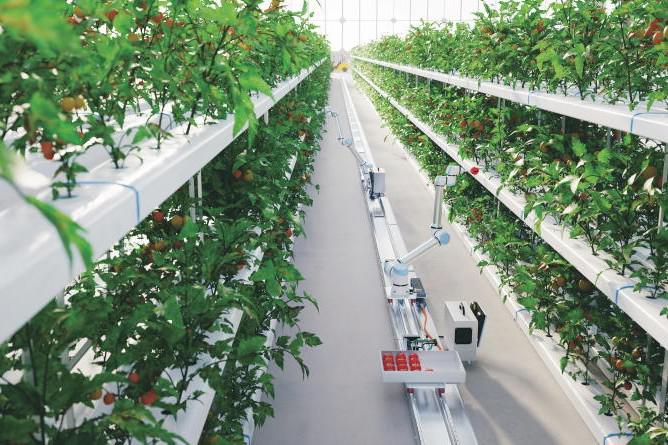
In many cases, modern equipment can replace several manual stations, production line layouts can be redesigned to improve flow, and vertical or modular solutions can free up valuable floor space.
A rule of thumb is to assess output per square metre before and after automation. If output increases without expanding the footprint, the investment is doing its job.
Where it fits
When people hear ‘AI’, they often think of ChatGPT. In reality, AI in food businesses is usually invisible and works quietly in the background. Practical applications already in use include predictive maintenance, quality monitoring, demand forecasting, production scheduling, and waste analysis.
AI is particularly useful where data already exists but isn’t being fully used, helping identify patterns in production, downtime, or quality data that humans may miss. However, AI rarely makes sense as a first step. It works best after basic automation and data capture are already in place.
Don’t disregard employees
Automation changes how people work. Businesses that succeed involve staff early, invest in training, and clearly redefine roles. In many cases, automation improves job quality rather than removing jobs, which can actually support retention and improve efficiency. If staff are hard to source, space is tight, and management time is stretched, further automation is worth consideration.
AI is not a silver bullet, but as part of a broader automation strategy, it can quietly improve efficiency and decision-making. For many Irish food producers, the question is no longer if automation is needed, but how to do it wisely.

Andrew Brolly, Senior Accountant with ifac.
Andrew Brolly is fractional cfo with ifac, which is the professional services firm for farming, food and agribusiness.
We have been running a food production business for over 30 years, and over time, we have moved from largely manual processes to a semi-automated production floor. The business has grown steadily, but space is now very tight.
Staff are harder to find, and margins feel under constant pressure. We are proud of how far the business has come, but we are unsure what the next step should be. Should we be looking at further automation? Is there any real, practical benefit from AI in a business like ours, or is it just hype?
ANSWER: This is a very real consideration for many Irish food producers in 2026. After decades of steady growth, businesses that have evolved from manual to semi-automated systems now face familiar challenges: limited space, difficulty recruiting staff, rising costs, and tighter margins.
Automation can deliver real benefits when approached as a business decision rather than a technology upgrade. AI can also add value, typically in a supporting role behind the scenes, not as a replacement for people.
Before looking at robots or software, the first step is to identify what is holding the business back. In most established food businesses, the constraints tend to be one or more of the following: labour availability or reliability, space limitations, equipment breakdowns and management fire fighting rather than planning.
The real benefits of automation
Automation works best when it removes a specific constraint, not when it simply replaces staff. It is also worth reviewing why attracting and retaining employees has become difficult.
Further automation typically delivers benefits in four main areas:
1. Employment efficiency: instead of replacing the need for people, it allows your business to:
Produce more with the same staff numbers.Reassign skilled staff to higher-value roles.Reduce the continuous need for additional staff.This is particularly important where recruitment and retention are ongoing risks.
2. Consistency and waste reduction: automated systems tend to be more consistent than manual processes. This can lead to:
Less product wastage.More consistency in the quality of your food products.More predictable yields.Even small improvements can have a significant impact on margins in a higher-cost environment.
3. Throughput and planning: automation reduces variability. When output becomes more predictable, planning improves:
Your business can accept more orders.Overtime and last-minute changes should not be required.Customer service improves overall.This stability is often underestimated but has a real financial value as customer satisfaction affects future business.
4. Management time saved: less time spent managing staffing issues, training new hires and dealing with equipment breakdowns allows managers to focus on growth, customers, and strategy.
Space constraints
Space is one of the biggest concerns for growing Irish food businesses. Importantly, automation does not always mean bigger machines.
In many cases, modern equipment can replace several manual stations, production line layouts can be redesigned to improve flow, and vertical or modular solutions can free up valuable floor space.
A rule of thumb is to assess output per square metre before and after automation. If output increases without expanding the footprint, the investment is doing its job.
Where it fits
When people hear ‘AI’, they often think of ChatGPT. In reality, AI in food businesses is usually invisible and works quietly in the background. Practical applications already in use include predictive maintenance, quality monitoring, demand forecasting, production scheduling, and waste analysis.
AI is particularly useful where data already exists but isn’t being fully used, helping identify patterns in production, downtime, or quality data that humans may miss. However, AI rarely makes sense as a first step. It works best after basic automation and data capture are already in place.
Don’t disregard employees
Automation changes how people work. Businesses that succeed involve staff early, invest in training, and clearly redefine roles. In many cases, automation improves job quality rather than removing jobs, which can actually support retention and improve efficiency. If staff are hard to source, space is tight, and management time is stretched, further automation is worth consideration.
AI is not a silver bullet, but as part of a broader automation strategy, it can quietly improve efficiency and decision-making. For many Irish food producers, the question is no longer if automation is needed, but how to do it wisely.
Andrew Brolly, Senior Accountant with ifac.
Andrew Brolly is fractional cfo with ifac, which is the professional services firm for farming, food and agribusiness.







SHARING OPTIONS