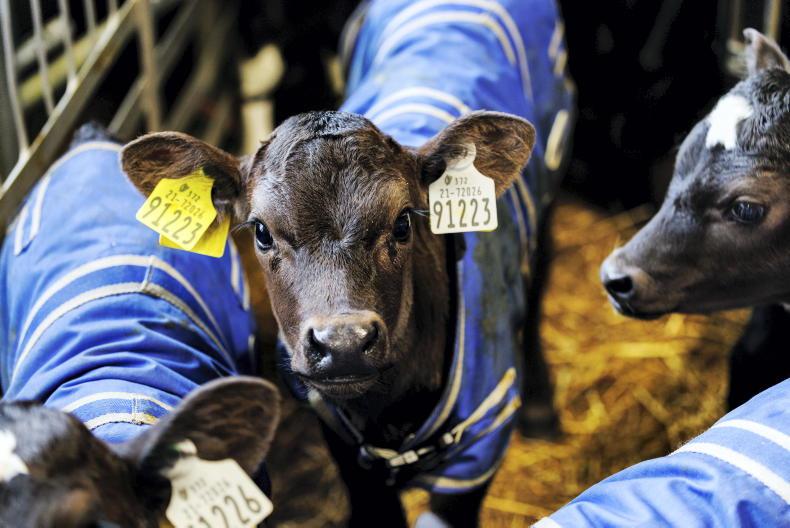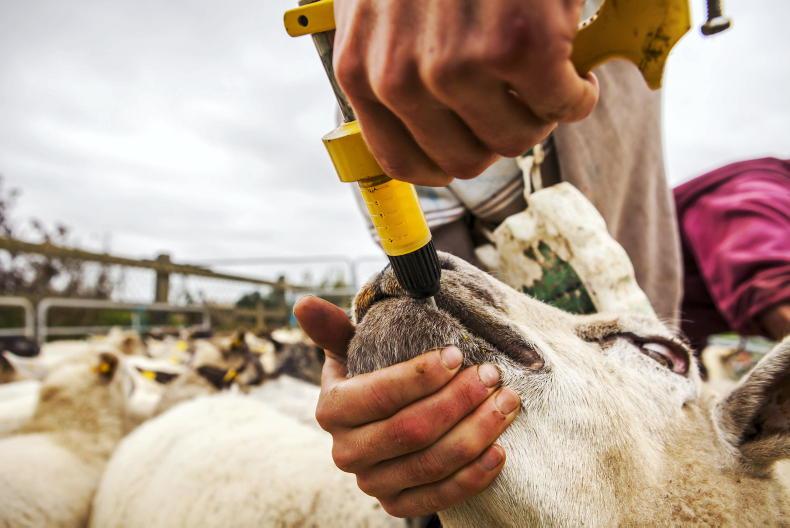
Calf housing is perhaps the most difficult type to get right when it comes to livestock.
The goal should be to keep calves in a warm, dry environment, all the time reducing disease pressure as calves develop their immune system.
The shed must also work well from a labour point of view, being easy to clean out, bed up and feed calves in.
To achieve these goals, certain design elements must be completed.
While calving is just around the corner, there can still be time to make necessary improvements to calf housing to improve animal welfare and to ease labour.
With the increased cost of straw in recent years, farmers are looking at ways to reduce straw usage, which can be a double-edged sword, whereby a penny saved in straw can be a pound lost in antibiotics or mortality. Chopping straw will increase absorbability and reduce usage by 10-15%.
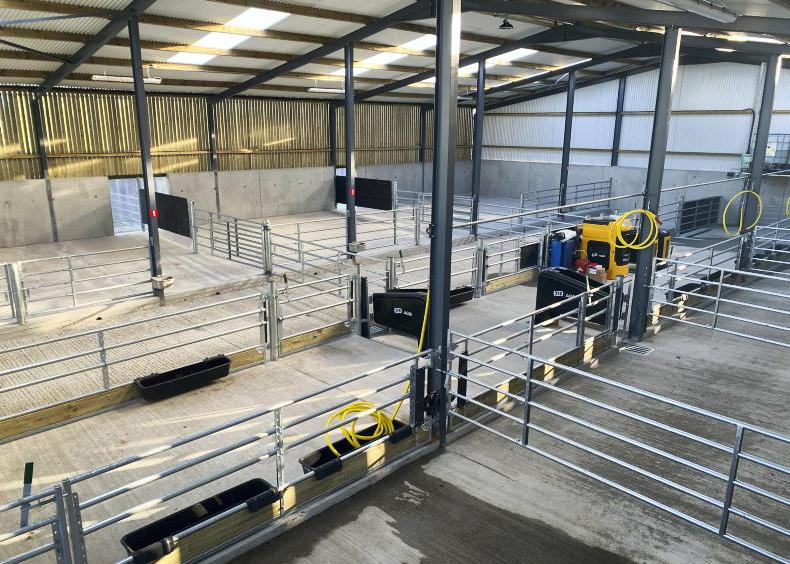
One of the simplest ways to reduce straw usage without impacting calf thrive or health is to have separate wet and dry areas for feeding and lying down, with the dry area towards the back wall of the shed and the wet area along the barrier.
Many farmers have incorporated this design into new calf houses, with a concrete plinth separating both areas. The plinth should be 150-200mm in height to prevent straw being dragged on to the wet area. To allow for drainage, sewer pipes can be cut in half, with the wide end facing down, before the plinth is installed.
Ventilation is possibly the trickiest but most critical element of housing to get right. Too little, and scours and pneumonia will tear through the shed, and too much ventilation will result in cold calves who fail to thrive.
Scottish expert Jamie Robertson spoke to the Farmers Journal a back in 2024, and was of the firm opinion that a ventilation tube was required for all calf houses. Mechanical ventilation is generally only used in calf houses where natural ventilation is substandard and not easily rectified, but due to their small size, the ‘stack effect’, whereby heat from animals’ bodies rises up and out a ridge, is not particularly effective for young calves in Robertson’s opinion, which is why he recommends such ventilation.
Farmers opting to use natural ventilation must know exactly how much air inlet and outlet space they should have in their housing. The inlet size should be 0.08m2/calf on sheltered sites and 0.05m2 on exposed sites.
While Teagasc and Department specifications would dictate that the air outlet at the ridge be 50mm per 3m building width, Robertson again disagreed with this and would argue that the air outlet should be dictated by the stocking density of the shed.
Using a stocking capacity of 80 calves in a shed, the air inlet should be 6.4m2 on normal sites, with an air outlet of 3.2m2.
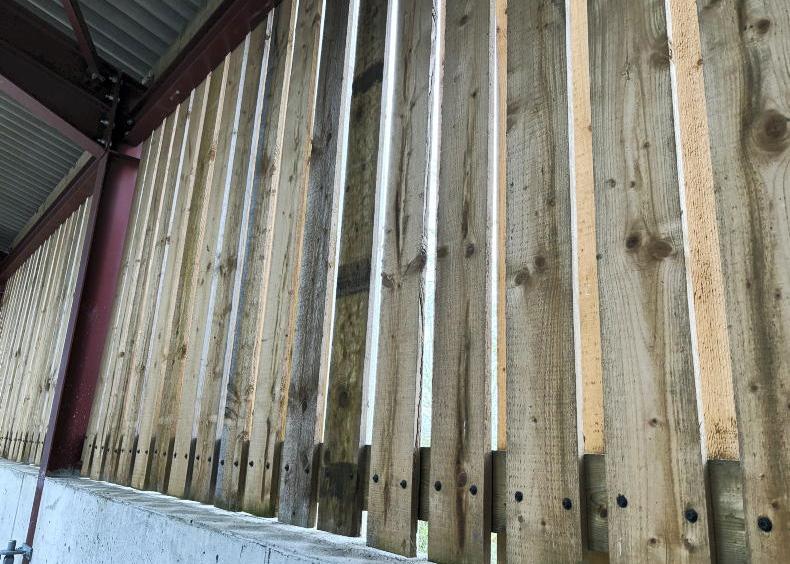
Doors should be closed, and any gaps underneath them sealed to prevent low-level draughts. The ideal form of air inlet spacing is Yorkshire boarding, with lats running both sides of the purlin on the side in a staggered manner.
A gap at the eaves of the building also works well, provided there is an overhand to prevent rain entering.
Calves require a pen space of 1,8m2 each. In a standard bay of 4.8m long and a pen depth of 6m giving a gross floor area of 28.8m2, a pen should only be stocked at 16 calves.
This includes the wet and dry areas, with a total floor space of 2.3–2.5m2/calf floor area (including the feed passage). Overstocking pens will increase the disease pressure on calves, especially in younger animals.
Using an outdoor lounging area of a woodchip pad, or access to a paddock for older calves, will also help reduce disease pressure on pens.
Passageways in between pens should not be less than 1.2m to allow for servicing with milk carts etc.
Floors should be sloped towards effluent channels at 1:20 or 1:15 of a slope to keep bedding dry.Bedding needs to be frequently replenished to keep calves clean and dry. Don’t scrimp on straw.Good ventilation without creating draughts is difficult.
Calf housing is perhaps the most difficult type to get right when it comes to livestock.
The goal should be to keep calves in a warm, dry environment, all the time reducing disease pressure as calves develop their immune system.
The shed must also work well from a labour point of view, being easy to clean out, bed up and feed calves in.
To achieve these goals, certain design elements must be completed.
While calving is just around the corner, there can still be time to make necessary improvements to calf housing to improve animal welfare and to ease labour.
With the increased cost of straw in recent years, farmers are looking at ways to reduce straw usage, which can be a double-edged sword, whereby a penny saved in straw can be a pound lost in antibiotics or mortality. Chopping straw will increase absorbability and reduce usage by 10-15%.
One of the simplest ways to reduce straw usage without impacting calf thrive or health is to have separate wet and dry areas for feeding and lying down, with the dry area towards the back wall of the shed and the wet area along the barrier.
Many farmers have incorporated this design into new calf houses, with a concrete plinth separating both areas. The plinth should be 150-200mm in height to prevent straw being dragged on to the wet area. To allow for drainage, sewer pipes can be cut in half, with the wide end facing down, before the plinth is installed.
Ventilation is possibly the trickiest but most critical element of housing to get right. Too little, and scours and pneumonia will tear through the shed, and too much ventilation will result in cold calves who fail to thrive.
Scottish expert Jamie Robertson spoke to the Farmers Journal a back in 2024, and was of the firm opinion that a ventilation tube was required for all calf houses. Mechanical ventilation is generally only used in calf houses where natural ventilation is substandard and not easily rectified, but due to their small size, the ‘stack effect’, whereby heat from animals’ bodies rises up and out a ridge, is not particularly effective for young calves in Robertson’s opinion, which is why he recommends such ventilation.
Farmers opting to use natural ventilation must know exactly how much air inlet and outlet space they should have in their housing. The inlet size should be 0.08m2/calf on sheltered sites and 0.05m2 on exposed sites.
While Teagasc and Department specifications would dictate that the air outlet at the ridge be 50mm per 3m building width, Robertson again disagreed with this and would argue that the air outlet should be dictated by the stocking density of the shed.
Using a stocking capacity of 80 calves in a shed, the air inlet should be 6.4m2 on normal sites, with an air outlet of 3.2m2.
Doors should be closed, and any gaps underneath them sealed to prevent low-level draughts. The ideal form of air inlet spacing is Yorkshire boarding, with lats running both sides of the purlin on the side in a staggered manner.
A gap at the eaves of the building also works well, provided there is an overhand to prevent rain entering.
Calves require a pen space of 1,8m2 each. In a standard bay of 4.8m long and a pen depth of 6m giving a gross floor area of 28.8m2, a pen should only be stocked at 16 calves.
This includes the wet and dry areas, with a total floor space of 2.3–2.5m2/calf floor area (including the feed passage). Overstocking pens will increase the disease pressure on calves, especially in younger animals.
Using an outdoor lounging area of a woodchip pad, or access to a paddock for older calves, will also help reduce disease pressure on pens.
Passageways in between pens should not be less than 1.2m to allow for servicing with milk carts etc.
Floors should be sloped towards effluent channels at 1:20 or 1:15 of a slope to keep bedding dry.Bedding needs to be frequently replenished to keep calves clean and dry. Don’t scrimp on straw.Good ventilation without creating draughts is difficult.
SHARING OPTIONS