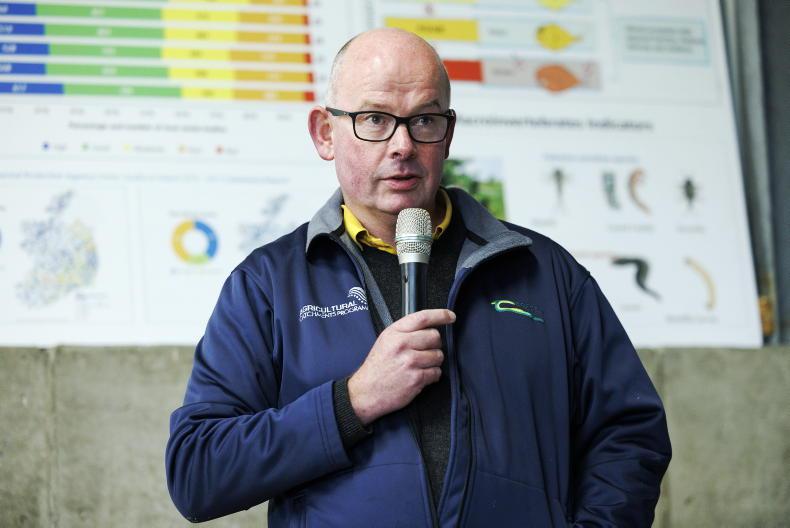
Bogus slurry export declarations are among the biggest factors hitting water quality, according to Eddie Burgess of Teagasc's agricultural catchments programme.
Despite Department of Agriculture and Department of Housing checks, a minority of farmers claiming to export slurry to stay within stocking rate rules do not export the volumes declared, the researcher told RTÉ Radio 1 on Tuesday.
Burgess clarified that it would be “fair to say” that the vast majority of farmers availing of both nitrates derogations or slurry exports abide by the rules.
“I think there is a general awareness that there is a small number of farmers that may be availing of this movement [option] to remain compliant, but the actual amounts of slurry being moved would not be reflected in what is being notified,” he said.
The catchment scientist stated that the 250kg/ha organic N stocking rate limit was proven to have had only a “minimal impact on nutrient loss”.
Breaking the limit
However, areas within a farm or an entire farm breaking this limit could impact negatively on water quality at such a concentration of nutrients.
“But if you have farms exceeding that or locations within a farm where you have disproportionate loads of nutrients going on to certain ground as opposed to others, then yes, that is one of the bigger factors that can contribute to detriment in water quality,” Burgess explained.
He added that there is “an awareness” that instances of rule breaking occurs when it comes to slurry, but said that there are “changes taking place” in inspection regimes to clamp down on these instances.
The use of GPS trackers and real-time declarations of slurry movements have been discussed by the interdepartmental nitrates expert group as among the measures which could tighten up on those who break slurry rules, the Irish Farmers Journal reported in October.