Sustained weather impacts in recent years have caused damage to property, coastlines, ecosystems, energy supply, food production and forests, and have also led to loss of life. The Government’s response to natural disasters is to minimise future damage caused by flooding and storms.
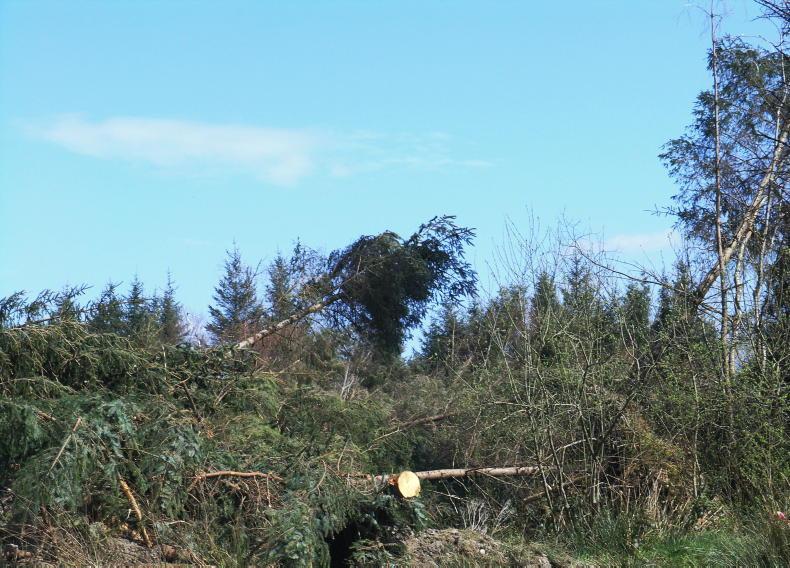
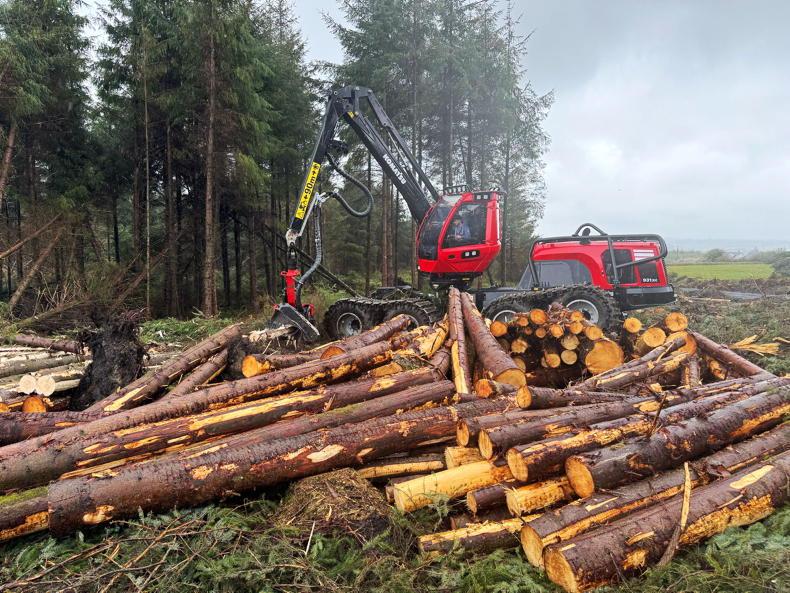
As well as blowing down over two years’ timber harvest in Irish forests, storms Éowyn and Darragh also caused electricity outages. While forest owners are getting on with salvaging timber from windblown forests, the main Government focus has been on minimising future damage to energy supply as over one million homes and businesses lost electricity nationwide, often as a result of windblown trees falling on power lines.
All forestry and farming organisations negotiating with ESB acknowledge the need to protect power supply especially during heavy storms. They have put together a set of proposals aimed at achieving this, while safeguarding forest owners.
Power outages as a result of windblown trees have sparked debates throughout Europe about securing energy supply, especially in countries with high forest cover, such as Sweden and Finland.
The Scandinavian approach
One of the solutions proposed in Scandinavia was to bury power cables, which is costly. But so are other projects required to deal with natural disasters, which are now accepted as climate-change-related.
In Finland, which has 72% forest cover, Elenia, the second largest distributor of electricity with 430,000 customers, aims to bury 75% of its network by 2028. Installing underground cables involves digging trenches up to 1m deep and restoring the land after laying cables.
During the decade that followed storm Gudrun in 2005, Swedish power company Vattenfall invested SEK17bn (€1.54bn) to safeguard the electricity grid during severe weather events. A total of 17,000km of lines were put underground or secured by new isolated air lines.
ESB has entertained no such debate on undergrounding at least some cables across its 710km network through Irish forests. It should have at least been asked by its parent Department of Climate, Energy and the Environment (DCEE) to look at the Scandinavian model, which has been in place for over two decades.
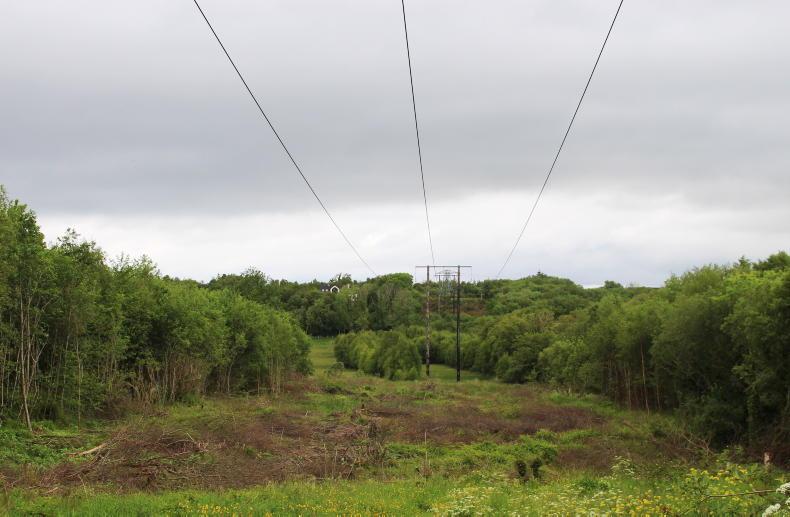
Instead. the proposed Electricity (Supply) (Amendment) Bill 2025 will allow ESB to cut a 55m-wide swathe through Irish forests. Apart from undergrounding cables, there are other ways to address this issue, including varying corridor clearance widths. Most conifer trees are now felled at 22m top height, so allowing for falling arcs, 35m widths should be sufficient. This could be further reduced to 5m access paths by planting native tree and shrub species, which could be managed to maximum heights of less than 10m.
The result of this approach would be to create wildlife and species-diverse corridors. Apart from excessive corridor clearance, ESB’s initial response was to pass the responsibility of safeguarding electricity supply to the forest owner, while compensation will be negotiated between the timber growers and ESB.
Lack of consultation
Minister Heydon recently said the Heads of Bill are before Government and that the Department of Agriculture, Food and the Marine (DAFM) was in “regular contact with the DCEE and other critical stakeholders including Coillte, Forestry Industries Ireland (FII), and farmer representative organisations in relation to forests and electricity infrastructure”.
Minister Heydon’s comments about regular contact with stakeholders is disputed. Forestry negotiators including FII, IFA and ITGA said they had not seen the Heads of Bill, nor were they given any assurances that the proposed legislation would be made available to them in the near future. As a result, they couldn’t comment on the ESB modifying its stance on passing responsibility to forest owners in protecting the grid, which would be reflected in the legislation.
The IFA and ITGA, in particular, have been extremely critical of the lack of consultation by ESB Networks and DCEE (see below).
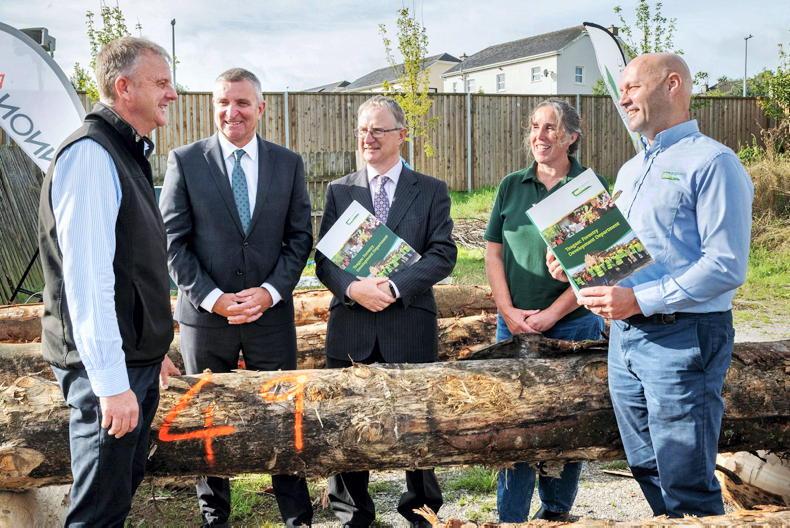
The IFA and the Irish Timber Growers Association (ITGA) have been critical of ESB Networks for lack of open discussions on safeguarding electricity supply following recent storms.
“There is an onus on ESB to consult with forest owners as key stakeholders,” said Padraig Stapleton, chair of the IFA farm forestry committee.
“The absence of any discussion with the IFA has been disappointing,” he added. “Farmers with established forests are extremely concerned about some of the proposals which include removing the Forestry Green Edge to widen forestry corridors.”
The IFA and other organisations believe this approach will leave plantations vulnerable to further windblow.
“There is also concern around the proposals seeking to impose maintenance responsibilities on landowners,” he said.
This view is shared by Donal Whelan, ITGA, technical director.
“There is serious concern that the proposed legislation could transfer future corridor maintenance responsibilities from ESB to landowners, potentially exposing them to additional costs and liabilities which is not acceptable to growers,” Whelan said.
Neither could comment on ESB modifying its stance in this regard as the ESB, DCEE or DAFM had not made the proposed legislation available to their organisations.
ESB has cleared 55m corridors since Storm Éowyn but there is “currently no mandatory obligation on any forest owner to sign an easement with ESB Networks on clearing forestry corridors,” according to Stapleton.
“It is important for forestry landowners to know that any proposal from ESB Networks around forestry corridor easement is completely voluntary and also subject to agreed compensation.”
“ITGA is calling for urgent engagement between the DCEE and forest owners over proposals to widen medium-voltage electricity corridors through forests from 20 metres to 55 metres,” Whelan said.
“The proposed widening would remove 2,485 hectares of forests including 1,757 hectares – a total area greater than Ireland’s average annual afforestation [2000-2025] of 2,140ha.”