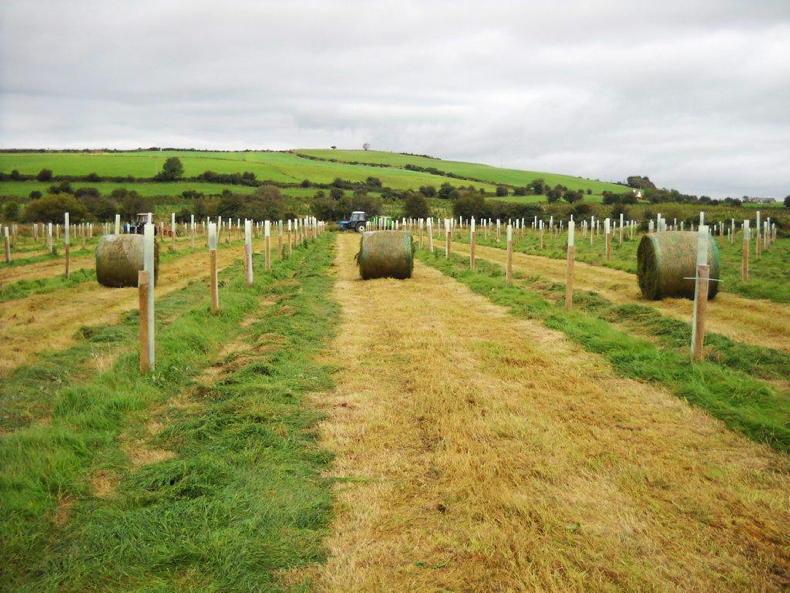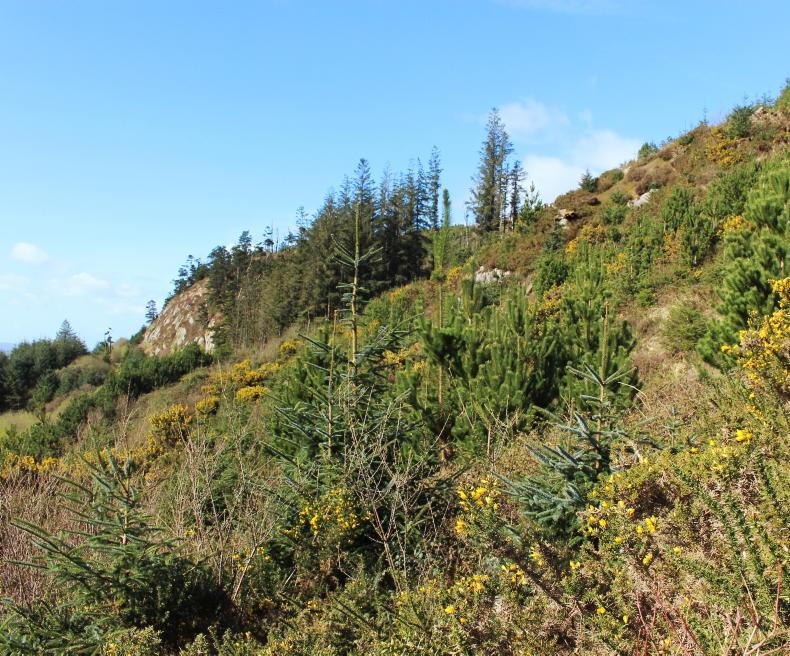
One of the biggest differences between forests established for most of the last century and those established since the early 2000s is their location. Deep peats haven’t been afforested since the 1990s and now even shallow peats – greater than 30cm depth – are precluded from the afforestation programme.
The biggest topographical difference in forest location is in altitude. While visiting Irish forests over the past couple of years – researching Ireland’s heritage and recreation forests – the most glaring difference is the absence of forests now being established on higher altitudes, while forests established over the past two decades are completely absent from unenclosed land – unfenced land generally not in agricultural use other than grazing.
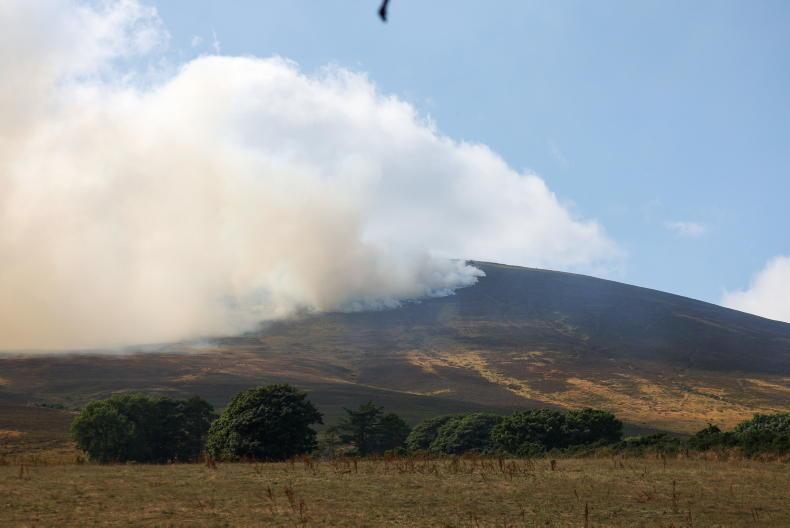
Unenclosed land, which is ideally suitable for forestry, has been virtually banned from the planting programme since 2012. While planting unenclosed land in theory has been limited to 20% of an afforestation licence, it has effectively been banned regardless of suitability. Foresters no longer submit these sites for planting licences as they are likely to be rejected. There is a correlation between the fall in afforestation, since planting unenclosed land has been precluded from the planting programme.
A number of good presentations and articles have been written in recent years about exploring the forestry potential of some of the upland areas where unenclosed land is located. Some of these have potential to increase land availability for forestry without compromising landscape or ecosystem values.
Marina Conway makes the case for native woodland establishment on upland, unenclosed sites while the Society of Irish Foresters (SIF) believes that mixed – native, naturalised and exotic – species have serious potential at much higher elevations than at present.
Marina Conway, head of woodlands with Hometree and former CEO of Western Forestry Co-op, asks the question: “ How do we expand our upland native woodlands?” The question is partly answered by the recognition that we know “that our uplands once contained vast swathes of sessile oak forest”, she says. “Under Article 17 reporting on the status of habitats under the Habitats Directive, the National Parks and Wildlife Service (NPWS) has estimated that Ireland needs to re-establish some 14,000ha of lost Annex woodlands by 2030 as part of the Nature Restoration Law.”
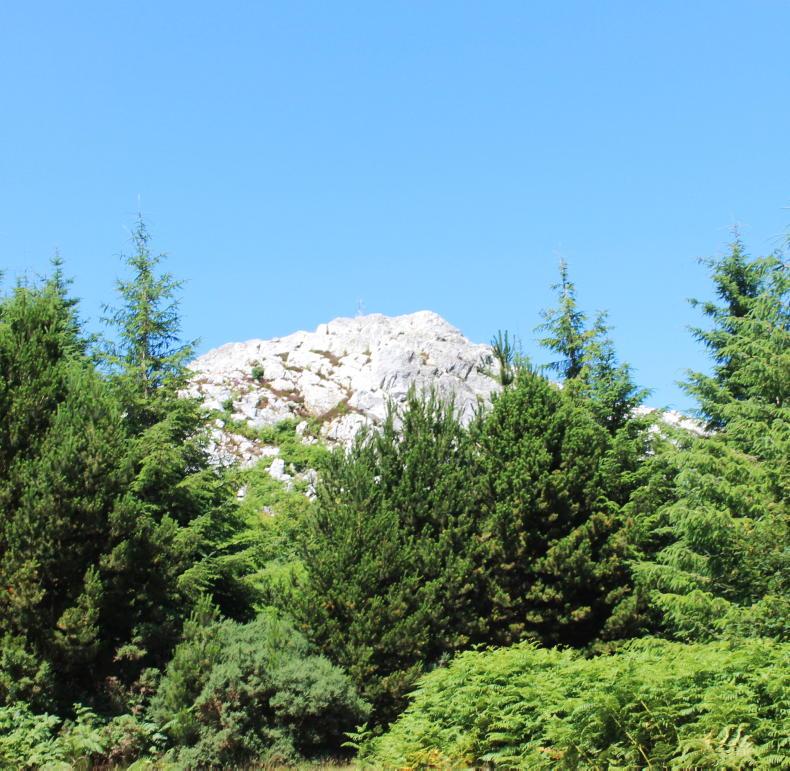
While Conway advocates native species, the SIF sees a role for commercial exotic species alongside native species.
“When the productive agricultural category is excluded, the most likely sources for land use change are to be found in the marginal and unenclosed land categories,” SIF maintains in its 2022 submission of evidence to inform the Climate Action Plan National Land Use Review on the Role of Forestry.
The society demonstrates that 475,000ha of marginal land could be afforested without impacting on farming, including 180,000ha of unenclosed uplands suitable for forestry. While most unenclosed land is unsuitable for afforestation on production and ecological grounds, this tiny fraction of the land area (2.5%) of Ireland, if planted, would bring Ireland’s forest cover to 14% . It has the potential to yield highly productive Sitka spruce and is also suitable for native woodland species such as sessile oak, alder, birch and Scots pine, the Society contends.
Ireland has major advantages in planting unenclosed lands as “sufficient information has already been assembled to allow decisions to be made and implemented by streamlining existing structures without recourse to any new land use surveys or research initiatives,” according to the SIF.
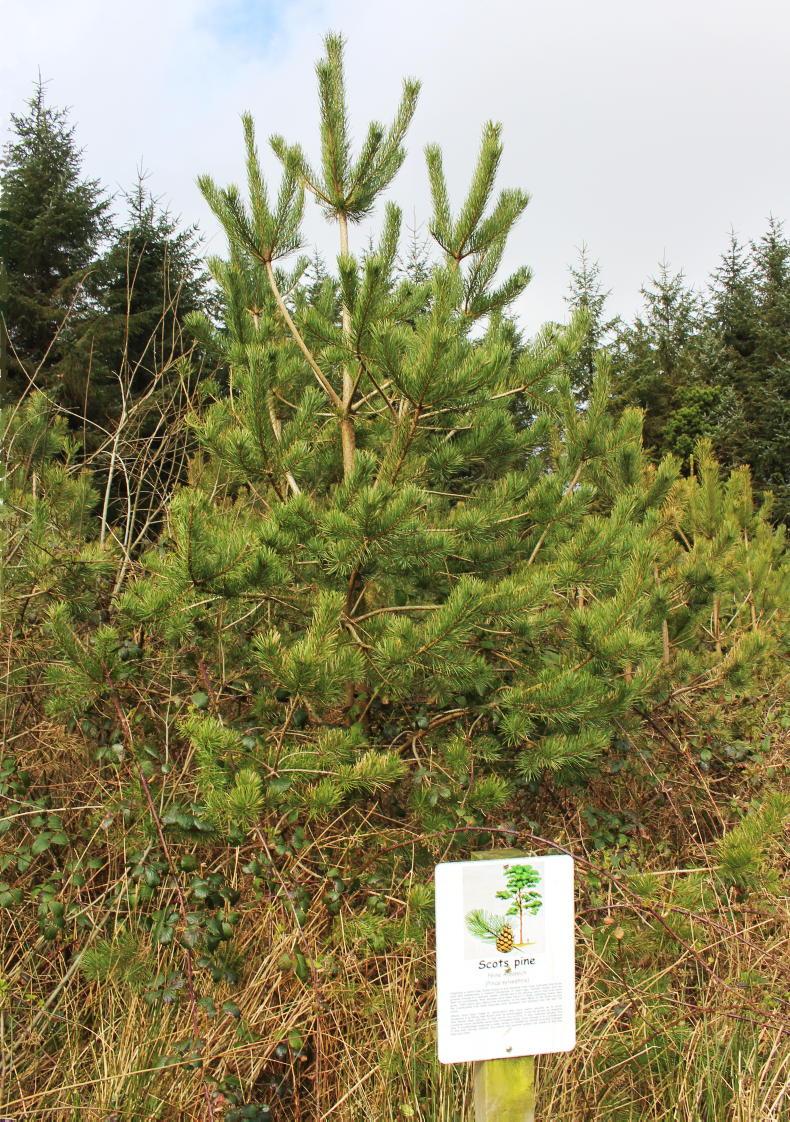
The evidence is available in upland forests throughout the island. I visited a number of sites this year that were in their second and third rotations, all with forests on unenclosed land and at altitudes at or above the 300m contour.
Carrigfadda Forest in west Cork is a typical example of upland forestry. When I visited this Coillte forest last summer, the area had a crop of recently reforested Sitka spruce and Scots pine, with some broadleaves. Despite the elevation – it’s planted to the 313m summit – exposure and shallow soils, the stumps of the previous crop and the growth rates of the current crop were close to yield class (YC) 20 (m3/ha/annum), well above the national average and over three times higher than central and northern European forests.
The same is true of Sliabh Bawn, Co Roscommon, which runs close to 300m altitude. Coillte has carried out a worthwhile native tree species experiment here close to the summit. This demonstrates that a wide range of native tree and shrub species can grow well on poor nutrient sites at high altitudes, provided they have shelter from surrounding mature Sitka spruce.
In Co Wicklow, productive forests have been established at altitudes above 600m. Even in the hill forests such as Carrick Mountain, the forest is planted right up to the 381m summit, well into unenclosed land. Although the forest soil is nutrient-poor, especially near the summit, it still supports a wide range of tree species, including Sitka spruce, lodgepole pine, sessile oak, birch, mountain ash, Scots pine, holly and Japanese larch.
It is unlikely that these three Coillte forests would receive planting licences today, yet they enhance their respective landscapes and communities – ecologically, economically and socially. They provide the evidence that unenclosed uplands need to be part of the afforestation and land availability conversation.