For suckler farmers who sell calves as weanlings in the autumn, thoughts should now be firmly on preparing this year’s animals for sale.
Most sales get under way towards the end of September, which is about four weeks away.
On the back of rising input costs, and with a need to generate additional cashflow on farms, mart managers indicate they are getting enquiries from suckler farmers who do not normally specialise in this market looking to offload animals this autumn.
Specialist system
Selling calves as weanlings is the most simplistic suckler system to operate, but you only get one crack at getting it right.
In a suckler-to-beef system, a calf can have a light weaning weight. However, with the right feeding programme and good management, these animals have time to get weight gain back on track.
But in a calf-to-weanling system, there is no place for light calves, or animals with plain or average conformation. Calves out of traditional beef breeds might be best kept on to be sold as stores or finished beef.
Covering costs
Costings for keeping a suckler cow in 2022 were detailed in a separate article in the Irish Farmers Journal in March. Our analysis highlighted that for a typical spring calving herd the annual cost to keep a cow was in the region of £1,100 per head.
Lighter weanlings and plainer calves will struggle to generate a sale value in line with this figure, meaning that such animals are sold at a loss.
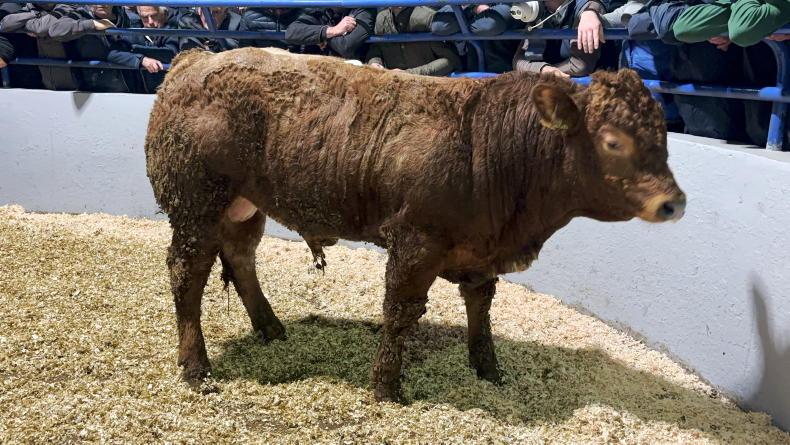
It takes top-quality calves with excellent conformation and liveweight typically above 350kg to stand a chance of turning a profit.
It is also important to remember that it is the average that matters. A few calves might make headline-grabbing prices, but a number of light heifer calves can quickly drag the average down.
So for farmers planning on selling weanlings this autumn, outlined are 10 tips to help prepare animals for sale. Start preparations sooner, rather than later.
1 Separate bull and heifer calves for creep feeding
There is no point in putting a static, ad-lib creep feeder with a group of calves if there is a big variation in liveweight, calf quality and calf type.
The economic return on creep feeding will not be there. Split bull calves and heifer calves into separate grazing groups to get the best return from creep feeding meal.
This makes it easier to target bull calves with a higher feeding rate in the region of 2kg to 3kg/day (where there is an adequate supply of good grass).
If grass is scarce and the cow is lacking milk, offer bulls 4kg/day. At a ration cost of £370/t, feeding 4kg/day costs £1.48/calf. Weight gain should be in the region of 1.5kg/day, so at a sale price of 280p/kg, there is a margin over meal costs of £2.72/head.
Heifers will go fat if offered meal ad-lib and it is less likely that any additional weight gain compared to calves not fed, will cover the cost of the feed.
By splitting heifers into a separate group, they can be capped at 2kg/day, although feeding meal in a trough may be required to control intakes.
This is more awkward, but is possible by allowing calves to creep forward in front of the cows.
Breeding should be more or less over for February to April calving herds, so re-grouping cows and calves for creep feeding should be less of an issue.
2 Creep grazing calves
Allowing calves to creep graze ahead of cows will help break the bond with the cow. With the calf semi-weaned, it will be under less stress in the mart and may attract more buying interest.
Start off by erecting temporary electric wire, or a creep gate, in one corner of a paddock. Alternatively, fence off the headland of a field about 10 metres in from the end boundary.
As the starting area is small, calves will be in sight of the cow, keeping them settled and less inclined to break the wire.
Ideally, use a mains fencer, or high-powered battery fencer with a solar panel, to provide a current in the fence wire.
Raise the wire slightly higher at the two sides where it meets the boundary fence to let calves creep under, but low enough to hold back cows. Once calves get used to it, creep feeding troughs can be set up to entice animals forward.
3 Choosing a ration for calves
There is no need to buy a premium ration for creep feeding with a crude protein higher than 16%. There is ample protein in grazed grass, as well as the milk supplied by the cow.
Keep the ration as simple as possible, ideally using three or four key ingredients. Look at the list of ingredients in the mix. They will be listed in order of inclusion rate.
The larger the inclusion rate, the earlier an ingredient will appear on the list. Look for barley, soya, sugar beet pulp or soya hulls to be listed in the top four or five ingredients.
4 Targeting silage aftermath to weanlings
With second-cut silage harvested, target the fresh regrowth to the calves that will be sold this autumn.
Aftergrass will be highly digestible, driving weight gain directly in the calf, as well as boosting milk yield in the cow.
5 Healthy calves are saleable
Make sure calves are well covered for internal parasites such as lungworm. Worm burdens will reduce weight gain and cause respiratory issues.
Treating too late means calves are more susceptible to pneumonia and body condition will deteriorate. Such calves will be a hard sell in any market.
Vaccinating calves against respiratory diseases is money well spent. At a cost of £15/calf, 6kg of liveweight gain will pay for the vaccines where a sale price of 280p/kg is achieved.
Where calves are not vaccinated and develop pneumonia, even in a mild form, treatment and the loss in daily liveweight gain will add up to a cost much greater than £15.
6 Tidy up horns
Presentation in the sale ring is what generates buying interest. Think about what would entice you to bid on cattle. Tidy up horn buds that have regrown and dehorn animals that were missed back in the spring. The earlier this is done the better to allow horn buds to heal over again.
7 Clipping the calf’s back and tail
Clipping the calf along the back and hind quarter can help the presentation of the animal, attracting greater buying interest.
Calves that have been clipped are able to regulate body temperature better and are less prone to pneumonia when housed, a big positive from a buyer’s point of view.
This is a task to carry out a couple of days before a sale.
Clipping just before the sale is possible, but calves can become soiled in handling pens.
8 Know your market
Pay attention to the dates of weanling sales. Some marts run sales based on breed.
There is no point preparing weanlings for sale, then bringing the wrong type of cattle to the wrong mart on the wrong day.
9 Do you castrate males or leave them as bulls?
When it comes to male cattle, there is a perception that calves which have been castrated will reduce the number of potential buyers and vice versa.
This is not always true. Ask the mart manager what buyers are usually looking for at weanling sales.
In recent years, whether male calves are left entire or castrated has made little difference to demand and price.
Where this may become an issue is with older weanlings that have a relatively low weight for age.
Such cattle will struggle to reach a suitable carcase weight in an under-16-month bull system.
But generally speaking, castrating calves so close to the autumn sales is a risky strategy as there will be a short-term loss in performance.
10 Don’t put all your eggs in one basket
In most marts, the strongest, heaviest and most visually attractive weanlings tend to be sold during the first or second autumn sales held.
Lighter, younger calves are generally sold in late autumn.
Therefore, if you are planning to sell weanlings this autumn, select animals carefully for each sale and don’t go with everything on the same day.
Read more
What will it cost to keep suckler cows in 2022?
Quality over quantity for Cloonglasna
For suckler farmers who sell calves as weanlings in the autumn, thoughts should now be firmly on preparing this year’s animals for sale.
Most sales get under way towards the end of September, which is about four weeks away.
On the back of rising input costs, and with a need to generate additional cashflow on farms, mart managers indicate they are getting enquiries from suckler farmers who do not normally specialise in this market looking to offload animals this autumn.
Specialist system
Selling calves as weanlings is the most simplistic suckler system to operate, but you only get one crack at getting it right.
In a suckler-to-beef system, a calf can have a light weaning weight. However, with the right feeding programme and good management, these animals have time to get weight gain back on track.
But in a calf-to-weanling system, there is no place for light calves, or animals with plain or average conformation. Calves out of traditional beef breeds might be best kept on to be sold as stores or finished beef.
Covering costs
Costings for keeping a suckler cow in 2022 were detailed in a separate article in the Irish Farmers Journal in March. Our analysis highlighted that for a typical spring calving herd the annual cost to keep a cow was in the region of £1,100 per head.
Lighter weanlings and plainer calves will struggle to generate a sale value in line with this figure, meaning that such animals are sold at a loss.
It takes top-quality calves with excellent conformation and liveweight typically above 350kg to stand a chance of turning a profit.
It is also important to remember that it is the average that matters. A few calves might make headline-grabbing prices, but a number of light heifer calves can quickly drag the average down.
So for farmers planning on selling weanlings this autumn, outlined are 10 tips to help prepare animals for sale. Start preparations sooner, rather than later.
1 Separate bull and heifer calves for creep feeding
There is no point in putting a static, ad-lib creep feeder with a group of calves if there is a big variation in liveweight, calf quality and calf type.
The economic return on creep feeding will not be there. Split bull calves and heifer calves into separate grazing groups to get the best return from creep feeding meal.
This makes it easier to target bull calves with a higher feeding rate in the region of 2kg to 3kg/day (where there is an adequate supply of good grass).
If grass is scarce and the cow is lacking milk, offer bulls 4kg/day. At a ration cost of £370/t, feeding 4kg/day costs £1.48/calf. Weight gain should be in the region of 1.5kg/day, so at a sale price of 280p/kg, there is a margin over meal costs of £2.72/head.
Heifers will go fat if offered meal ad-lib and it is less likely that any additional weight gain compared to calves not fed, will cover the cost of the feed.
By splitting heifers into a separate group, they can be capped at 2kg/day, although feeding meal in a trough may be required to control intakes.
This is more awkward, but is possible by allowing calves to creep forward in front of the cows.
Breeding should be more or less over for February to April calving herds, so re-grouping cows and calves for creep feeding should be less of an issue.
2 Creep grazing calves
Allowing calves to creep graze ahead of cows will help break the bond with the cow. With the calf semi-weaned, it will be under less stress in the mart and may attract more buying interest.
Start off by erecting temporary electric wire, or a creep gate, in one corner of a paddock. Alternatively, fence off the headland of a field about 10 metres in from the end boundary.
As the starting area is small, calves will be in sight of the cow, keeping them settled and less inclined to break the wire.
Ideally, use a mains fencer, or high-powered battery fencer with a solar panel, to provide a current in the fence wire.
Raise the wire slightly higher at the two sides where it meets the boundary fence to let calves creep under, but low enough to hold back cows. Once calves get used to it, creep feeding troughs can be set up to entice animals forward.
3 Choosing a ration for calves
There is no need to buy a premium ration for creep feeding with a crude protein higher than 16%. There is ample protein in grazed grass, as well as the milk supplied by the cow.
Keep the ration as simple as possible, ideally using three or four key ingredients. Look at the list of ingredients in the mix. They will be listed in order of inclusion rate.
The larger the inclusion rate, the earlier an ingredient will appear on the list. Look for barley, soya, sugar beet pulp or soya hulls to be listed in the top four or five ingredients.
4 Targeting silage aftermath to weanlings
With second-cut silage harvested, target the fresh regrowth to the calves that will be sold this autumn.
Aftergrass will be highly digestible, driving weight gain directly in the calf, as well as boosting milk yield in the cow.
5 Healthy calves are saleable
Make sure calves are well covered for internal parasites such as lungworm. Worm burdens will reduce weight gain and cause respiratory issues.
Treating too late means calves are more susceptible to pneumonia and body condition will deteriorate. Such calves will be a hard sell in any market.
Vaccinating calves against respiratory diseases is money well spent. At a cost of £15/calf, 6kg of liveweight gain will pay for the vaccines where a sale price of 280p/kg is achieved.
Where calves are not vaccinated and develop pneumonia, even in a mild form, treatment and the loss in daily liveweight gain will add up to a cost much greater than £15.
6 Tidy up horns
Presentation in the sale ring is what generates buying interest. Think about what would entice you to bid on cattle. Tidy up horn buds that have regrown and dehorn animals that were missed back in the spring. The earlier this is done the better to allow horn buds to heal over again.
7 Clipping the calf’s back and tail
Clipping the calf along the back and hind quarter can help the presentation of the animal, attracting greater buying interest.
Calves that have been clipped are able to regulate body temperature better and are less prone to pneumonia when housed, a big positive from a buyer’s point of view.
This is a task to carry out a couple of days before a sale.
Clipping just before the sale is possible, but calves can become soiled in handling pens.
8 Know your market
Pay attention to the dates of weanling sales. Some marts run sales based on breed.
There is no point preparing weanlings for sale, then bringing the wrong type of cattle to the wrong mart on the wrong day.
9 Do you castrate males or leave them as bulls?
When it comes to male cattle, there is a perception that calves which have been castrated will reduce the number of potential buyers and vice versa.
This is not always true. Ask the mart manager what buyers are usually looking for at weanling sales.
In recent years, whether male calves are left entire or castrated has made little difference to demand and price.
Where this may become an issue is with older weanlings that have a relatively low weight for age.
Such cattle will struggle to reach a suitable carcase weight in an under-16-month bull system.
But generally speaking, castrating calves so close to the autumn sales is a risky strategy as there will be a short-term loss in performance.
10 Don’t put all your eggs in one basket
In most marts, the strongest, heaviest and most visually attractive weanlings tend to be sold during the first or second autumn sales held.
Lighter, younger calves are generally sold in late autumn.
Therefore, if you are planning to sell weanlings this autumn, select animals carefully for each sale and don’t go with everything on the same day.
Read more
What will it cost to keep suckler cows in 2022?
Quality over quantity for Cloonglasna






SHARING OPTIONS