



The transition from fossil fuel-generated electricity to renewable energy is being driven by a combination of binding climate legislation and strong economic incentives.
For many large food processors, renewable energy is no longer an optional sustainability initiative but a necessity for both environmental and cost reductions.
Electricity costs represent a significant expense in food processing, particularly in energy intensive operations such as cooling and refrigeration.
While installing renewable technologies such as solar photovoltaic (PV) or wind turbines requires a substantial upfront investment, the long-term benefit is that the fuel is essentially free. Over time, this can displace millions of euros in electricity purchases, ultimately improving margins.
However, renewable energy projects are not without complications. Since the start of the war in Ukraine, interest in on-site renewable energy generation has increased sharply among food manufacturers.
Most of this activity has focused on rooftop or ground-mounted solar PV systems and, in some cases, on-site wind turbines. Planning and construction are reasonably straightforward, but the complexities of connecting to the national electricity grid have emerged as a major barrier.
In some instances, the grid is no longer able to accept additional export capacity, and regulatory rules around existing renewable installations can restrict how new projects operate.
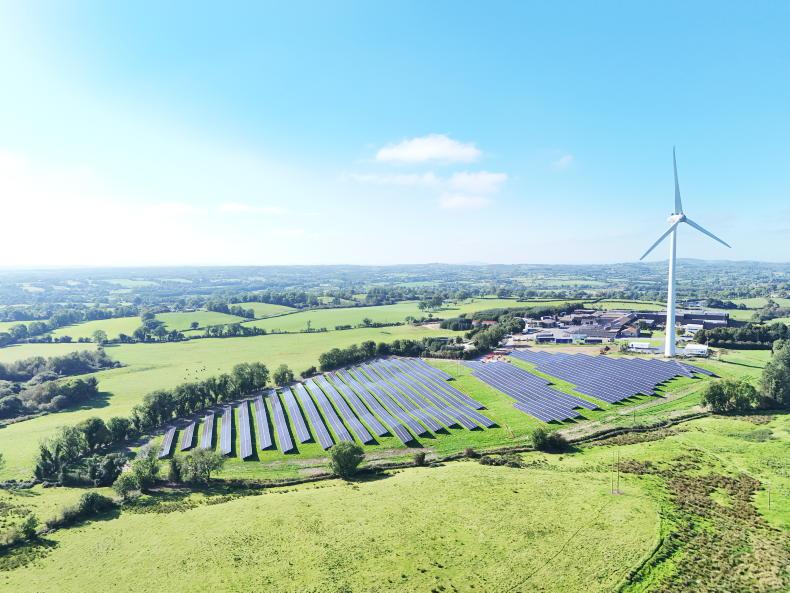
Liffey Meats, based in Ballyjamesduff, County Cavan, is an example of how a business can overcome these challenges. The company recently completed a €3.1 million renewable energy project combining a 25ac solar farm with an existing wind turbine.
The result is Ireland’s largest behind-the-meter co-located renewable energy installation. We paid a visit to learn more.
Wind power
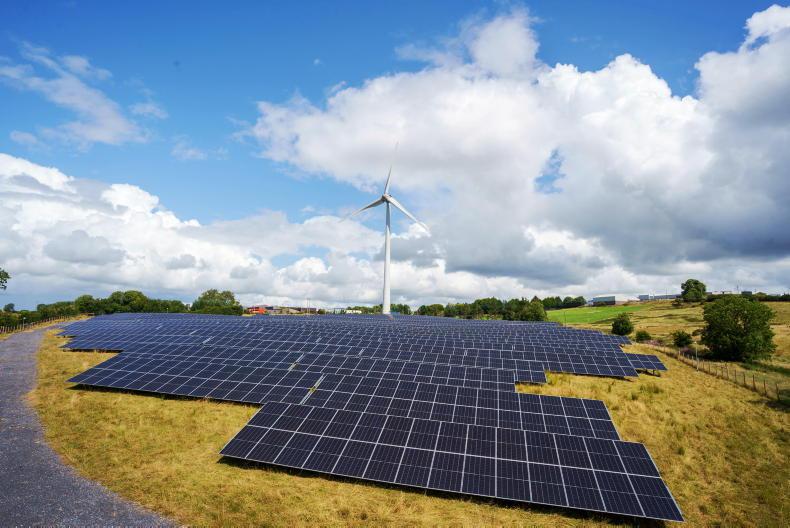
Liffey Meats’ journey into large-scale renewables began in 2017 with the installation of a 3.05MW Enercon wind turbine.
The turbine is supported under the Renewable Energy Feed-in Tariff (REFIT) scheme, which guarantees a fixed tariff for electricity exported to the grid over a 15-year period. The wind turbines generate around 8.5 million kilowatt-hours annually, with approximately 49% of the electricity used on-site and the remainder exported to the grid. The entire Liffey Meats site uses 12.2 million kilowatt-hours per year. On-site electricity generation offsets purchased power, so maximising its use is the most cost-effective approach.
The wind turbine operates under a maintenance contract with Enercon and has maintained an uptime of around 95% since installation.
A dedicated substation and medium-voltage switchgear were installed as part of the original wind project, giving the site an electrical infrastructure capable of supporting additional renewable generation.
The case for solar
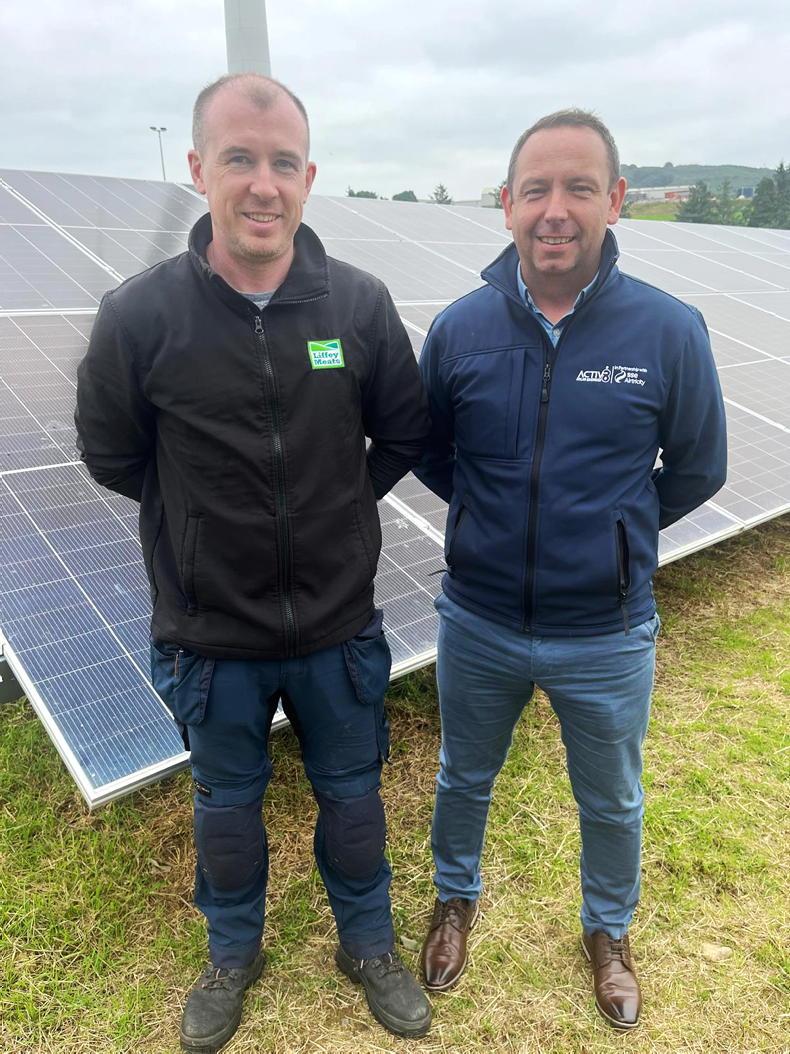
According to Liffey Meats maintenance manager Colm Kearns, solar PV was a logical next step. Solar and wind complement each other well in Ireland’s climate. Wind generation is often lower during sunny conditions, and solar output naturally peaks during daylight hours when site demand can be high.
When asked about the possibility of installing a second wind turbine instead, Colm explained that the idea was rejected due to the high capital cost and site limitations. Solar was considered the most cost-effective and technically suitable option.
Planning permission for the solar farm was secured in 2022, and work began with Activ8 in 2023, explained Martin Mulholland, commercial operations director at Activ8.
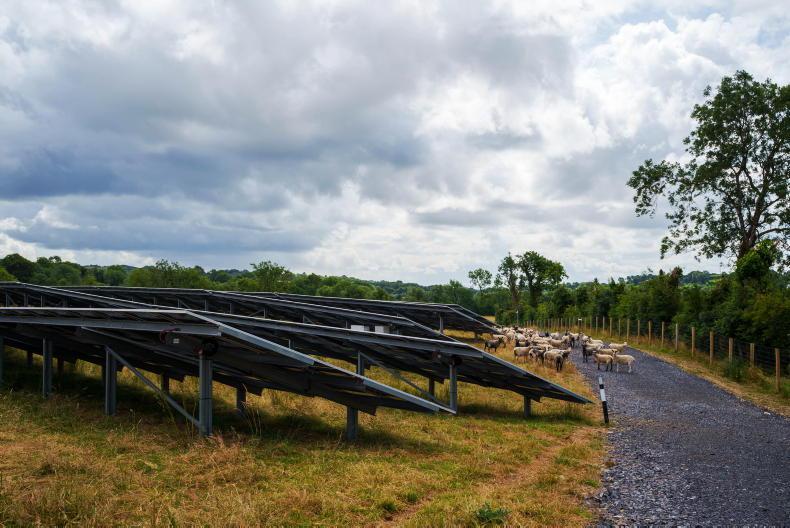
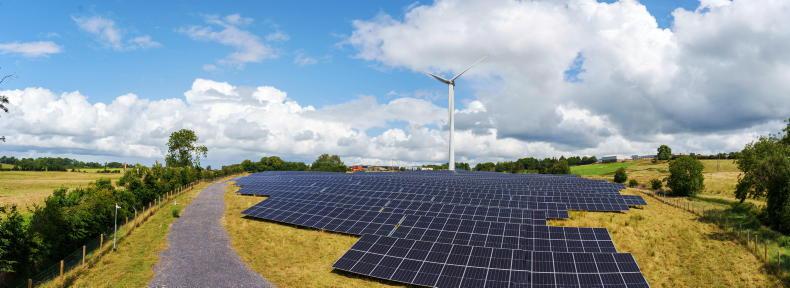
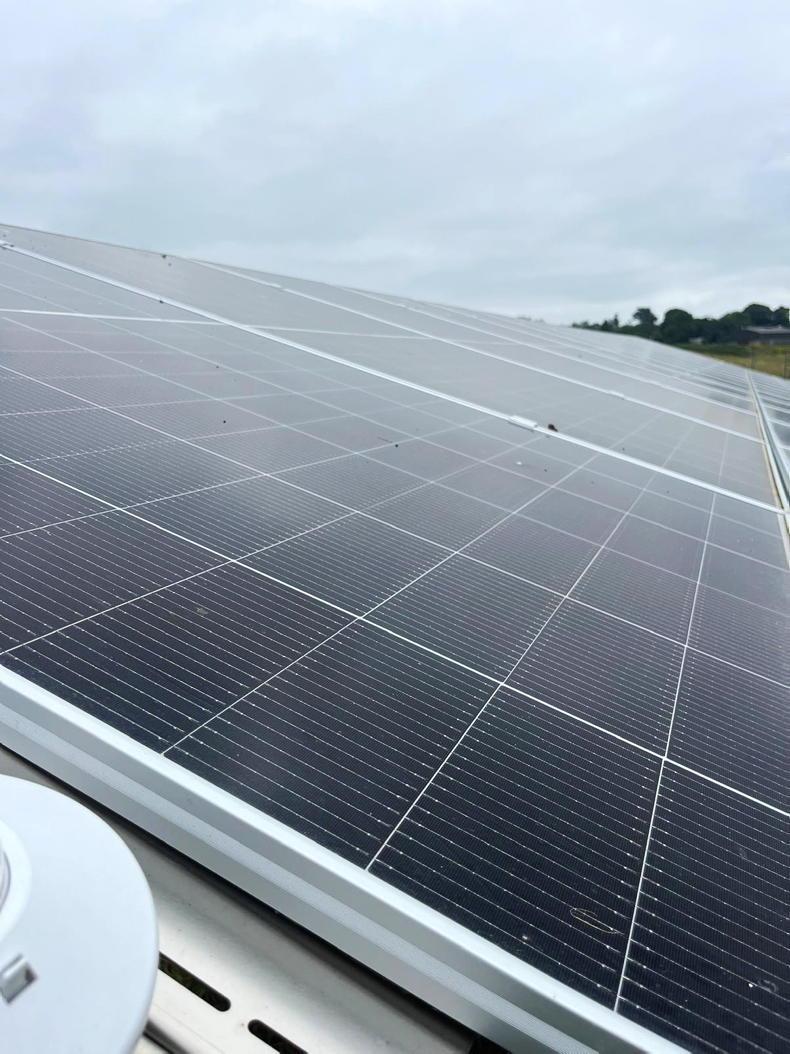
The solar farm was designed to have a maximum output of 4.5?MW. Approximately 6,640 bifacial Canadian Solar panels, each rated at 700?watts, were installed across a 25ac field next to Liffey Meats. The panels are connected to ten 300?kilowatt inverters, and the system is expected to generate around 4.15?gigawatt-hours of electricity annually.
Grid connection challenges
Although the wind turbine was already connected to the grid, the solar farm could not simply connect to the same point.
Colm and Martin explained that the electricity generated by the solar farm would be indistinguishable from the wind power when exported, and because the wind turbine benefits from REFIT support, surplus solar power would not be allowed to be exported.
Applying for a new, separate grid connection was considered too costly and impractical. The solution was to design the solar farm as a behind-the-meter installation with zero export capability.
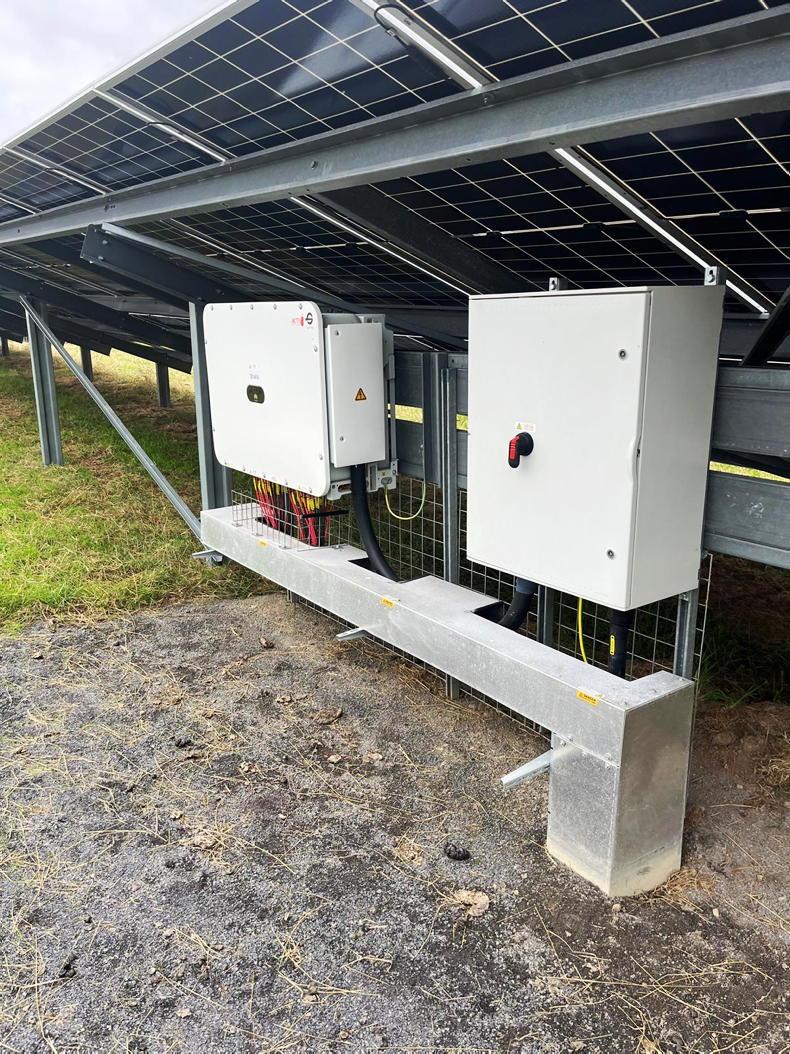
This meant that all solar electricity must be consumed on site. Any surplus generation would have to be curtailed automatically to avoid it being exported.
While this sounds simple, this solution required extensive discussions with ESB Networks, explained Martin. ESB Networks needed to be satisfied that no export from the solar farm would be possible under any circumstances.
This required a bespoke control system, designed to ensure that if site demand dropped below renewable generation, the solar farm’s output would be reduced, or “throttled down”, to maintain zero export.
Construction and commissioning
Construction of the solar farm began in early 2024. The groundworks involved driving approximately 2,300 piles between 1.5 and two metres deep, tailored to soil conditions identified through geotechnical surveys. Because the site is not level, the solar arrays were installed to follow the natural contours of the land rather than levelling the field. The panels face south to maximise generation. Power is fed to the main site via a 250 metre underground medium-voltage cable.

The solar farm was energised on 22 March 2025. Between commissioning and June, the system generated just over 400,000 kilowatt-hours. On average, the solar farm is expected to supply around 30% of the site’s annual electricity needs. When combined with wind generation, renewables could provide up to 70% of total demand.
Lost power
Because the solar farm is prohibited from exporting to the grid, around 1.7 gigawatt-hours of potential annual generation will be curtailed. This is energy that could otherwise have been exported and sold. Despite this limitation, the project is still expected to achieve payback in around 4.8 years. Even with these restrictions, the solar project will deliver high carbon savings, around 959,461kg of CO2 avoided each year
Rather than waste the surplus generation, Liffey Meats is exploring options such as installing a large-scale battery storage system. Storing excess solar power may allow the site to reduce imports during low generation periods.
The land where the solar farm is installed in is owned by Liffey Meats, and sheep graze beneath the panels. The panels typically need cleaning once a year to remove bird droppings and dust.
Backup generation
Liffey Meats also has substantial on-site backup generation capacity. These generators can supply the site during outages and can be called upon to export electricity to the grid if required.
The integration of multiple generation sources, coupled with the need to comply with REFIT and zero-export rules, made the site one of the more complex private renewable installations in the country.



SHARING OPTIONS