

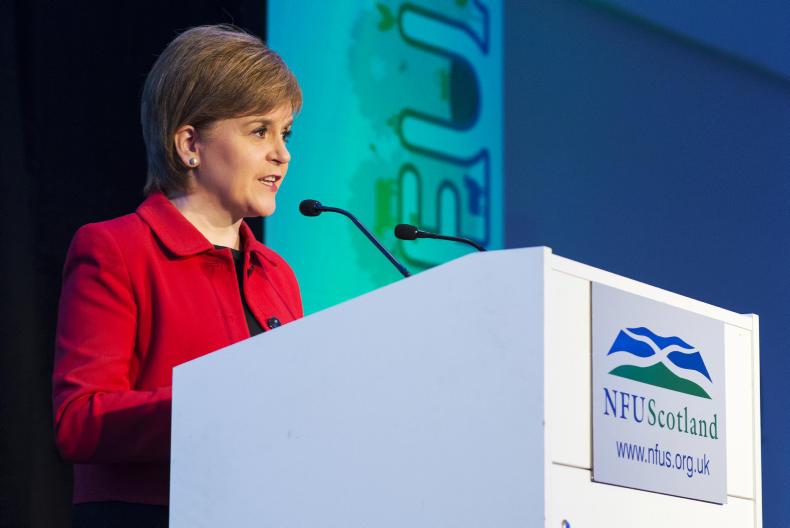
Scotland’s first minister Nicola Sturgeon has called for a second independence referendum in Scotland.
She is calling for a vote between the autumn of 2018 and the spring of 2019, with the vote no sooner than autumn next year but before the UK leaves the EU in 2019.
Sturgeon says that Britain’s vote to leave the EU means that Scottish voters need to have a choice between a hard Brexit and an independent Scotland.
ADVERTISEMENT
Next week, Sturgeon will seek authority from the Scottish Parliament for a Section 30 order, which would start the process for a second independence referendum. The pro-independence SNP and Green party make up a majority in the Scottish Parliament, so this is likely to go through.
The UK government will then also need to be involved in the process. Prime minister Theresa May will find it politically difficult to refuse a referendum, but the key negations will be over the timing of the vote.
This comes after Labour leader Jeremy Corbyn announced at the weekend that he would not stand in the way of a second referendum in Scotland.
Recent polls show that there is a narrow lead staying within the UK.
This content is available to digital subscribers and loyalty code users only. Sign in to your account, use the code or subscribe to get unlimited access.
The reader loyalty code gives you full access to the site from when you enter it until the following Wednesday at 9pm. Find your unique code on the back page of Irish Country Living every week.
CODE ACCEPTED
You have full access to the site until next Wednesday at 9pm.
CODE NOT VALID
Please try again or contact support.
Scotland’s first minister Nicola Sturgeon has called for a second independence referendum in Scotland.
She is calling for a vote between the autumn of 2018 and the spring of 2019, with the vote no sooner than autumn next year but before the UK leaves the EU in 2019.
Sturgeon says that Britain’s vote to leave the EU means that Scottish voters need to have a choice between a hard Brexit and an independent Scotland.
Next week, Sturgeon will seek authority from the Scottish Parliament for a Section 30 order, which would start the process for a second independence referendum. The pro-independence SNP and Green party make up a majority in the Scottish Parliament, so this is likely to go through.
The UK government will then also need to be involved in the process. Prime minister Theresa May will find it politically difficult to refuse a referendum, but the key negations will be over the timing of the vote.
This comes after Labour leader Jeremy Corbyn announced at the weekend that he would not stand in the way of a second referendum in Scotland.
Recent polls show that there is a narrow lead staying within the UK.
If you would like to speak to a member of our team, please call us on 01-4199525.
Link sent to your email address
We have sent an email to your address. Please click on the link in this email to reset your password. If you can't find it in your inbox, please check your spam folder. If you can't find the email, please call us on 01-4199525.
ENTER YOUR LOYALTY CODE:
The reader loyalty code gives you full access to the site from when you enter it until the following Wednesday at 9pm. Find your unique code on the back page of Irish Country Living every week.
SHARING OPTIONS