


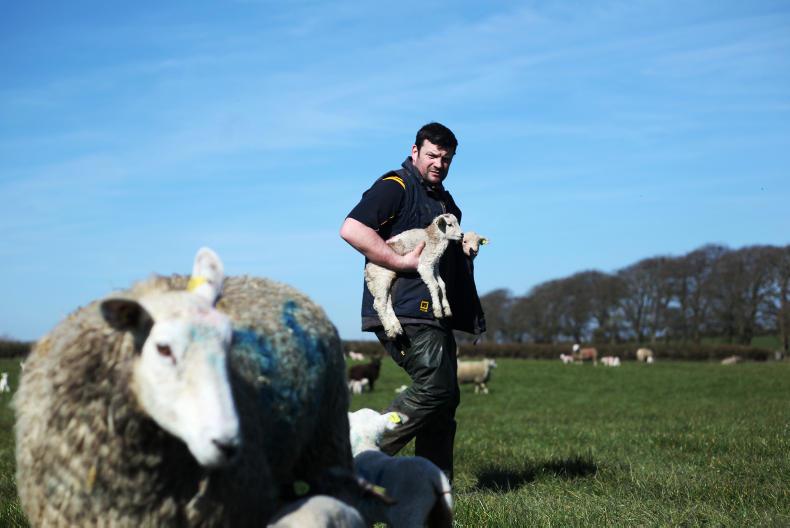
Last week I attended the Teagasc National Sheep Conference in Carlow, which attracted a large crowd.
The presentations on the night included papers on key flock decisions to optimise lambing performance, strategies for dealing with orphan lambs, a descriptive study of the mortality in 33 Irish sheep flocks and making the most of a farming resource.
All of the presentations enlightened me on their topics but, in particular, I enjoyed the last presentation by John Doyle, a sheep farmer from Bunclody, Co Wexford, who, like myself, is taking part in the Teagasc BETTER farm sheep programme.
He described himself as originally being a meal-mad farmer who thought meal was the only way to get lambs finished but who now grows more grass to finish his stock for him.
The conference was an enjoyable evening and a great occasion to socialise with other farmers and individuals with similar interests.
Speaking of growing grass, I have dusted off the plate meter and begun to walk the fields. The covers at present are a testament to the mild winter we have had.
At present, my average farm cover is 592kg DM/ha. I would like to have at least an average farm cover of 700kg to 800kg DM/ha at lambing time.
I aim to apply three quarters of a bag of urea over the drier fields of the farm in the next 10 days. This will help boost covers sufficiently to enhance the growth rates during March. The remaining fields will get an application as they become more trafficable.
Last week, we scanned the repeats and the ewe lambs. I was very happy with how the scan went, with 80% in lamb after a three-week mating period. All the empties have been removed to a separate field and are receiving good quality silage.
The empty mature ewes have been sent to the factory, while the ewe lambs will be retained and given a second chance next breeding season. Those that are in lamb will remain on the forage rape with access to first-rate silage and 300g/hd/day of a ration.
The sheep sheds are now being cleaned out to remove the dung that has built up so far over the housing period before the lambing starts at the end of the month. The pens will be disinfected after they are cleaned out to help prevent any carryover of disease into the lambing.
I am also going over the list of products used last spring during the lambing and making sure there are sufficient quantities of each stocked before lambing starts. Hopefully, my orders will be sufficient and I will not run out during the very busy few weeks that lie ahead.




SHARING OPTIONS