



At time of writing (4 April) I am balancing on a knife edge. On one side is lush green pasture, complete with firm ground conditions to ensure maximum grass utilisation.
On the other side (as I listen to the rain pelting off the Velux window above my head) is the unenviable prospect of turning cattle out of the house a few days too early and me forlornly looking on as heifers and bullocks destroy acres of perfect grazing in days.
Added to this precarious tightrope act is the rapidly diminishing pile of black bales. I suppose counting them three times per day won’t make them last any longer, but I do it anyway.
Double-edged
The long, wet winter has been, to some extent, a double-edged sword. Certainly, there are huge disadvantages to housing all the cattle by early November, not least among them being extra silage and straw used, as well as the headache of having to lower the slurry tank in the middle of March.
But the relatively mild winter has translated into decent covers of grass, which brings a degree of reassurance to springtime decision making.
Weights
Just before the lambing kicked off at the end of February, I took the chance to weigh two pens of male cattle.
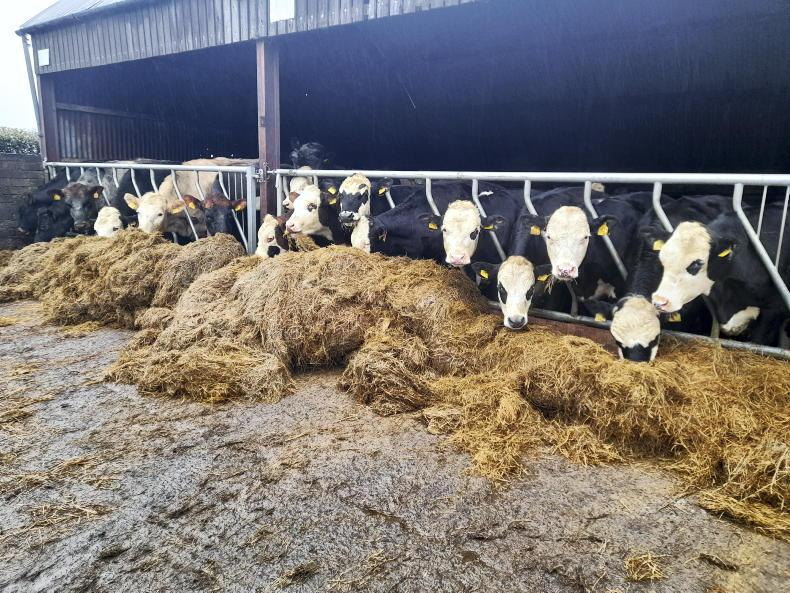
I wasn’t overly confident about the performance of the young Hereford calves that we reared last April but was eagerly anticipating the weighbridge scores for the pen of heavy boys. They looked well in the way that big cattle do – a bit awkward getting up off the slats, and had that slow, lumbering way of moving around the pen.
Shock horror, Derek got his predictions all wrong!
The whiteheads had achieved 0.75kg per day in the three months from mid-November, on just under 1.5kg of meal and ad lib silage. By contrast, the older cattle only managed 0.5kg per day on double this amount of meal.
After much head scratching there are possibly two contributing factors.
Firstly, I have learned over the years to play a longer game and look at previous weighings. For instance, these cattle had done 0.9kg/day from September through to housing in early November, and sometimes a strong performance for a period is followed by an over-compensation afterwards.
However, the second option has more merit, and I suspect it has everything to do with slatted accommodation.
When I look at past figures, light cattle are the only ones to achieve desirable performances on my slats (0.75kg on limited concentrate amounts).
I have looked at trials that claim no difference in weight gains between various floor types, but I am not convinced. I wonder should I invest in rubber matting for some of my slats? Would it mean heavier cattle would match younger ones for weight gains?
And is a relatively poor performance over the winter cancelled out by compensatory growth at grass?
Premium
Whatever the answers, I’m fairly pleased about my decision not to finish them out of the house in order to receive the £75 per head beef payment.
I sort of fell between two stools and wondered if some of them might beef before going to grass, but after this mediocre showing, I needn’t have worried.
Therefore, they’ll be turned out, probably weighing around 630kg and the updated plan (it may change yet again) is to feed them a bit at grass and observe as they hit 2kg per day, with this monstrous compensatory weight gain seeing me laughing all the way to the bank.
It’s bound to happen, isn’t it?


SHARING OPTIONS