After the high-level theory of workshops in Brussels last week, we were brought back to earth with a dull thud when we weighed the lambs on Saturday.
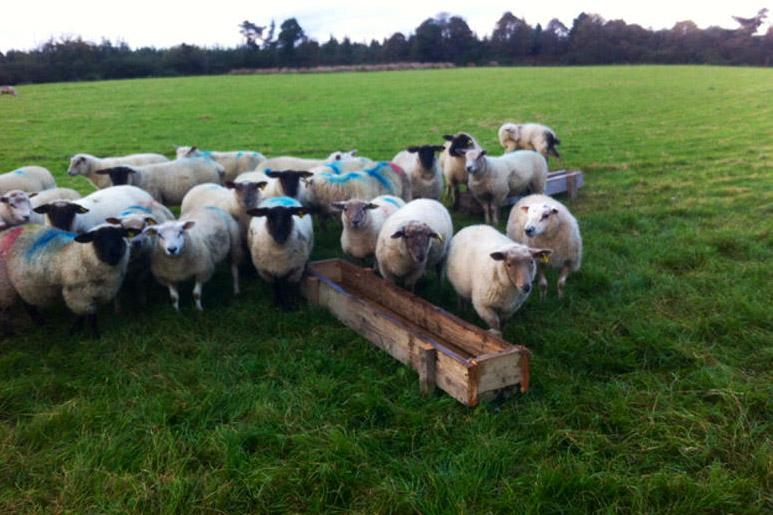
The first mistake was admiring them out in the field. To the naked eye, they looked like they had done well. Expectations were high then that they would look the same on the weighing scales.
The reality was that very few weighed as well as we had hoped. Some are a few weeks off butcher weight, more a few months off factory weight, and we’ll be looking at a third category until Santa has come and gone.
We had hoped to shift everything before December, so an improvised plan has to be put in place.
Extra concentrate will be given, a cobalt drench will be administered every two weeks, instead of every three, and we’ll get in some fodder beet to supplement decreasing grass supplies. Given how the store lambs in particular have performed, this is almost a damage limitation exercise now.
This is another mistake we won’t make next year
However, you have to take something positive from whatever happens. So, if nothing else, this poor lamb performance has reminded us that we’re still just starting out and have lots of the basics to get right yet.
Not for the first time, I find myself thinking: “This is another mistake we won’t make next year.”
Better news
Our experience with the lambs supports the view we took that lambing earlier would suit our system better. This year, we lambed late in April. It was our first year lambing, so we were really just making it up as we went along. In 2017, however, we’ll be 12 months wiser and much better prepared.
All sheep will lamb from 1 March, with ewe lambs due to start lambing on 14 March. It will be extra work but should give us a head start compared with 2016. Lambs will subsequently be weaned earlier, creep-fed to push them on and, hopefully, all gone out the gate by October – either finished or as stores.
Things probably won’t run as smoothly as this. But we’re aiming for it anyway and unlike the current weight of lambs, expectations are set much more realistically.
To kickstart this plan, we left out the rams on 1 October. We’re using Lleyn rams and choose them for two main reasons:
To develop our own maternal ewe lambs for breeding stock.To make outside lambing easy. A third reason is probably the very reputable supplier of these rams.
I should mention here that the Belclare-Texel ewe lambs we bought also came from a very reputable supplier (and Irish Farmers Journal colleague).
Between the two, I’m hoping we have the nucleus of a high-quality flock. And we’ll have fewer disappointments next year when it comes to weighing near-fit lambs, both by eye and on the scales.
Kieran Sullivan and his brother farm part-time in Co Waterford. You can follow him on Twitter: @kieran_sullivan
Read more of Kieran’s articles here.
After the high-level theory of workshops in Brussels last week, we were brought back to earth with a dull thud when we weighed the lambs on Saturday.
The first mistake was admiring them out in the field. To the naked eye, they looked like they had done well. Expectations were high then that they would look the same on the weighing scales.
The reality was that very few weighed as well as we had hoped. Some are a few weeks off butcher weight, more a few months off factory weight, and we’ll be looking at a third category until Santa has come and gone.
We had hoped to shift everything before December, so an improvised plan has to be put in place.
Extra concentrate will be given, a cobalt drench will be administered every two weeks, instead of every three, and we’ll get in some fodder beet to supplement decreasing grass supplies. Given how the store lambs in particular have performed, this is almost a damage limitation exercise now.
This is another mistake we won’t make next year
However, you have to take something positive from whatever happens. So, if nothing else, this poor lamb performance has reminded us that we’re still just starting out and have lots of the basics to get right yet.
Not for the first time, I find myself thinking: “This is another mistake we won’t make next year.”
Better news
Our experience with the lambs supports the view we took that lambing earlier would suit our system better. This year, we lambed late in April. It was our first year lambing, so we were really just making it up as we went along. In 2017, however, we’ll be 12 months wiser and much better prepared.
All sheep will lamb from 1 March, with ewe lambs due to start lambing on 14 March. It will be extra work but should give us a head start compared with 2016. Lambs will subsequently be weaned earlier, creep-fed to push them on and, hopefully, all gone out the gate by October – either finished or as stores.
Things probably won’t run as smoothly as this. But we’re aiming for it anyway and unlike the current weight of lambs, expectations are set much more realistically.
To kickstart this plan, we left out the rams on 1 October. We’re using Lleyn rams and choose them for two main reasons:
To develop our own maternal ewe lambs for breeding stock.To make outside lambing easy. A third reason is probably the very reputable supplier of these rams.
I should mention here that the Belclare-Texel ewe lambs we bought also came from a very reputable supplier (and Irish Farmers Journal colleague).
Between the two, I’m hoping we have the nucleus of a high-quality flock. And we’ll have fewer disappointments next year when it comes to weighing near-fit lambs, both by eye and on the scales.
Kieran Sullivan and his brother farm part-time in Co Waterford. You can follow him on Twitter: @kieran_sullivan
Read more of Kieran’s articles here.






SHARING OPTIONS