



I spend my life looking forward to sunlit September mornings, with the dew glistening on the grass and the mist melting over the turning trees.
And there have been plenty of those this year to delight the many people who, like me, love the colourful transition from late summer to early autumn.
The frenzy of summer is replaced by a more relaxed time, with the harvest wound up and the earthy season of planting just beginning.
Yet when autumn does arrive, I never think it is all that great, which is a pity. In reality, it’s never as relaxing, as in my mind’s eye, as September is always a very busy time.
I do recall a wise neighbour telling me that you can leave such recreational ideas and plans too late
Nonetheless, I dream of waking up on a misty September morn, with the promise of a beautiful day, on a boat moored amongst the gently swaying reeds of the Shannon. That’s probably as good as it gets for me and, of course, it is reasonable and doable.
Next year, I say but next year never comes.
I do recall a wise neighbour telling me that you can leave such recreational ideas and plans too late. And how right Greg is, as life is ever-changing and spending my Septembers on the Shannon may not be part of the grand plan. I could run out of time.
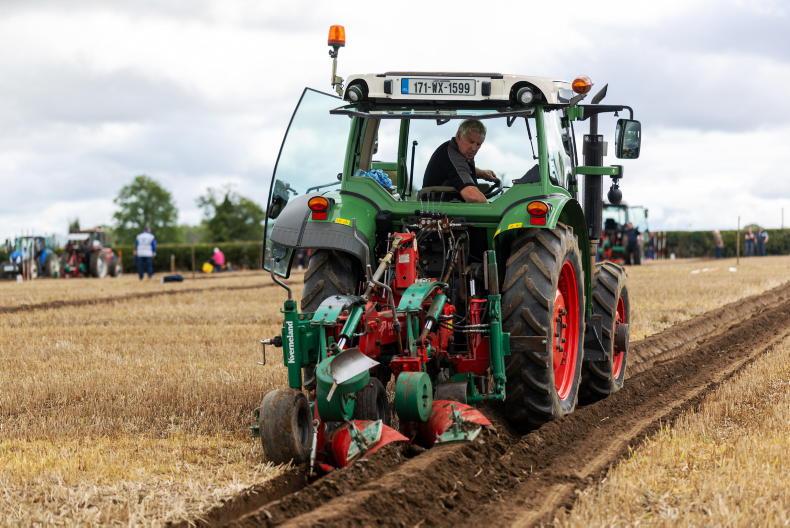
Anyhow, back to the September of 2026. Arguably in a year like this with an early bean harvest, it is possible to be all sown up in the darling month of September. And with min-till, this is probably a reasonably good idea as opportunities greatly decline as we slip into October. Your neighbours can stroke away with the plough and one-pass combination, while you are waiting for stale seedbeds to dry off which may not happen as readily in October. Or it may not happen at all.
Cultural control
But while early sowing may be attractive, it is far from best cultural practice. I’m okay with sowing winter barley in September, especially if it is a BYDV tolerant variety. With the recent mild winters, virus-carrying aphids are a real problem and crops emerging before mid-October are most at risk. Insecticides are hit or miss and I try to avoid them, if at all possible.
Our best wheat yields are nearly always October-sown
It takes a frost of -4°C to kill aphids. And BYDV tolerance does not mean total immunity to this serious virus, but it certainly helps. It’s a useful tool.
However, sowing wheat in September is a different story and we do not have BYDV tolerant varieties as yet. But aphids may be the least of our problems with September-sown wheat. Diseases such as take-all, septoria and yellow rust are also much more prevalent as are grassweed issues. Our best wheat yields are nearly always October-sown (and ploughed).
For all these reasons, I try to limit the temptation to bull on with September sown wheat (Scope) to those fields that are following oilseed rape. Early sowing gets the wheat away quickly before the slugs surface.
Also, ring-rolling is usually possible in September which helps greatly with slug control. It’s rare to rock and roll in October.
Once October arrives, it’s full steam ahead and ready to grab every opportunity. The remaining first wheats (Kubik) are now sown, into sticky seedbeds. Later, second wheats (Rebellion, Latitude dressed) will complete the autumn sowing. Or at least that’s the plan.
But as my neighbour said about recreational activity, you could leave min-till too late. This autumn could close down quickly and that’s without even mentioning El Niño. As it is, the land is rewetting faster than an Offaly bog.


SHARING OPTIONS