



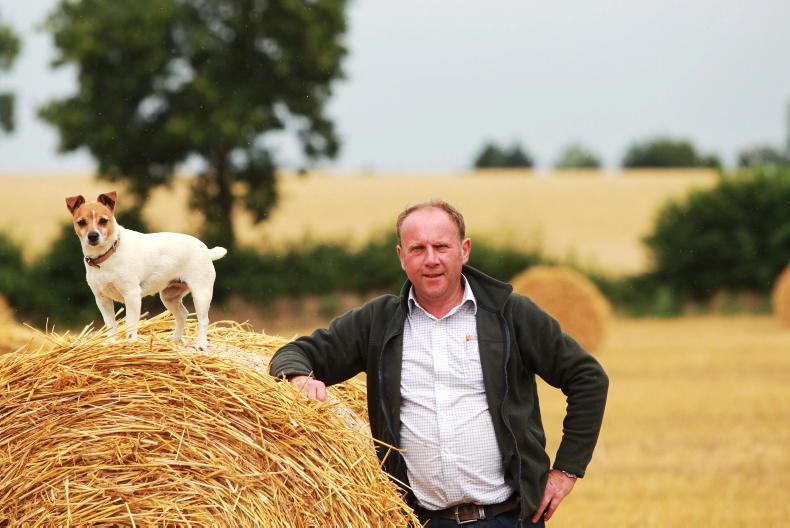
As a young farmer I was all into technology, almost in a pioneering way. I had proportional output on the sprayer and weigh cells on the spreader, while most were still talking gallons per acre and manually calibrating the spreader in hundredweights per acre. Theirs was a basic suck-it-and-see approach. They weren’t even analogue, while I was digital.
The Motorola brick mobile phone came along and, yep, I had one of the first. Then before you could say Bill Gates, my progress stopped dead. I didn’t want a smartphone that was a radio and a messaging device and a calculator and a camera. I already had all these gadgets.
Nowadays I do have an Apple iPhone and can find my way around it in the same way as a dinosaur might try to squeeze down the Dublin Port Tunnel at rush hour. We’re not a good fit with different worlds colliding.
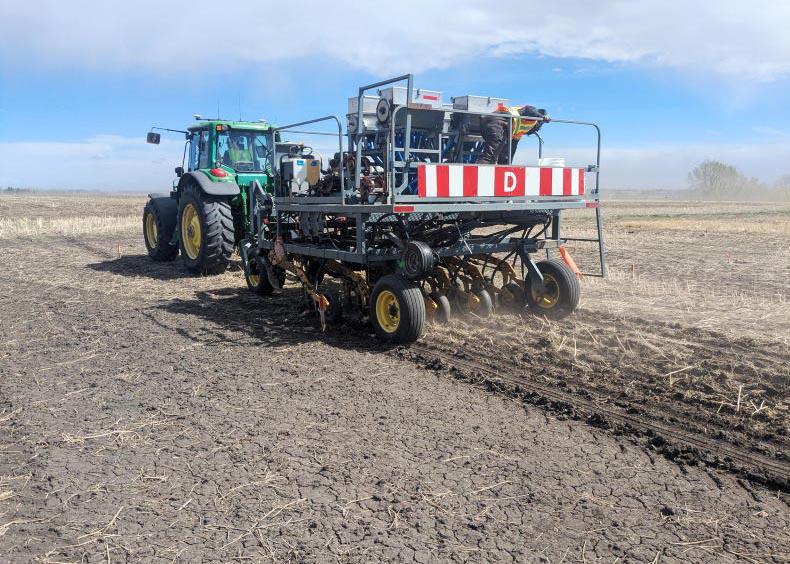
Autosteer for tractors first appeared maybe 10 years ago. But I didn’t need it. I could sow as straight as any man, so what would I be doing with it? In 2018, when we last bought a tractor (not counting the Massey), it came guidance ready. But I wasn’t ready. I still faithfully followed the seed drill marker.
However, as any old hand will know, it’s not always plain sailing following the marker scratch in the ground. Sometimes it’s virtually impossible to see, particularly if the soil is cloddy. Or there are certain fields that always catch the low equinox sun while sowing in September. On one March morning this year, I had to abandon the job as I hadn’t a clue where I was going. And sowing the oilseed rape in the dust this August was pure guesswork.
It was getting to the stage that I was like a biodynamic farmer burying a bullock’s horn in a moonlit field at midnight so the gods might empower me to see the marks in the morning.
I had to do something. First, I nervously rushed to the toilet and then plucked up the courage to ring Niall in Fendt dealers Atkins to train me in. To cut a long story short, Niall was patient with me for a few hours and then let me off sowing. It’s kinda so far so good, but I’ve made mistakes which will be evident for all to see. I didn’t make that many before.
Anyhow, the busy autumn workload was progressing along quite nicely, until the unexpected arrival of the monsoon season. Maybe I was taking the weather for granted, but I think it surprised Met Éireann as well. They’re not at their best of late and we’re seeing more yellow warnings than Spanish footballer Sergio Ramos. Storm Amy has messed it up for min-till. We will plough on, but I don’t have massive appetite for mucking in wheat at current prices.
Brussels should think about re-introducing a voluntary set aside payment as a supply management tool. But whatever about wheat, growing oats is a dead loss as there’s total oversupply. I won’t be planting any and it’s with little regret, as oats can cause more problems than they’re worth.
Despite plant growth regulators (PGRs), lodging is still an issue and flattened crops are a problem for subsequent tillage operations. And then there’s the perennial problem of combining oats. The straw is typically damp and combine losses are always an issue, as it seems impossible to reduce losses to an acceptable level (but combine losses were high in all the cereals this year).
Maybe the problem is too much technology and I need to come out from behind the cab screens and have a good old-fashioned flitter under the combine swath.


SHARING OPTIONS