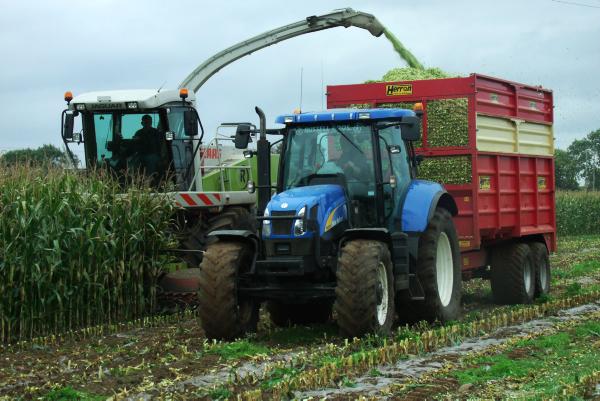
With a break in the weather looming, ground conditions good and the maize nearing the optimal stage for harvest, the decision was made to ensile it on 30 September.
The cobs were well filled, with no juice when the grain was squeezed between finger and thumb. It could be argued that the plant was still a bit green, although I think if you wait too long for the plant to die down, feed value is compromised. Having said that, no effluent ran out of the clamp, so dry matter should be over 30%. A rough calculation would indicate that the crop yielded just over 18t/acre.
It has been an excellent year for maize but, for me, it has probably been a case of good luck more than good management. We have from now until spring to decide whether to grow maize again or go back to wheat, which tends to be a more reliable alternative.
Due to the exceptional weather conditions in September, low yielders were kept out day and night with the high/fresh group still out during the day and in at night. However, since the start of October, the high group are now fully housed and the low group in at night.
With a good autumn, I think that we can easily over-estimate the potential of grass at this time of year. I certainly think this has been the case here.
Cows are milking well to average 32 litres, but butterfat is frustratingly low at 3.75%. With a low base price, this is a penalty I could well do without. Now that the high group is fully housed, with more fibre in the diet, hopefully butterfat will correct itself.
Protein on the other hand is holding up well at 3.35%. Overall milk solids are 2.27kg per cow with a feed rate of 0.4kg concentrate per cow.
The winter diet for the high group is:
7.5kg of a 24% blend,2.5kg of rolled wheat,0.5kg of glycerine,12kg of maize,25kg of first-cut silage.This gives a total intake per cow of 18.8kg dry matter per day.
In the first 50 days post-calving, cows were fed a flat rate of 6kg in the parlour. This is a 45-litre diet and, above this, cows are topped up at 0.45kg/litre to a maximum of 10kg. From day 51, they are fed-to-yield at 0.45kg per litre above 32 litres. If they need more, they have to eat it at the trough. Over the next month, the level of maize will be increased to 12kg/cow and good quality second-cut silage will be introduced.
Calving
Calving is under way and days-in-milk have dropped to 170. To date, calving has been going well, with very few problems. There have been very few assisted calvings and very little disturbed sleep. A lot has to be said for easy-calving bulls. So far, 40 cows have calved; two sets of twins, one held cleaning, one twisted calf bed and two still births.
The heifer to calf ratio is good, although the last four heifers have calved to a stock bull and have had bull calves. Maybe this disproves the myth that bulls breed more heifer calves. Up to now, no calves have been lost in the rearing stage but, of course, this will become more of a challenge as the year progresses.
Northern Ireland man Peter Kennedy, who formerly worked with the agriculture team in Dunbia and most recently was the Agriculture Manager in red meat for Tesco has joined the Marks & Spencer agricultural team.
He will be responsible for raw material sourcing in the pig and poultry sectors as well as raw material sourcing of all proteins across Ireland north and south.
Treating fluke
this winter
Despite the dry summer and autumn weather, it is still necessary to discuss with your vet or other suitably qualified professional the possible products that should be used to control fluke in livestock this winter.
As reported on page 61, there are also issues with increasing resistance to some products and the limited range of treatments that can be used in dairy herds.
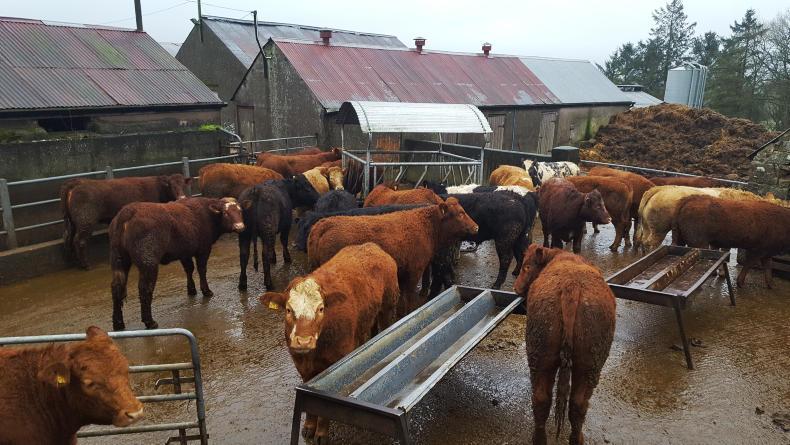
For suckler producers, there are a number of options. Some will wait until around eight weeks after housing and treat with products containing closantel (eg Flukiver), nitroxynil (Trodax) or oxyclozanide (Zanil or Levafas Diamond), which will also kill rumen fluke.
Other options include using a product containing triclabendozole (eg Fasinex) at around two weeks post-housing or going with some of the other products eight weeks apart.
Farmers should note the long meat withdrawal period of some of these dosing programmes.
Cows that are out-wintered should be treated for liver fluke in the autumn and the spring.
For store or finishing beef cattle, a number of farmers now favour using products at housing that kill mature fluke along with worms (eg Closamectin, Ivomec Super, Animec Super), and then following this up with an oxyclozanide product eight weeks later to kill the remainder of the liver fluke and also rumen fluke.
Every farm is different, so professional advice should always be sought.
UGS autumn visit
The Ulster Grassland Society (UGS) is hosting its autumn event on the dairy farm of Harold and Helen Johnston, Ahoghill on Wednesday 29 October at 10.45am.
The visit will focus on current management of the 220-cow herd, which has a rolling average yield of 8,246 litres/cow.
Of particular interest will be how grazed grass and silage have been made best use of, and how regular grass measuring over the grazing period has improved sward quality.
For further details, and to book your place, please contact UGS secretary George Reid on 07920 037 910.
With a break in the weather looming, ground conditions good and the maize nearing the optimal stage for harvest, the decision was made to ensile it on 30 September.
The cobs were well filled, with no juice when the grain was squeezed between finger and thumb. It could be argued that the plant was still a bit green, although I think if you wait too long for the plant to die down, feed value is compromised. Having said that, no effluent ran out of the clamp, so dry matter should be over 30%. A rough calculation would indicate that the crop yielded just over 18t/acre.
It has been an excellent year for maize but, for me, it has probably been a case of good luck more than good management. We have from now until spring to decide whether to grow maize again or go back to wheat, which tends to be a more reliable alternative.
Due to the exceptional weather conditions in September, low yielders were kept out day and night with the high/fresh group still out during the day and in at night. However, since the start of October, the high group are now fully housed and the low group in at night.
With a good autumn, I think that we can easily over-estimate the potential of grass at this time of year. I certainly think this has been the case here.
Cows are milking well to average 32 litres, but butterfat is frustratingly low at 3.75%. With a low base price, this is a penalty I could well do without. Now that the high group is fully housed, with more fibre in the diet, hopefully butterfat will correct itself.
Protein on the other hand is holding up well at 3.35%. Overall milk solids are 2.27kg per cow with a feed rate of 0.4kg concentrate per cow.
The winter diet for the high group is:
7.5kg of a 24% blend,2.5kg of rolled wheat,0.5kg of glycerine,12kg of maize,25kg of first-cut silage.This gives a total intake per cow of 18.8kg dry matter per day.
In the first 50 days post-calving, cows were fed a flat rate of 6kg in the parlour. This is a 45-litre diet and, above this, cows are topped up at 0.45kg/litre to a maximum of 10kg. From day 51, they are fed-to-yield at 0.45kg per litre above 32 litres. If they need more, they have to eat it at the trough. Over the next month, the level of maize will be increased to 12kg/cow and good quality second-cut silage will be introduced.
Calving
Calving is under way and days-in-milk have dropped to 170. To date, calving has been going well, with very few problems. There have been very few assisted calvings and very little disturbed sleep. A lot has to be said for easy-calving bulls. So far, 40 cows have calved; two sets of twins, one held cleaning, one twisted calf bed and two still births.
The heifer to calf ratio is good, although the last four heifers have calved to a stock bull and have had bull calves. Maybe this disproves the myth that bulls breed more heifer calves. Up to now, no calves have been lost in the rearing stage but, of course, this will become more of a challenge as the year progresses.
Northern Ireland man Peter Kennedy, who formerly worked with the agriculture team in Dunbia and most recently was the Agriculture Manager in red meat for Tesco has joined the Marks & Spencer agricultural team.
He will be responsible for raw material sourcing in the pig and poultry sectors as well as raw material sourcing of all proteins across Ireland north and south.
Treating fluke
this winter
Despite the dry summer and autumn weather, it is still necessary to discuss with your vet or other suitably qualified professional the possible products that should be used to control fluke in livestock this winter.
As reported on page 61, there are also issues with increasing resistance to some products and the limited range of treatments that can be used in dairy herds.
For suckler producers, there are a number of options. Some will wait until around eight weeks after housing and treat with products containing closantel (eg Flukiver), nitroxynil (Trodax) or oxyclozanide (Zanil or Levafas Diamond), which will also kill rumen fluke.
Other options include using a product containing triclabendozole (eg Fasinex) at around two weeks post-housing or going with some of the other products eight weeks apart.
Farmers should note the long meat withdrawal period of some of these dosing programmes.
Cows that are out-wintered should be treated for liver fluke in the autumn and the spring.
For store or finishing beef cattle, a number of farmers now favour using products at housing that kill mature fluke along with worms (eg Closamectin, Ivomec Super, Animec Super), and then following this up with an oxyclozanide product eight weeks later to kill the remainder of the liver fluke and also rumen fluke.
Every farm is different, so professional advice should always be sought.
UGS autumn visit
The Ulster Grassland Society (UGS) is hosting its autumn event on the dairy farm of Harold and Helen Johnston, Ahoghill on Wednesday 29 October at 10.45am.
The visit will focus on current management of the 220-cow herd, which has a rolling average yield of 8,246 litres/cow.
Of particular interest will be how grazed grass and silage have been made best use of, and how regular grass measuring over the grazing period has improved sward quality.
For further details, and to book your place, please contact UGS secretary George Reid on 07920 037 910.
SHARING OPTIONS