


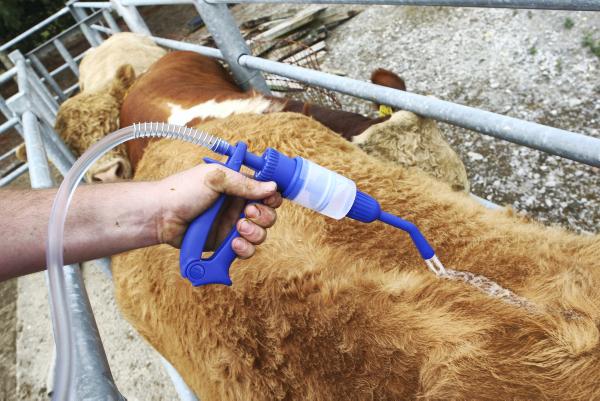
It is the time of year for lungworm, but this year we are noticing a higher than normal level, with many cattle and calves coughing recently.
Lungworm characteristically sounds like a dry “barking” cough, often with the neck stretched out, the mouth open and the tongue out. It starts with some coughing as they run up to the trough and, if untreated, can progress to severe coughing and pneumonia.
An adult lungworm is about an inch long and only as thick as a hair. Lung damage comes from huge numbers of worms causing inflammation as the worm moves and writhes in the sensitive airways in the lungs, which induces coughing (hoose).
As the number of worms increases in the lung so does the damage done to the lung tissue. This, coupled with the dead worms decaying in the airways, eventually sets up localised infections which will turn into pneumonia and, in the worst case scenario, death.
Where do cattle get the lungworms? Lungworm larvae are passed in cattle faeces from infected cattle and these can live on grass for varying periods. They wait until they are eaten and then migrate into and through their new host’s lungs.
The type of lungworm infection depends on the amount of larvae on the grass. If there is a high level of larvae, these immature larvae alone can cause coughing even before they become adults due to the sheer numbers burrowing through the lungs.
We see this syndrome more in adult cows as they are generally immune to the adult worm form of the disease. Hoose is seen mostly in late August and September because the worm burden on the pasture has built up to dangerous levels over the summer. In the colder months, the larvae do not survive and sometimes hibernate to emerge the following spring.
The commonest way to prevent hoose is to dose cattle regularly with wormer products. There are several products on the market and we can group them into long-acting (like ivermectins, doramectin, moxidectin and eprinomectin) or those with little or no persistent activity (like levamisole and white drenches).
All manufacturers will have a recommended dosing interval for their brand and this is generally based upon the period of drug activity, plus three weeks (the generally accepted time cattle can pick up worms without any undesirable effects).
It is important to allow young cattle to pick up some worms for a controlled period at least once a year so as to allow the calves to produce their own immunity to the worms. We sometimes find this is not happening due to the efficiency and persistency of modern worming products with the result that first calving heifers are taking lungworm or gut worm infections.
Cough
If cattle have a significant lungworm burden, it’s not uncommon for farmers to notice that the cattle cough worse after dosing (sometimes taking up to a week to develop) and it is assumed the wormer has not worked. What is actually going on is that the dead worms are decaying in the lungs and causing localised infections, which can turn into pneumonia. It can be a number of days post administration before drugs reach peak levels in the animal and achieve the greatest kill of worms.
It is common practice to use Levamisole if the cattle are heavily infected with lungworms. Because of the way levamisole kills lungworm, it reduces the risk of secondary infection and increases the opportunity for dead lungworm to be coughed out of the lungs.
Sometimes, under veterinary supervision, it may be advisable to give a long-acting antibiotic with the wormer to help prevent any secondary infections from the dead worms.
Weather
With the recent period of good weather, we have witnessed increased field-work with third and fourth silage cuts, ploughing and reseeding taking place on many farms. Unfortunately, this has perhaps extended the ideal dosing period on many farms and, without noticing, lungworm challenges have increased with many stock.
Don’t put off dosing cattle that are coughing this time of year just to try and get them into the house and save the cost of a dose. Cattle housed with lungworm are more prone to taking pneumonia in the house, and if they have been vaccinated against pneumonia the vaccines will not have the same protection in the damaged lungs.
It is good practice to house cattle free of any worm burden to minimise stress. If there is not a perceived risk from a high lungworm challenge, that would necessitate the use of levamisole/antibiotic treatment, it may be economical to use one of the longer-acting wormers like doramectin, moxidectin or eprinomectin.
Their increased persistency in the animal (five weeks for many of the main parasites) may mean they will not require a further treatment for worms at housing, potentially saving the cost of another dose. The most appropriate fluke and ectoparasite programme can then be chosen for these animals.
Sampling
Clinical signs from the field (coughing, etc) are often the best guide when considered along with your routine worming protocols to determine your level of risk. Faecal sampling can help, although we often find the damage has already been done before significant levels of lungworm appear in the samples.
However, in our experience this autumn, increased surveillance through routine sampling has helped many of our clients understand both the level of challenge they have on their farms from a range of parasites (lungworm, stomach worms, tapeworms, stomach fluke, liver fluke and coccidia), as well as evaluate the effectiveness of their current worming regime.
*Craig McAlister, MVB MRCVS, is a director of Parklands Veterinary Group, a mixed practice based in Co Tyrone.


SHARING OPTIONS