



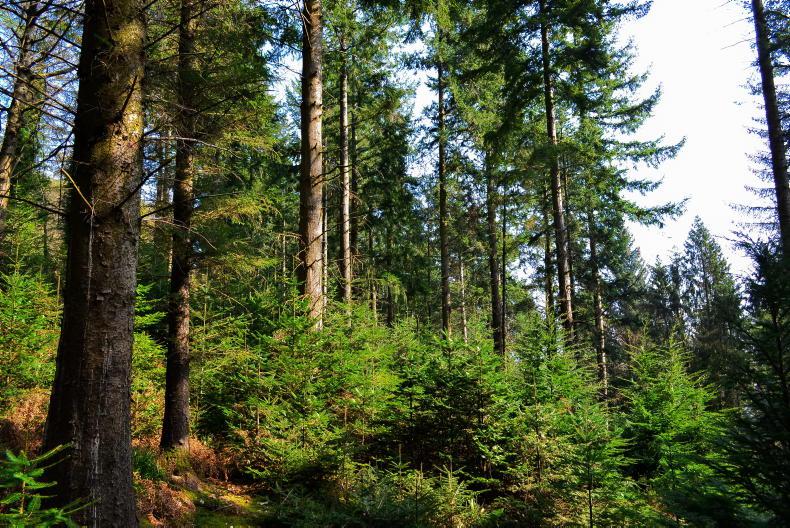
Coillte purchased close to 3,940ac of standing forests and lands for planting in the three years from 2020 to 2022 inclusive. The State forestry body sold around 2,606ac in the same three-year period. This meant that the forestry company purchased a net total of 1,334ac between 2020 and 2022.
Coillte supplied the information in response to a parliamentary question from Sinn Féin’s agriculture spokesperson, Claire Kerrane. The Coillte data shows that the company bought 914ac in 2020, 1,442ac in 2021 and 1,583ac last year.
The biggest purchases by Coillte were in Kerry, where the company bought a total of 1,323ac over the three years.
Cork and Mayo also saw significant purchases by Coillte over the three years. A total of 378ac were bought by Coillte in Cork, while 376ac were purchased in Kerry. Offaly, Donegal and Cork topped the rankings in terms of land sales by Coillte.
The figure for Offaly was 566ac over the three years, with the corresponding figures for Donegal and Cork at 307ac and 255ac respectively.
Coillte statement
Coillte stated that the lands it purchased included a mix of forestry plantations and holdings suitable for planting.
“Coillte buys and sells lands for a range of reasons, including the expansion of our forests, facilitation of our neighbours, local communities, schools and businesses, and to support strategic national objectives such as tourism, regional development, renewable energy and other infrastructure projects,” Coillte stated. The State forestry body controls around 1.08m acres of land.
Earlier this year, the Tánaiste Micheál Martin suggested that Coillte should purchase more land to plant for forestry.
No information was provided on the prices Coillte paid for the lands it purchased, nor was any given about what it received for the lands it sold.
Reacting to the figures supplied by Coillte, Deputy Kerrane pointed out that the purchase of private lands was inevitably contentious.
“It is important that land purchasing by State bodies does not have the impact of disadvantaging local farmers in rural communities, particularly for young farmers who are trying to get their foot in the door,” she said.



SHARING OPTIONS