



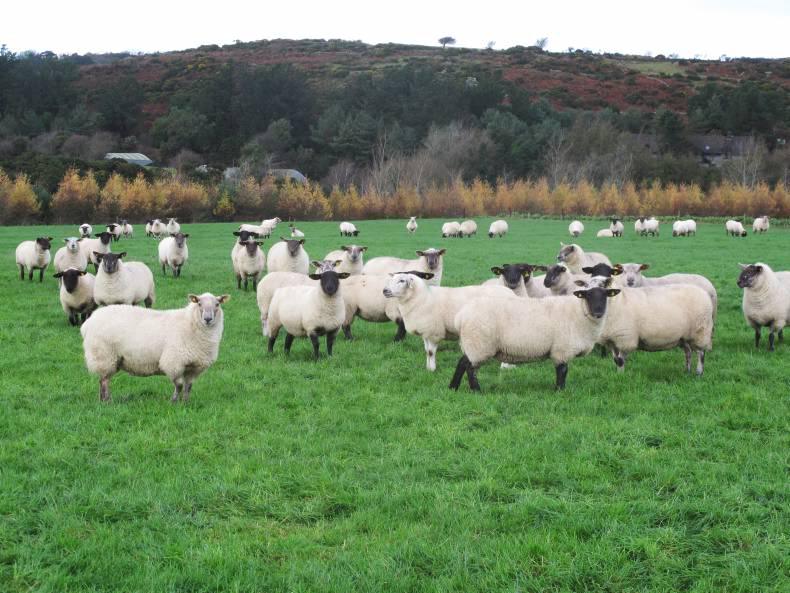
If the recent water charges controversy has told us anything, it is that we have singularly failed to harness properly our country’s abundant indigenous resources. There is sufficient grass in Ireland to feed our livestock, but can we also use grass to produce biomethane? Six European gas grids have agreed to supply 100% green gas in the natural gas grids by 2050. Can Ireland’s grass help us to green our gas grid?
Silage and slurry
The conversion of organic substrates such as grass silage and slurry residues to biomethane gas through anaerobic digestion is a well-understood process. Germany, with over 8,000 digesters, remains the world leader in crop digestion, with the predominant crop feedstock of maize. Ireland has its own indigenous crop – grass.
The EU Renewable Energy Directive requires that 10% of all energy in transport be renewable by 2020. The EU has capped first-generation biodiesel and ethanol at 7% of energy in transport. Ireland will struggle with the 3% shortfall unless green gas is used in natural gas vehicles (NGVs) as seen in Sweden.
The scientific literature suggests a substantial quantity of grass silage in Ireland is available annually surplus to livestock requirements.
Even allowing for Food Harvest 2020 targets, provided that grass management and production practices are more efficient, there will be sufficient quantities of grass to facilitate anaerobic digestion and the initiation of a green gas industry.
This is a technology-ready solution to the 3% advanced biofuels target for energy in transport. It is reinforced by the EU Renewable Energy Directive, which allows a double weighting for biofuels from residues (slurry) and lignocellulosic biomass (grass) when considering renewable transport targets.
In UCC, we have been involved in a collaborative study with Teagasc and MTT Finland, which has established guidelines on the operation of grass silage and slurry digesters intended for Irish farms. Optimum feeding rates, retention times, mixture ratios of grass and slurry and the identification of process-deficient trace elements have all been documented to improve biomethane production efficiency.
The joint research initiative has highlighted that co-digestion of grass silage and dairy slurry could provide over 10% of our energy supply in transport using just 1.1% of grassland in the country.
The industry proposed equates to 170 digesters treating 10,000t per annum of grass and 40,000t per annum of slurry. This is very achievable when considering the industry in Austria, which has 350 digesters, and roughly twice the population of Ireland. The biogas, when upgraded to biomethane, may be injected to the natural gas grid for sale off-site as a transport fuel.
The concept of community or co-op digesters offers a potentially viable option for Ireland. This is a scenario where partnerships of farmers/developers in a town or village join forces using the resources at their disposal to develop a centralised anaerobic digester.
For instance, Timoleague is a small village in west Cork. Each year, 10,000t of sea lettuce washes up into the bay of the village as a result of eutrophication. This is an algal bloom, releasing similar toxic gases to that from slurry pits. Yet it is a potential third-generation biofuel resource and may potentially receive a gate fee for farmers to remove it from the strand.
Such biomass could be utilised as a sustainable fuel source along with available grass and slurry in the region. Different areas have different resources; in tourist towns we can substitute algae with food waste. Anaerobic digestion is seen as a scavenger technology – it allows for opportunity.
Economic benefits
The potential economic benefits of anaerobic digestion in the country have now improved. In previous years, a low renewable energy feed-in-tariff (REFIT) of €0.15 per kWhe, for digesters of less than 500 kW capacity, has seen Ireland struggle to develop a sustainable biogas industry. This contrasts to our neighbours in Northern Ireland, who benefited from higher incentives and higher returns. However, a shift from electricity generation to green gas is now proposed in the South.
The National Oil Reserve Agency operates a Biofuel Obligation Certificate (BOC) scheme for transport fuel. This may be a financial incentive for the green gas industry. A BOC trades in a range of €0.13 to €0.36 depending on the differentiation in cost of imported biodiesel and diesel.
Use of biomethane in NGVs (buses or lorries) may be eligible to receive three BOCs plus the sale price of the natural gas. The potential revenue is €0.68 to €1.37 per cubic metre of methane. This allows for a financially viable framework, similar to our neighbours north of the border.
With some lateral thinking by farmers and communities we can succeed in fulfilling our energy obligations. We have the grass and now a market permitting a financially viable industry to provide a renewable gaseous transport fuel for Ireland.


SHARING OPTIONS