



The number of cattle showing up with lesions at the factory doubled between 2019 and 2024, according to the Department of Agriculture.
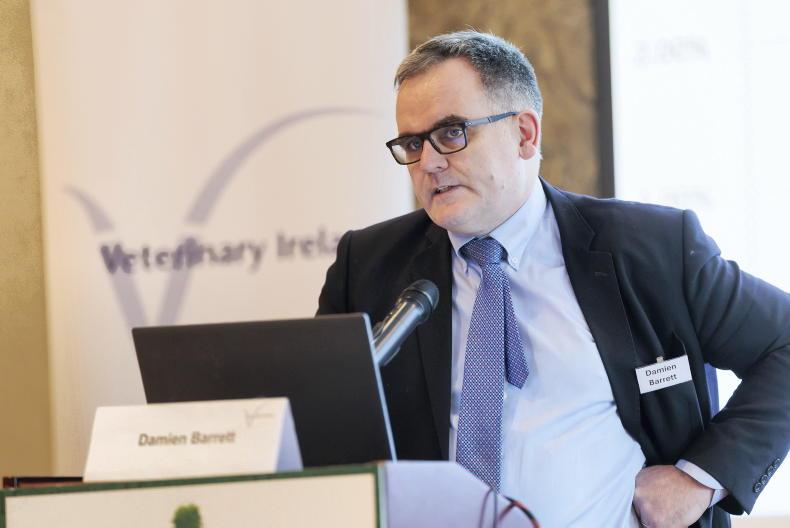
The number of animals with lesions has risen 13-14% per annum since 2019, senior superintending veterinary inspector at the Department of Agriculture Damien Barrett has said.
As of 17 November 2025, there were 3,072 confirmed factory cases nationally, up from 2,843 in the same period in 2024.
Barrett said that TB trends are like oil prices – once they start to rise they never go back down to what they were before.
He was speaking at Veterinary Ireland’s annual conference in Kilkenny on Friday, where he said residual infection is becoming a bigger issue as herds have increased in size following the abolition of quotas in 2015.
“Breakdown size has increased, residual infection has assumed a greater importance and a lot of this is being driven by increased herd size. Our residual infection model has shown that long-term residency is quite a significant factor – these are breeding cows, cows that are around for the long haul,” he said.
The herd incidence rate for TB reached 6.5% in early 2025. Up to last week, the 12-month herd incidence rate was 5.87%, according to Department figures.
Meanwhile, current reactor numbers are down from 40,044 in November 2024 to 38,243 this November.
“Herd incidence reached 6.5% in early 2025, which was last seen in the early 2000s and reactor numbers reached more than 40,000 cattle in 2024 which was last seen in the late-1990s. It is clear that the existing approach to TB eradication needs to change,” Barrett said.
He highlighted the importance of the five-point action plan to address TB. He also reiterated the Deparment’s conclusion, which he said is based on a variety of evidence, that cattle-to-cattle transmission is the main driver of TB.




SHARING OPTIONS