


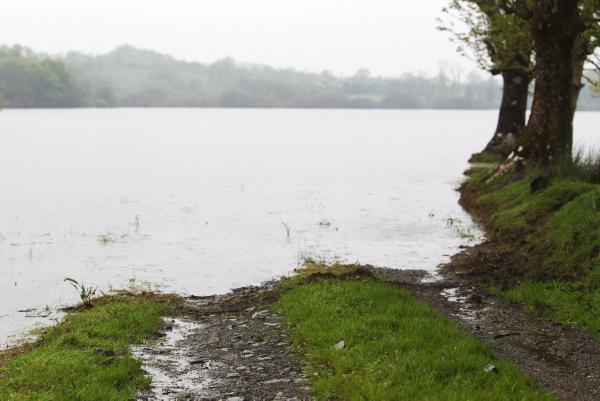
“There is a stream running through my neighbour’s land which passes down onto my land through drains he constructed and causes flooding at certain times. I regularly clean out the drains on my land. However, he has not cleaned out the drains on his for years. What can I do?”
Where water naturally drains from one property to another, a natural right of drainage exists, but the channelling of water by a pipe or other artificial means onto land where it would not naturally flow can only exist as an acquired right or, in legal terms, as an easement.
As your neighbour appears to have diverted the natural flow of the water through drains, it would appear that he would not have natural rights of drainage under common law per se, but may have acquired an easement in respect of water and drainage to accommodate his lands.
While the law in relation to natural rights under common law may not apply to your case, it could still be useful to set out the law that applies where water naturally drains from one property to another. The owner of land bounding a natural river or stream can protect against flooding of his lands by banking a river, for example. Equally, the owner of lower lands can take action to pin back or stem the flow of water.
If water on the higher land naturally passed onto the lower land, the owner of that lower land does not necessarily have a cause of action against the owner of the higher land in nuisance or trespass if the natural flow of water floods his lower lands. However, he can protect his lands by making a barrier even though this may cause damage to the higher landowner. However, an action to pen back the water must be no more than is reasonably necessary to protect the lower landowner’s own enjoyment and he must not act for the purpose of injuring the higher landowner.
A lower landowner may, however, have a remedy in negligence where the higher landowner fails in his duty of care to do what was reasonable in all the circumstances to prevent a large and dangerous quantity of water on his land causing the lower landowner damage.
But if the only remedy is substantial and expensive works, he may discharge his duty by telling his neighbours that they are free to do the works at their own or at a shared expense.
As your neighbour seems to have created drains, it would appear that he has channelled water by artificial means and, so, his land may benefit from an easement across your lands. To establish an easement in an artificial watercourse such as pipes, ditches or drains (as opposed to natural rights in a natural watercourse), the court takes into consideration (a) the character of the watercourse, whether permanent or temporary, (b) the circumstances under which it was presumably created and (c) the mode in which it has been in fact used and enjoyed.
Consent
For example, where a drain was constructed through the lands of several tenants, the consent of each was necessary to its construction, its construction was of equal benefit to each tenant, the circumstances are such that each would have a right to use it so long as it continued to exist.
Thus, after 20 years of enjoyment, each would have acquired a prescriptive right to the flow. Where a prescriptive right to discharge surface water across adjacent property by a specific channel has been acquired, the obstruction of the channel by the owner of the land over which it crosses is a breach of those prescriptive rights. So, if you were to block the drains on your land which would cause the flow of water to back up, you may be deemed to be interfering with your neighbour’s prescriptive rights. The nature and extent of a prescriptive right of drainage was considered by the High Court in the leading Irish case of Callan vs McAvinue, a case memorable for featuring a swimming pool in Termonfeckin.
Waste water from the defendant’s swimming pool and kitchen, together with his septic tank effluent, was discharged by pipe into a branch of a stream. The stream ran dry so the effluent lay stagnant on the plaintiff’s lands.
The court held that the defendant, the owner of the swimming pool, had acquired an equitable right to discharge properly treated effluent onto the lands of the plaintiff’s property, but it did not extend to a right to create a nuisance. However, the court was satisfied on the facts that the discharge did create a nuisance by the offensive smells created by the watercourse.
But, as you pointed out, from a practical viewpoint it is probably in your interest to stop your own land from flooding. Nor is the owner of the land through which a watercourse passes liable for flooding of the land of an adjoining landowner due to his failure to clean and scour the portion of the watercourse which flows through his lands. It is worth discussing all this with your neighbouring landowner.


SHARING OPTIONS