A substantial non-residential hill farm at Derrintin in south Mayo has recently come on the market. For sale by private treaty, the farm will be familiar to sheep farmers as it was leased from the O’Toole family for 20 years by Teagasc and used as a demonstration farm for hill sheep production.
Changing times
Reflecting on their time owning the farm Kathleen O’Toole said: “As the gates close on 53 years of ownership, over which time farming has changed so much, the land remains much the same and carries our footprint forward to a new beginning for another.”
Armed with a loan from the Agricultural Credit Corporation Ltd and the bank, Kathleen and her husband Michael O’Toole purchased the farm in 1973.
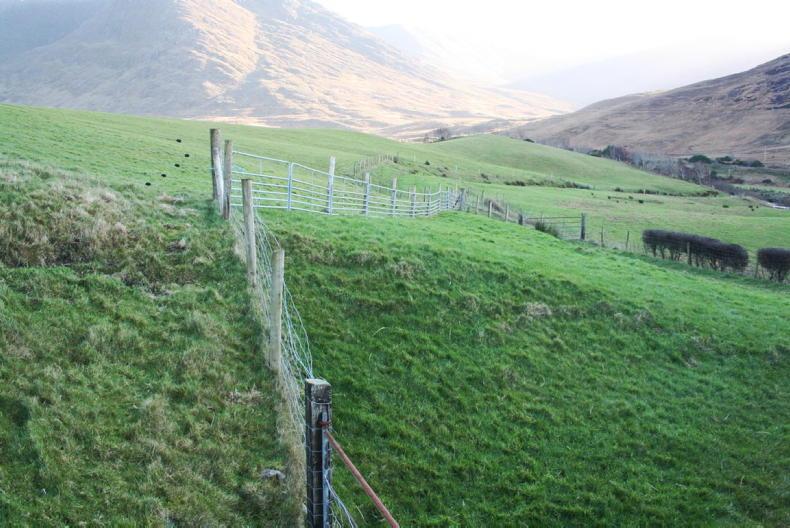
The farm is well-fenced both internally and on it's external boundary.
Speaking to Irish Country Living, she said: “We purchased it from the late Michael Joyce and his wife Sarah. Derrintin townland was part of the Barony of Murrisk and owned by the Marquis of Sligo.
“It was rented to Captain Houston who brought the Blackface breed into the area. The late Michael Joyce’s ancestors would have been tenants.”
It was a daunting task for a young couple with four children, she said, but Michael’s farming background and agricultural training brought valuable expertise when it came to draining the land and building up a good quality breeding flock.
“The farm consisted of mountain, bog and good free draining grassland. First task was fencing the hill boundaries and the lowland fields which were divided into paddocks, used for cutting hay and feeding sheep. We built up a flock of Blackface ewes. We tried different rams but settled on blackface rams. A new handling pen with dipping area and hay shed were built. Each year lambs were sold to the factory or for fattening on lowland farms.”
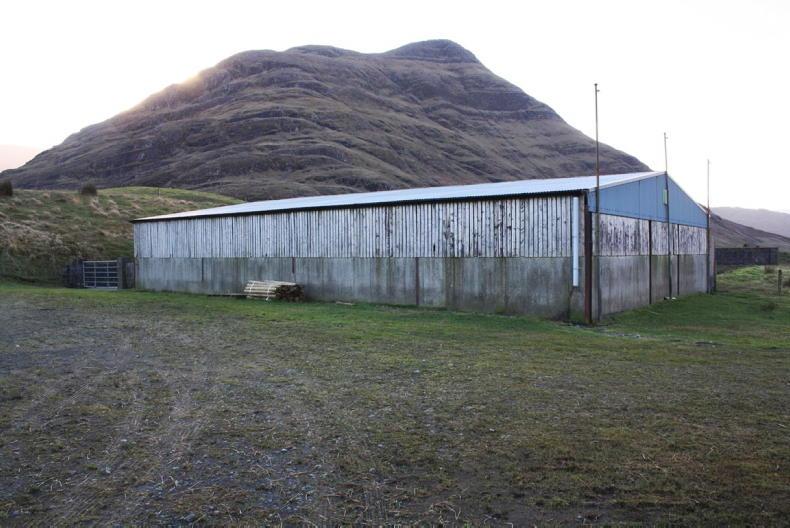
There is a four-bay double-sided slatted sheep unit with accommodation for 250 sheep located on the farm.
“Our family holds great memories of the time [here], from pet lambs, to all the tasks involved with care of sheep, to fun by the river, sandwiches and flasks of tea and the hard work involved. We experienced the ups and downs of farming life. In one year, we had baby lambs and a new baby for feeding with several bottles on the go every four hours.
“We also cut turf on the bog. Cutting hay was always a problem as we could never predict the weather. Holidays would be booked and then cancelled as we seized whatever opportunity the weather brought in an area of high rainfall. Shearing was carried out by local shearers and neighbouring farmers provided help when needed. We trained several sheep dogs over the years – some good and some not so.”
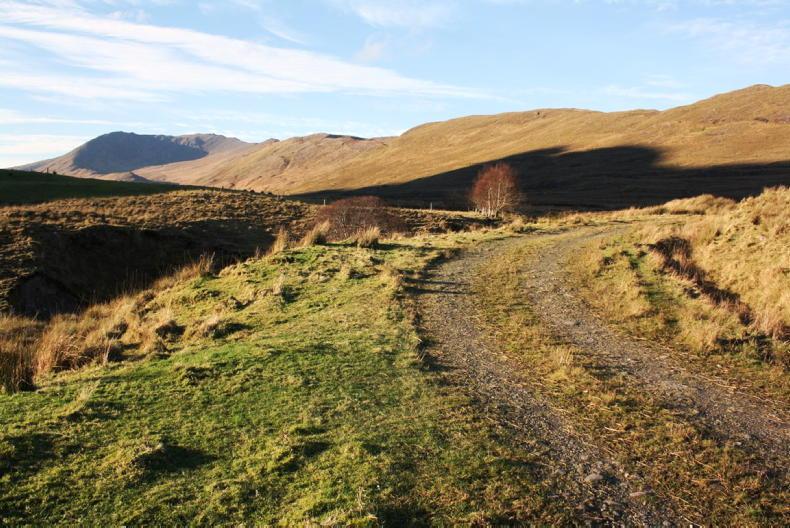
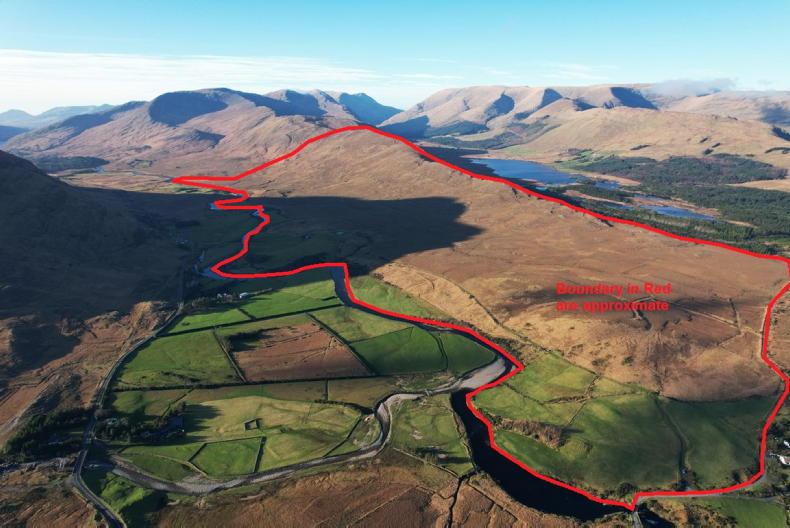
The 687ac farm at Derrintin, Co Mayo will be familiar to sheep farmers as it was leased by Teagasc for use as a demonstration farm for hill sheep for many years.
Leasing the land in 1991
In 1991, the couple decided to lease the farm to Teagasc who developed a well-known research station on hill and lowland sheep farming. The farm was improved and divided in line with the ideal hill and lowland sheep production systems maximising lamb production.
“In 2011, the farm was leased to a company who continued to improve the farm and converted it to organic. The lease expired and we decided to put the farm up for sale,” Kathleen explains.
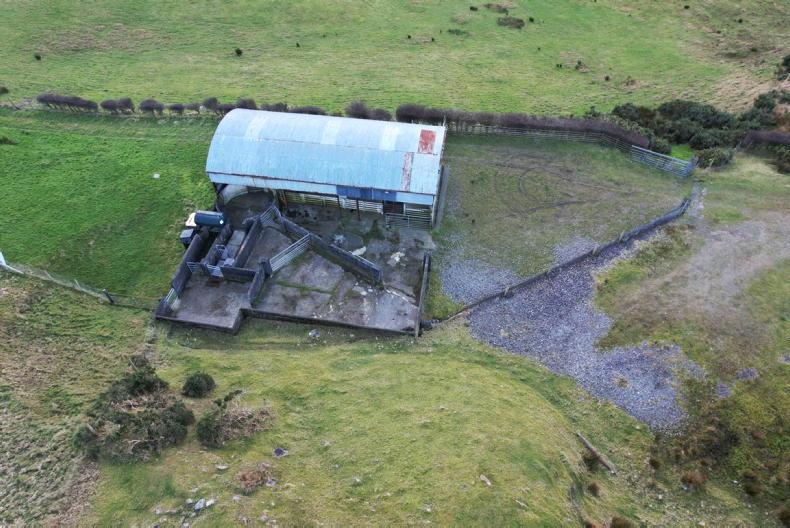
The sheds are centrally located on the farm and there is sheep penning and dipping facilities located close to the storage shed.
All the lands are in one block and it consists of 52ac of green land with the balance, approximately 635ac consisting of mountain land. An extensive network of gravel roadways provide excellent internal access across the holding and the lands are adequately fenced throughout.
The land also benefits from a water supply and the Erriff River – which is renowned for its salmon fishing – flows along the property’s southern boundary. Fishing rights for this river are owned by the State.
This is an exceptionally well set-up and maintained farm. It includes a four-bay double-sided slatted sheep unit with accommodation for 250 sheep. Complimenting this, is a silage base, sheep penning and dipping facilities. There is also a storage shed with toilet facilities.
Close to the N59 road, this farm is 9km northeast of Leenane, 23km from Westport and 43km from Clifden.
While listed as non-residential, there is a derelict ruin of a dwelling house on the land and this may be suitable for reconstruction, subject to the granting of the appropriate planning permission.
Auctioneer, Brendan O’Malley said that: “A portion of the land contains extensive sand deposits which, following testing in the 1990s, were deemed suitable for use on football pitches. Any future extraction would be subject to renewed testing and the granting of planning permission.”
Offers in excess of €1.2m are expected for this farm.
A substantial non-residential hill farm at Derrintin in south Mayo has recently come on the market. For sale by private treaty, the farm will be familiar to sheep farmers as it was leased from the O’Toole family for 20 years by Teagasc and used as a demonstration farm for hill sheep production.
Changing times
Reflecting on their time owning the farm Kathleen O’Toole said: “As the gates close on 53 years of ownership, over which time farming has changed so much, the land remains much the same and carries our footprint forward to a new beginning for another.”
Armed with a loan from the Agricultural Credit Corporation Ltd and the bank, Kathleen and her husband Michael O’Toole purchased the farm in 1973.

The farm is well-fenced both internally and on it's external boundary.
Speaking to Irish Country Living, she said: “We purchased it from the late Michael Joyce and his wife Sarah. Derrintin townland was part of the Barony of Murrisk and owned by the Marquis of Sligo.
“It was rented to Captain Houston who brought the Blackface breed into the area. The late Michael Joyce’s ancestors would have been tenants.”
It was a daunting task for a young couple with four children, she said, but Michael’s farming background and agricultural training brought valuable expertise when it came to draining the land and building up a good quality breeding flock.
“The farm consisted of mountain, bog and good free draining grassland. First task was fencing the hill boundaries and the lowland fields which were divided into paddocks, used for cutting hay and feeding sheep. We built up a flock of Blackface ewes. We tried different rams but settled on blackface rams. A new handling pen with dipping area and hay shed were built. Each year lambs were sold to the factory or for fattening on lowland farms.”

There is a four-bay double-sided slatted sheep unit with accommodation for 250 sheep located on the farm.
“Our family holds great memories of the time [here], from pet lambs, to all the tasks involved with care of sheep, to fun by the river, sandwiches and flasks of tea and the hard work involved. We experienced the ups and downs of farming life. In one year, we had baby lambs and a new baby for feeding with several bottles on the go every four hours.
“We also cut turf on the bog. Cutting hay was always a problem as we could never predict the weather. Holidays would be booked and then cancelled as we seized whatever opportunity the weather brought in an area of high rainfall. Shearing was carried out by local shearers and neighbouring farmers provided help when needed. We trained several sheep dogs over the years – some good and some not so.”

The 687ac farm at Derrintin, Co Mayo will be familiar to sheep farmers as it was leased by Teagasc for use as a demonstration farm for hill sheep for many years.
Leasing the land in 1991
In 1991, the couple decided to lease the farm to Teagasc who developed a well-known research station on hill and lowland sheep farming. The farm was improved and divided in line with the ideal hill and lowland sheep production systems maximising lamb production.
“In 2011, the farm was leased to a company who continued to improve the farm and converted it to organic. The lease expired and we decided to put the farm up for sale,” Kathleen explains.

The sheds are centrally located on the farm and there is sheep penning and dipping facilities located close to the storage shed.
All the lands are in one block and it consists of 52ac of green land with the balance, approximately 635ac consisting of mountain land. An extensive network of gravel roadways provide excellent internal access across the holding and the lands are adequately fenced throughout.
The land also benefits from a water supply and the Erriff River – which is renowned for its salmon fishing – flows along the property’s southern boundary. Fishing rights for this river are owned by the State.
This is an exceptionally well set-up and maintained farm. It includes a four-bay double-sided slatted sheep unit with accommodation for 250 sheep. Complimenting this, is a silage base, sheep penning and dipping facilities. There is also a storage shed with toilet facilities.
Close to the N59 road, this farm is 9km northeast of Leenane, 23km from Westport and 43km from Clifden.
While listed as non-residential, there is a derelict ruin of a dwelling house on the land and this may be suitable for reconstruction, subject to the granting of the appropriate planning permission.
Auctioneer, Brendan O’Malley said that: “A portion of the land contains extensive sand deposits which, following testing in the 1990s, were deemed suitable for use on football pitches. Any future extraction would be subject to renewed testing and the granting of planning permission.”
Offers in excess of €1.2m are expected for this farm.
SHARING OPTIONS