


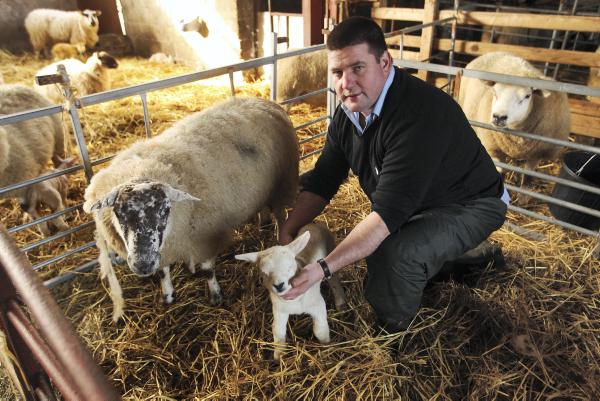
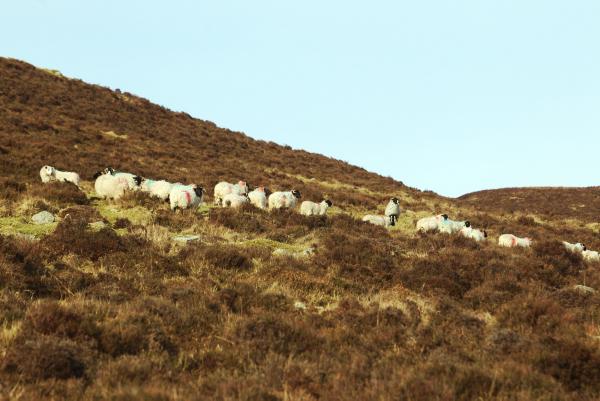
This week marks the end of lambing in the lowland flock and scanning of the hill flock for Cooley Peninsula farmer John Wehrly. John runs a flock of 250 hill ewes and a pedigree Texel lowland flock of 70 ewes at Ravensdale, County Louth.
The pedigree flock comprises 50 purebred Texel ewes and about 20 crossbred ewes that are used for embryo transfer.
With lambing just finished, John said it went well with sufficient space to keep ewes and lambs indoors, saving him from having to deal with the storms and difficult weather of recent weeks.
He added that part of the good performance is also due to spending a lot of time in the shed and paying very close supervision throughout the day and also at intervals during the night.
The system adopted requires high levels of management.
“Flushing and embryo transfer is very expensive to carry out so you need to make sure that you look after them and get live lambs on the ground.
“The supervision is very demanding but the upshot of flushing is that lambing only really lasts a week to 10 days.”
While John admits flushing is expensive and can often be hit and miss, it speeds up the rate of genetic gain in his flock.
“I purchased one particular ewe at a sale last year. She is very well bred but is pushing on in age so I want to try to get as many lambs from her as I can. I was lucky this year as I got 15 live lambs.”
The improvement in weather at the start of the week allowed gradual turnout of some ewes and lambs to sheltered fields.
With grass growth slow to kick-off most years in the Cooley Peninsula, supplementation will be continued outdoors. Ewes are currently eating ad-lib hay and silage indoors, along with 1kg of a high protein nut.
Supplementation at 1kg per head per day will be continued for the first three to four weeks of lactation with creep feeding introduced to lambs.
Worlds apart
John describes management in the lowland and hill flocks as two different worlds. Hill ewes are being scanned this week with lambing commencing on 1 April.
John explained that he has delayed the scanning rate by a week to 10 days in recent years, that is, provided sufficient forage is available on the hill. This allows more straightforward management of ewes post-scanning with twin-bearing ewes housed and singles tightened up and supplemented.
Condition of ewes this year is described as good with strong grass growth at the backend of the year improving forage supplies on the hill and mountain area. John also explained that he has reverted from incorporating crossbred ewes into the hill flock in recent years.
“I found crossbred ewes were okay on the lowland areas but they couldn’t match the Blackies (Swaledale and Scottish Blackface cross) on the more extreme hills or in harsher winters. They lost condition faster and needed much more feeding. I have cut these out again from the flock and I am concentrating on using a Blue (Bluefaced Leicester) and Texel ram to produce Mule and Hiltex lambs as the Cooley Sheep Breeders Sale in September has generated demand for replacement sheep.”
Supplementation
Twin-bearing ewes are housed once they come off the hill and are fed good quality hay or silage up until when released outdoors for lambing.
Supplementation is also introduced at half a pound a day and increased to about a pound (0.4kg to 0.5kg) as ewes near lambing. Ewes are released outdoors to lamb and John finds this works well in letting ewes lamb in a more natural environment.
“I don’t go near them if I can. I wouldn’t say I have a big supply of grass for them but a fresh pick generally keeps them happy. I find if I bother them too much, they only look for feed and it can upset them and lead to mis-mothering.
“The single ewes remain outdoors on hay/silage and lick buckets and I find these keep the ewes in good condition without getting them too accustomed to daily supplementation.”
Emphasis on breeding
Improving breeding on hill farms is often a battle with the lower value of progeny. The Cooley Sheep Breeders group that was set up three years ago is providing an incentive for flockowners to put more emphasis on breeding.
“We now have 70 members and last year sold about 1,600 ewe lambs and hoggets. We are holding a stock judging competition on 15 March and events like this will hopefully add further to this.”


SHARING OPTIONS