


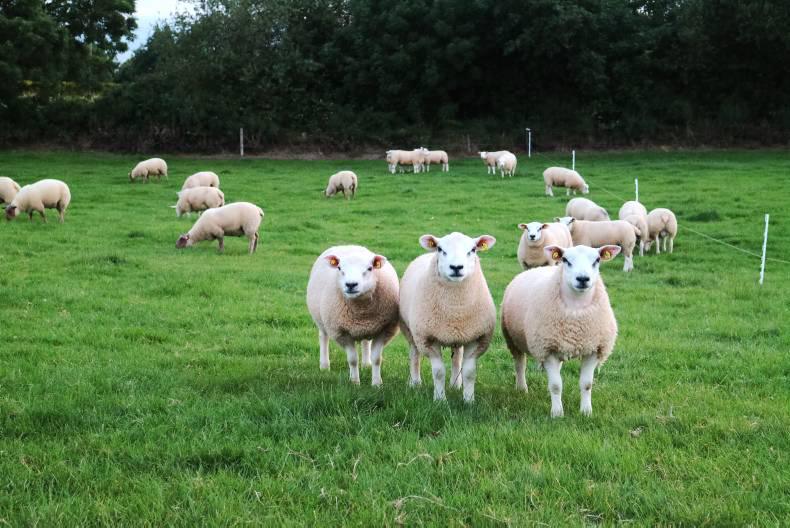
The 2015 National Sheep and Goat Census released last week by the Department of Agriculture, Food and the Marine shows the number of ewes in the national flock increasing by 82,637 to 2.5m head. This follows a 38,226 head decrease in 2014 and a marginal decrease in 2013 which temporarily halted recovery in the national flock following five years of growth.
The census, recorded on 13 December 2015, also shows 91,471 extra sheep in the ‘other sheep’ category, reflecting the higher lamb crop in 2015 and carryover of store lambs and potential replacements. Combining these two categories with the number of rams increasing 4,499 to 84,931 head, there were a total of 3.76m sheep in 35,254 flocks in December 2015, or a combined increase of 178,607 sheep.
Growth in ewe flock
As is reflected in the map, all counties except Kildare recorded an increase in their ewe flock, with numbers falling marginally by 80 head to 72,121 head. Donegal and Mayo recorded the largest increase in ewe numbers, rising by 13,146 and 11,766 respectively. Galway also recorded a large increase of 8,229 head while Kerry, the county with the fourth-largest ewe flock, increased its ewe numbers by 3,985 head.
The increase in ewe numbers is proportionate to the size of flocks in each of these counties, with these four combined possessing 1,116,263 head or 45% of the national ewe flock. On a percentage basis, Longford (11.2%) and Monaghan (10.6%) recorded over 10% growth in their ewe flocks while counties with large dairy herds that recorded a reduction in ewe numbers in previous years all experienced recovery.
The increase in numbers stems from a combination of growth in the average flock size and new entrants to the sector. Sheep census applications were sent to 44,453 farmers registered as sheep flock-keepers on the Department’s database. There was a 90% return rate, with 4,845 keepers with no sheep in December 2015, of which 1,308 indicated they did not intend to return to sheep farming. There were 705 extra flock owners with sheep in December 2015, bringing the total to 35,524. From this, 32,346 farmers or 92% of flock owners had ewes.
An increase in flock owners also reflects greater interest from farmers entering the store lamb trade. Anecdotal reports from mart managers point to this trend continuing in 2016, with very strong activity in store lamb sales at present. Some of this repeat and new activity is being driven by beef producers splitting their risk over two enterprises. Donegal recorded the greatest increase in flock keepers, with 164 more possessing sheep in December 2015. This was significantly ahead of Wicklow, which recorded 59 more flock owners followed by Sligo with 58 and Leitrim 55.
The average number of sheep per flock increased from 104 head to 107 head, with over 66% of flocks possessing less than 100 sheep. Figure 4 details a breakdown of flock numbers by size of flock. As can be quickly seen, small flocks dominate the sector with 714 flocks possessing greater than 500 sheep last December and 526 flocks between 400 and 500 flocks.
While the average flock size in Wicklow reduced from 180 to 179, the county still holds the position of the largest average flock size. Kildare has the next largest flock size with an average of 165 while Carlow had an average flock size last December of 149 sheep. Clare had by far the smallest average flock size of just 41 sheep.
Increase in rams
As detailed in Table 1, there has been strong growth in the number of breeding rams on farms. Part of this growth is in line with an increase in ewe numbers but reports also suggest the requirement for farmers participating in the Sheep Technology Adoption Programme or STAP to purchase €uro-Star rated rams contributed to growth in pedigree flocks and also in the number of rams purchased into flocks.
Future projections
Fluctuations in the National ewe flock are largely determined by confidence in the sector which in turn is influenced by potential margins. Farmgate prices have a critical role in shaping confidence but measures such as Government supports also prompt decisions at farm level. For example, the Grassland Sheep Scheme provided a level of support that encouraged flock owners to maintain numbers. The makeup of the widely anticipated new sheep scheme could also have an influence on farmer confidence, as could margins from suckler and beef enterprises and weather patterns, with anecdotal reports suggesting an increase in flock numbers on some farms at the expense of suckler or beef cattle. Whatever the case, it is likely that ewe numbers will remain fairly static rather than experience any major upward or downward fluctuations.




SHARING OPTIONS