




While often viewed simply as a waste product that must be stored and spread, slurry is one of today’s most reliable and valuable nutrient resources for livestock.
Containing significant levels of nitrogen (N), phosphorus (P) and potassium (K), well-managed slurry can replace substantial quantities of chemical fertiliser, while supporting soil fertility, grass growth and farm profitability.
The true nutritional value of slurry
The value of slurry varies according to livestock type, storage conditions and dry matter content.
Lactating dairy cow slurry typically contains between nine and 11 units of N, five to six units of P, and 30 to 35 units of K per 1,000 gallons.
Finishing cattle slurry can contain up to 13 units of Nogen, while pig slurry generally has the highest N concentration of all livestock slurries.
When nutrient values are converted into fertiliser replacement value, the figures become even more impressive.
At 6% dry matter, cattle slurry can be worth approximately €37.50 per 1,000 gallons, with K accounting for nearly 40% of this value. For farms spreading large volumes annually, this represents thousands of euro worth of nutrients that might otherwise need to be purchased in bagged fertiliser.
However, not all slurry is equal. One of the biggest mistakes farmers can make is assuming every tank contains the same nutrient concentration. Factors such as rainfall dilution, housing duration, diet and storage conditions can all significantly affect nutrient content.
Why testing is essential for slurry management
This is where slurry testing becomes particularly useful. The Alltech 'Know Your Slurry' programme helps farmers understand the nutrient value of their slurry and emphasises how applying it correctly can help maximise returns from nutrients already available on farm.
Alltech also offers on-farm testing, which precisely measures plant-available N by analysing representative samples. Results are available in minutes, so farmers can make decisions in real time.
Hydrometer testing is also used to estimate dry matter content and assess P and K levels.
These test results enable the farmer to more accurately target specific fields and adjust application rates according to crop requirements.
High-dry-matter slurry, which contains greater concentrations of P and K, is particularly suited to silage ground where nutrient offtakes are highest. More diluted slurry is often better suited to grazing paddocks.
Management techniques that maximise slurry value
Application method also plays a major role in nutrient utilisation. Traditional splash plate systems – which are being phased out – can result in significant N losses through ammonia volatilisation.
In contrast, low emissions slurry spreading (LESS) technologies such as trailing shoes, dribble bars and injection systems help retain more N and improve nutrient recovery by the crop.
Timing remains another critical factor. Spring applications generally offer the highest nutrient efficiency, because growing grass has an immediate demand for nutrients.
N availability from slurry can increase from around 30% during summer spreading to approximately 40% when applied in spring conditions.
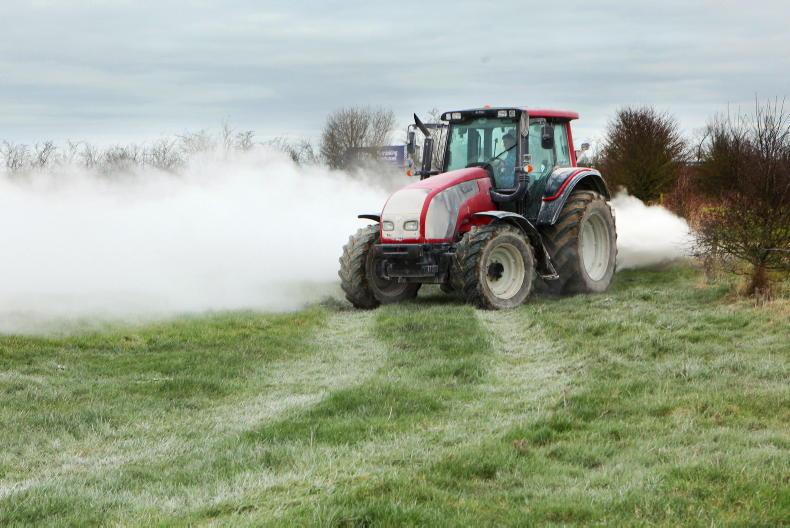
Weather conditions should also be considered carefully. Cool, damp conditions minimise ammonia losses, while hot, dry and windy weather accelerates volatilisation and, in certain cases, scorching.
The major effects of weather were demonstrated this summer in areas where slurry was spread in the height of drought conditions.
Eminex: strong protection for stored slurry
Slurry additives are also becoming part of the conversation around nutrient management. Products such as Alltech’s slurry additive Eminex® are designed to be applied during slurry storage to improve slurry consistency and help preserve nutrients.
Eminex works by inhibiting the release of greenhouse gases from stored slurry, reducing nutrient losses during storage and helping to retain more N within the slurry.
Findings show that slurry treated with Eminex can contain an additional 1kg of plant-available N per cubic metre, compared to untreated slurry.
Retaining more N within the slurry has the potential to increase its fertiliser value and improve nutrient recycling on-farm.
In practical terms, preserving nutrients during storage means more of the N produced by livestock remains available to support grass growth when slurry is applied, helping farmers make better use of existing resources while reducing reliance on purchased fertiliser.
Ultimately, slurry should be viewed as a valuable fertiliser resource rather than a waste product. By measuring nutrient content, treating slurry with a proven additive, matching applications to grass growth demand, adopting LESS technology and spreading under suitable conditions, farmers can significantly improve nutrient use efficiency.
For more info, contact 059-910 1320.




SHARING OPTIONS