



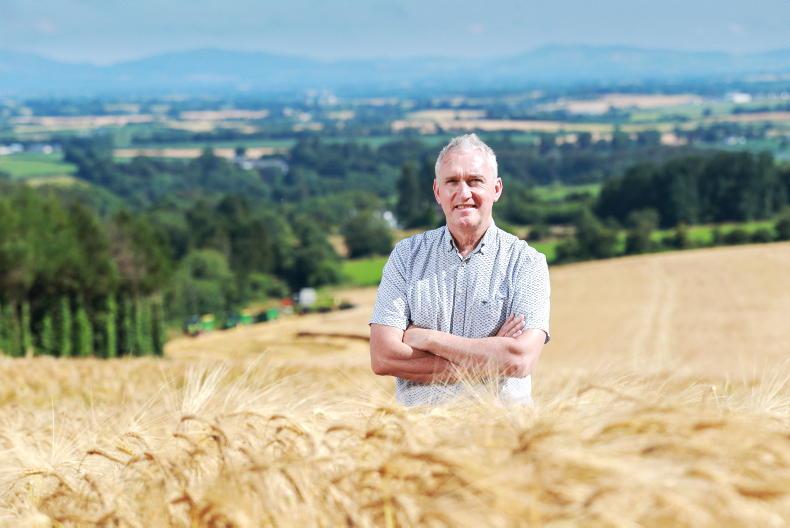
Soil fertility is very important. Beans – both winter and spring beans – are our main break crops, and rotation is hugely important. We rotate winter beans, winter wheat, winter barley and some spring crops as required, as we try to get the perfect fit.
I was first introduced to AgNav through Teagasc and the Signpost Programme. It’s been revolutionary on our farm.
AgNav is very easy to use. I was guided initially by Teagasc Tillage Signpost Programme Adviser, John Mahon. John explained how it worked and helped me get started.
Once John had shown us the process, we were able to work our way through it ourselves.
As a tillage farmer, to input your data into AgNav you must fill out a survey. The first questions were things I already knew, such as what our crop rotation was, our establishment method and what soil type we had.
We then moved on to our digital records, where we entered details such as the amount of chemical fertiliser we used, the number of passes we made over the fields, and anything that contributed to carbon emissions through its use.
Carbon footprint
Once all of that information was entered, we were able to see our carbon footprint for the first time, expressed as kilograms of CO2-eq per tonne of crop produced. That was very helpful to me.
The survey (to input the data) took me about 30 minutes to complete the first time, once I had the information to hand.
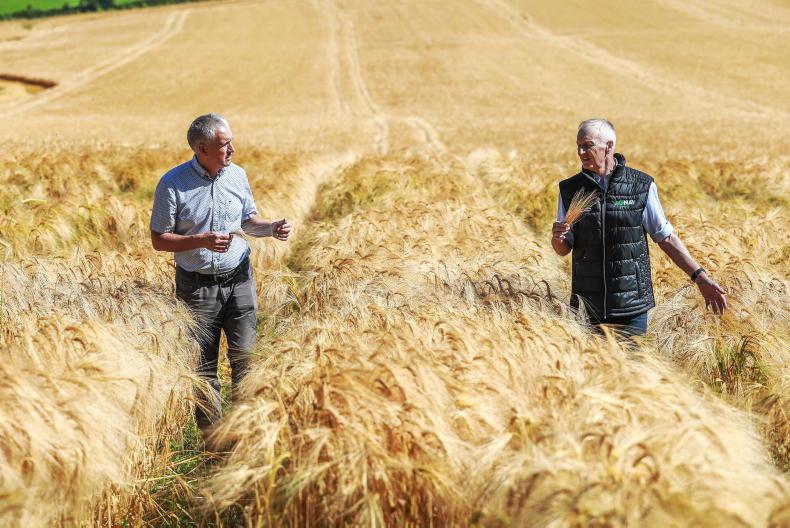
Initially, I just had to get used to what was being asked, but now that I know what’s coming, I’d say I could complete it in around 20 minutes. It’s not really about how long it takes – it’s about making sure the data you’re entering is accurate. I’d spend whatever time I need to because I know how important that data is.
The first time I saw the results, I was quite stunned. It showed me the carbon footprint per tonne of grain I produced, which is much lower than European and international figures.
What was even more extraordinary was our winter oats, when we incorporated chopped straw, it delivered a negative carbon footprint. That was really eye-opening because it showed us that we farm in a genuinely sustainable way.
It gives you tangible, factual info about the carbon footprint of your farm and your products
I’m now looking forward to entering next year’s data, and I’m getting ready to sell my grain for the first time with a measured carbon footprint on my invoices. I think this will revolutionise the sale of grain in Ireland.
I will definitely keep using AgNav in the future because it is a tool of huge importance.
It’s as important as the nitrates discussion we’re having at the moment. Carbon is the new frontier that we need to be able to measure and demonstrate and there are ways we can continue to improve by using whole-farm models that take into account forestry, hedgerows and other carbon sinks. In the future AgNav can be the central hub for all of this information.
Simple advice
My advice to other tillage farmers is simple: get your adviser involved and start using AgNav immediately. Every year you use it, you’ll build better data on your farm, you’ll have more confidence in selling your products and you’ll be better prepared for what the future requires. This is an essential tool for Irish agriculture, especially tillage farming.
In fact, I would recommend AgNav to any farmer. It gives you tangible, factual information about the carbon footprint of your farm and your products. As carbon reporting becomes increasingly important in the marketplace, having that information will become hugely valuable when we’re selling what we produce.
Assess
AgNav shows an assessment of current farm performance using data from Bord Bia, ICBF, and farmer-completed surveys. For beef and dairy farms, animal and production data from ICBF, along with information gathered as part of the Bord Bia audit, are automatically entered into AgNav.
Scientific models developed by Teagasc then use this data to calculate the individual farm’s performance under key sustainability metrics:
• Greenhouse gas (GHG) emissions.
• Ammonia emissions.
• Production.
• Nutrient balance.
• Soil carbon.
Soil carbon will only be calculated if a farmer chooses to complete an AgNav-hosted survey on their farm’s soils. If they do, AgNav will calculate how much carbon is captured in their soil and can adjust the farm’s GHG emissions accordingly.
Act
Based on the forecaster analysis, dairy and beef farmers can identify which actions are most appropriate for their farm allowing them to create a personalised farm sustainability action plan. Farmers can choose from a wide variety of actions, such as reducing fertiliser use, enhancing soil fertility, and improving water quality. There are three ways of signing up to AgNav.
Analyse
The AgNav Forecaster is a core feature of the AgNav platform, and is currently available for dairy and beef enterprises.
Farmers, or their advisers, can use the forecaster to analyse how changes in farming practices and management can impact each sustainability metric.
Sign up
There are three ways of signing up to AgNav.
1) Teagasc Signpost Advisory Programme
Any dairy, beef, or tillage farmer using AgNav has the option of signing up to Teagasc’s free Signpost Advisory Programme, where the farmer will be supported by a Teagasc adviser.
Participation in the programme will allow farmers to more easily identify the sustainability actions best suited to their farm and understand the impact of those actions on their farm’s sustainability metrics.
2) Sign up yourself
New tillage users must select the Tillage Registration button at the top righthand side of the main page.
New AgNav dairy and beef users can go directly to the log in page and use their ICBF log-in information (email/herd number and password).
3) Processor programme
Farmers can sign up to AgNav through an affiliated processor sustainability programme. Please contact your processor’s sustainability manager.



SHARING OPTIONS