In the 1930s, my late mother, Eleanor, spent the summers of her youth with her father’s family, the Ryans, on a well-appointed farm in the townland of Ballybeg between Bruff and Kilmallock in Co Limerick.
I visited the farm a few years back and all that was left was the imposing stand of tall ash trees that lined both sides of the long avenue that led to the now in ruins, old stone, once thatched house. It was there that she picked up no end of folklore and when we were growing up, little gems of that county Limerick lore would come out every now and again.
She would always mark the start of every new month by loudly proclaiming ‘white rabbits, white rabbits, white rabbits’ to bring luck for the rest of the month. She was the first to tell me that the crows all wait until the first of March to build their nests.
The extra detail that she added was if the first of March fell on a Sunday – as it does this year – then the crows would wait until the Monday to start their building. It dawns on me now that the crows building their nests on the avenue of tall ash trees in Ballybeg would have been in the minds of the Ryans down through the years.
The rooks kept picking at the crops and the farmers went complaining to the landlords
Treetop rookeries
Like most Irish people, I rarely distinguish between any variants of any of the large black-feathered Corvidae birds and simply use the term ‘crow’ to speak of rooks, jackdaws, hooded crows and ravens.
The family also include the jay, chough and magpie but as they have a flash of colour they don’t get lobbed into the generality of the dark black crow.
The most common so-called ‘crow’ is undoubtedly the rook and I am regularly transfixed most mornings and evenings, on my way to and from work, when I observe hundreds of these either departing or coming in to roost in their treetop rookeries.
Sometimes they perch in long lines on the electricity wires but most often they settle together in dense clusters on the tops of the tall trees on the edge of the Ardrum estate.
It was considered very good luck to have a rookery on one’s land and if by any chance the rooks were to leave, destitution, ill-health and ultimate demise were sure to follow for the family.
I imagine these positive notions of the rookery went some way to compensate for the endless cawing and noise that a rookery brings. In folklore, such is the sense of connection between the birds and the occupier of the land, it is a tradition to ‘tell the birds’ when someone has died in the same manner that at death someone must ‘tells the bees’ lest they swarm and leave.
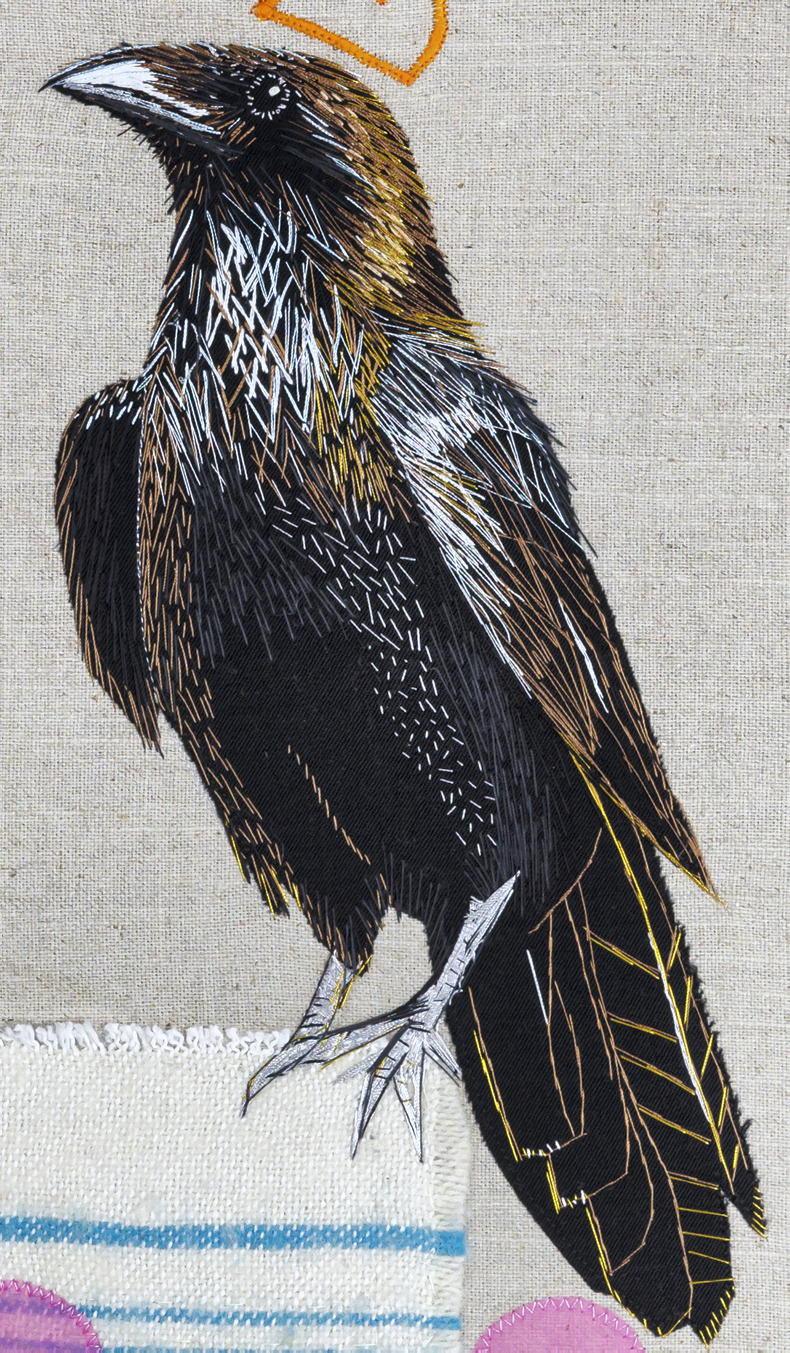
A rook drawn by Cork artist, Joan Hickson.
One of the most virulent curses in Ireland was called ‘the curse of the crows’ which banished the crows from the rookery and inevitable disaster followed. Estate owners and landlords was often guilty of gross injustices, mercilessly evicting tenants or publicly flogging those found poaching on their estates.
The curse of the crows, performed by an elder female of the vanquished family, was brought into play on such occasions and we hear of disease, horrific accidents and the line of the gentrified family eventually dying out as a result.
Rookeries also caused major distress for the neighbouring farmers who were trying to grow their crops of wheat and barley. The rooks kept picking at the crops and the farmers went complaining to the landlords.
Such advances were often dismissed facetiously with the suggestion that if it was a case of trespass, the offending birds should be captured and brought to the local pound, where the landlord would then be happy to pay the standard release fee for a trespassing animal.
This, of course, was an impossible task, but one disgruntled farmer came up with a great plan. He took a sack of wheat and soaked it in whiskey and placed a few piles of the inebriating mixture around the field.
In no time the inquisitive rooks alighted from their perches and when they ate it up they became so drunk they could not fly. The farmer boxed them up and brought them to the pound and the landlord was forced to pay the hefty release fine.
Shane Lehane is a folklorist and works in UCC and Cork College of FET, Tramore Road Campus. He is contactable on
slehane@ucc.ie
In the 1930s, my late mother, Eleanor, spent the summers of her youth with her father’s family, the Ryans, on a well-appointed farm in the townland of Ballybeg between Bruff and Kilmallock in Co Limerick.
I visited the farm a few years back and all that was left was the imposing stand of tall ash trees that lined both sides of the long avenue that led to the now in ruins, old stone, once thatched house. It was there that she picked up no end of folklore and when we were growing up, little gems of that county Limerick lore would come out every now and again.
She would always mark the start of every new month by loudly proclaiming ‘white rabbits, white rabbits, white rabbits’ to bring luck for the rest of the month. She was the first to tell me that the crows all wait until the first of March to build their nests.
The extra detail that she added was if the first of March fell on a Sunday – as it does this year – then the crows would wait until the Monday to start their building. It dawns on me now that the crows building their nests on the avenue of tall ash trees in Ballybeg would have been in the minds of the Ryans down through the years.
The rooks kept picking at the crops and the farmers went complaining to the landlords
Treetop rookeries
Like most Irish people, I rarely distinguish between any variants of any of the large black-feathered Corvidae birds and simply use the term ‘crow’ to speak of rooks, jackdaws, hooded crows and ravens.
The family also include the jay, chough and magpie but as they have a flash of colour they don’t get lobbed into the generality of the dark black crow.
The most common so-called ‘crow’ is undoubtedly the rook and I am regularly transfixed most mornings and evenings, on my way to and from work, when I observe hundreds of these either departing or coming in to roost in their treetop rookeries.
Sometimes they perch in long lines on the electricity wires but most often they settle together in dense clusters on the tops of the tall trees on the edge of the Ardrum estate.
It was considered very good luck to have a rookery on one’s land and if by any chance the rooks were to leave, destitution, ill-health and ultimate demise were sure to follow for the family.
I imagine these positive notions of the rookery went some way to compensate for the endless cawing and noise that a rookery brings. In folklore, such is the sense of connection between the birds and the occupier of the land, it is a tradition to ‘tell the birds’ when someone has died in the same manner that at death someone must ‘tells the bees’ lest they swarm and leave.
A rook drawn by Cork artist, Joan Hickson.
One of the most virulent curses in Ireland was called ‘the curse of the crows’ which banished the crows from the rookery and inevitable disaster followed. Estate owners and landlords was often guilty of gross injustices, mercilessly evicting tenants or publicly flogging those found poaching on their estates.
The curse of the crows, performed by an elder female of the vanquished family, was brought into play on such occasions and we hear of disease, horrific accidents and the line of the gentrified family eventually dying out as a result.
Rookeries also caused major distress for the neighbouring farmers who were trying to grow their crops of wheat and barley. The rooks kept picking at the crops and the farmers went complaining to the landlords.
Such advances were often dismissed facetiously with the suggestion that if it was a case of trespass, the offending birds should be captured and brought to the local pound, where the landlord would then be happy to pay the standard release fee for a trespassing animal.
This, of course, was an impossible task, but one disgruntled farmer came up with a great plan. He took a sack of wheat and soaked it in whiskey and placed a few piles of the inebriating mixture around the field.
In no time the inquisitive rooks alighted from their perches and when they ate it up they became so drunk they could not fly. The farmer boxed them up and brought them to the pound and the landlord was forced to pay the hefty release fine.
Shane Lehane is a folklorist and works in UCC and Cork College of FET, Tramore Road Campus. He is contactable on
slehane@ucc.ie





SHARING OPTIONS