



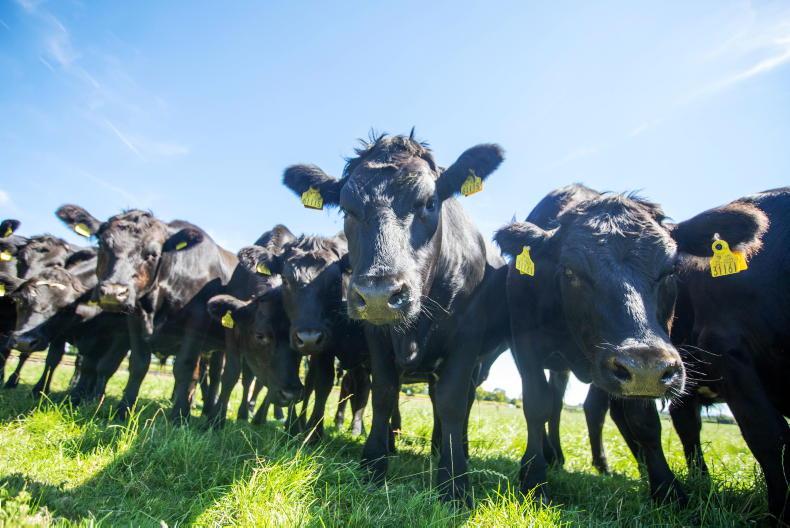
The latest Animal Identification and Movement (AIM) figures published by the Department of Agriculture show the national cattle herd running 77,901 head higher on 1 February 2026 compared with 1 February 2025.
There are contrasting figures across the different categories of stock, with beef-sired cattle running 117,741 head higher, while dairy heifers are running 49,366 head lower and dairy males over 16,000 head lower.
Starting with beef animals first, as can be seen in Table 1 below, the number of beef-sired male and female cattle on farms was running over 115,000 head higher on 1 February.
This is split into over 54,000 extra males and over 62,000 more heifers.
This is being driven primarily by continued increased usage of sexed semen and beef genetics in dairy breeding programmes. This in turn is also contributing to fewer dairy males and females on farms.
The recent sharp decline in the suckler herd also seems to have slowed considerably, with just 4,912 fewer suckler cows on farms. In recent years, the annual decline was upwards of 25,000 to 30,000 head.
Dairy herd
There has been a recovery in the number of dairy cows on farms following a slight contraction over the last 18 months.
The number of dairy cows on farms stood 31,924 head higher on 1 February. The recent contraction is reflected in over 25,000 fewer cows in the 30 to 42 month age category, as detailed in Table 2.
The number of dairy replacement heifers present is running over 49,000 head lower, despite an increase of almost 11,000 head in the number of heifers aged zero to three months of age.
The reduction in dairy heifers has been driven by a combination of lower optimism in the sector and continued use of sexed semen and beef genetics in dairy breeding programmes.
This has also influenced the number of births of dairy males in recent years, but another significant factor reducing numbers is the high level of calf exports in 2025.
Beef cattle
Figure 1 groups the number of potential beef animals in the system. There are significant increases in the six to 12 month and 18 to 24 month age categories with over 120,000 more cattle on farms compared to 12 months earlier.
Likewise, there was 31,561 more cattle aged 30 to 36 months on farms. It is also worth noting that while numbers on farms are higher than 1 February 2025, they are running below the trend of the last five years.




SHARING OPTIONS