Weather
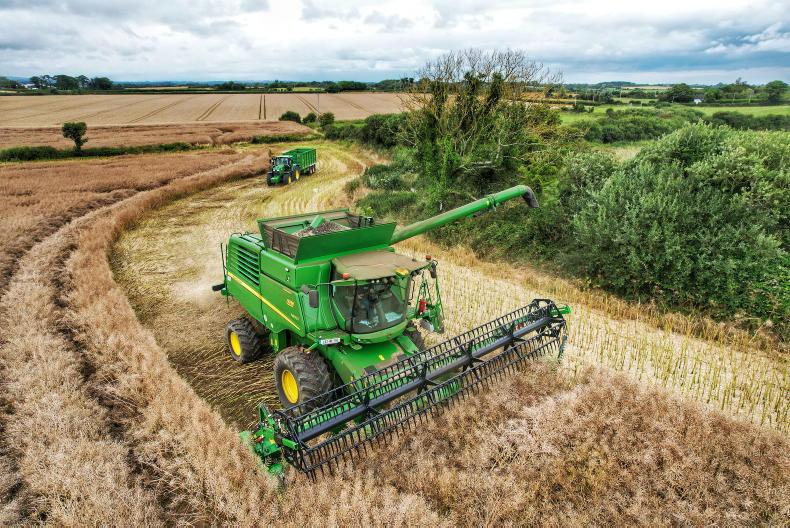
Weather continues to cause trouble for tillage farmers across the country. It’s a difficult time, but we can’t do anything about the weather, so remember that everyone is in the same boat.
Straw remains on the ground across the country and it looks like more will be chopped or has been chopped than is in the scheme with the wet weather, although some farmers no doubt withdrew from the scheme when a scarcity looked like more of a possibility. The rules of the Straw Incorporation Measure state that you should incorporate the straw as soon as possible after harvest. This can be done with a straw rake if it suits farmers in certain systems. The straw rake also qualifies for stubble cultivation.
Take every opportunity you can to harvest crops and remember you are not getting paid well for having low moisture contents. You need to meet the specifications which will vary across merchants or intakes. Cutting slightly above 20% will allow you to take more opportunities to cut in this weather. The longer crops are left the more at risk of yield and quality loss they are.
Early-sown spring barley is doing well yield wise, with yields of 3t/ac to 3.75t/ac being reported. Early-sown winter wheat is probably ready for harvest in some places this week or in the coming days. It’s unusual to have so many different crops to cut at the same time. As written last week, there is a zero-tolerance for glyphosate in malting barley delivered to Boortmalt, so clean out trailers if you sprayed other crops where there was a grass weed problem.
Oilseed rape
Harvest has been a struggle so far and there is a lot of work to catch up on, but something that needs to be in people’s minds is oilseed rape, which will be best sown in August to the middle of September. If possible, it’s good to get it planted early. As a result, farmers should be thinking about varieties and ordering seed. On this week’s tillage pages, you can look at some of the advantages of sowing oilseed rape and some of the varieties available. Consult with your seed supplier on seed rates. Conventional and hybrid varieties will differ and the thousand grain weight will also differ.
Grain markets
Grain markets continue to be incredibly volatile. Knowing what price you need to get to make a profit based on achieved and expected yields is an important exercise, and we have plenty of wet days in the office to do it.
Stubble cultivation
Due to the unseasonably wet month, the Government has agreed to allow an extended period of time for farmers to complete the shallow cultivation measure required post-harvest. The current 14-day period has been extended to 28 days for crops that are harvested up to 4 August. Remember, you do not have to cultivate stubbles where a field will be sown before 31 October, or in an organic system. These rules apply to all counties in Leinster, except Longford, as well as Cork, Waterford and Tipperary.