


Time to plant: There has been a lot of field activity over the past week as farmers begin primary cultivation and planting. With October now upon us, growers up the country and inland can safely begin planting. It is important to make the best of good ground conditions. Lower than normal temperatures will slow establishment and disease and pest risk.
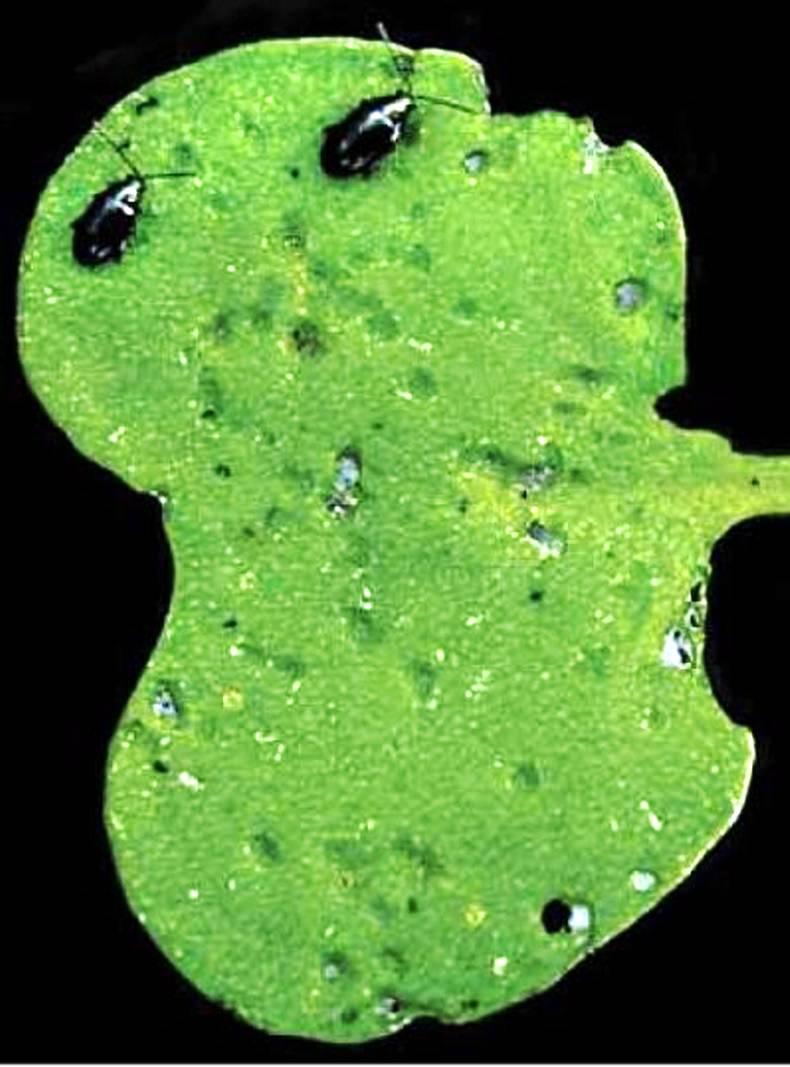
Winter rape: There have been a number of crops badly damaged by slugs over the past two weeks, with lots of talk of flea beetle damage too. It is important to know the difference between the two.
Slug attack will generally result in the removal of the leaves, especially the cotyledons. Sometimes they may eat a hole or two in a cotyledon but most of the time they eat the leaf from the fleshy edge in. Rain in recent weeks appears to have reawakened slugs which are now feeding very strongly in places and have already destroyed some crops.
Flea beetle damage is quite different. The beetles are tiny and black, 2-3mm in length and less than half as wide. The beetles themselves feed on the upper surface of the cotyledon and scoop out tiny little hollows of fleshy food. One little hole doesn’t matter but 100 could cause a cotyledon and plant to die. It’s very much a numbers’ game. The damage seldom penetrates through the full leaf thickness.
Planting: Ground conditions are generally good to excellent so good establishment can be expected. Complete winter barley planting first and move on to wheat and oats. It is still wise to consider Deter seed treatment for early aphid control but the benefit decreases as we plant that bit later.
Drill winter barley at up to 350 seeds/m2 or 160-190 kg/ha (10-12 st/ac) depending on seed size; winter wheat at 200 to 250 seeds/m2 or around 125-140kg/ha (8-9st/ac); and winter oats at around 300 seeds/m2 or 120-135kg/ha (7.5-9.5st/ac).
Roll post planting to help germination, establishment, pest control, residual spray activity and prevent root roll lodging. Where possible, roll across hills to help prevent water erosion down the wheel tracks.
Hedge v ditch: Speaking to growers at the Ploughing, it is obvious that confusion still exists re buffer zones obligations. Buffers (nitrates or pesticides) only apply to water holding bodies whether they hold water all the time or not.
Most of the confusion arises around definitions. The need for a buffer beside a ditch refers to an open drain as distinct from a hedge. The above ground feature is officially defined as a hedge. There is no buffer requirement for a hedge, as distinct from a ditch.
On the field side of a watercourse you must leave at least two meters uncultivated. The buffer required during spraying depends on the chemicals in the spray tank, the individual product rates and the nozzles used.


SHARING OPTIONS