


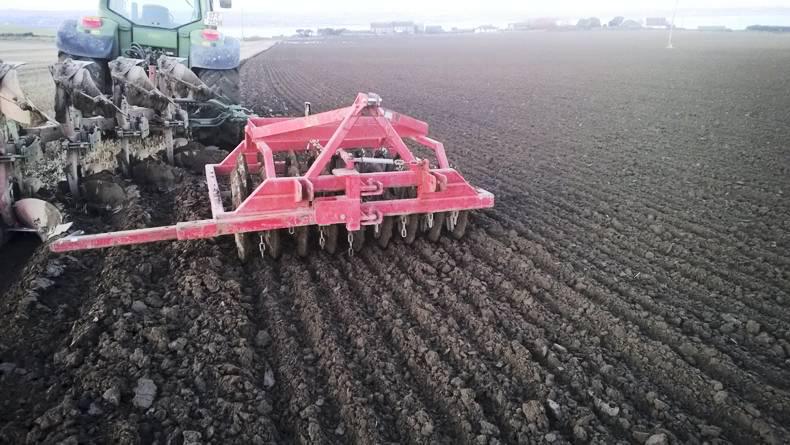
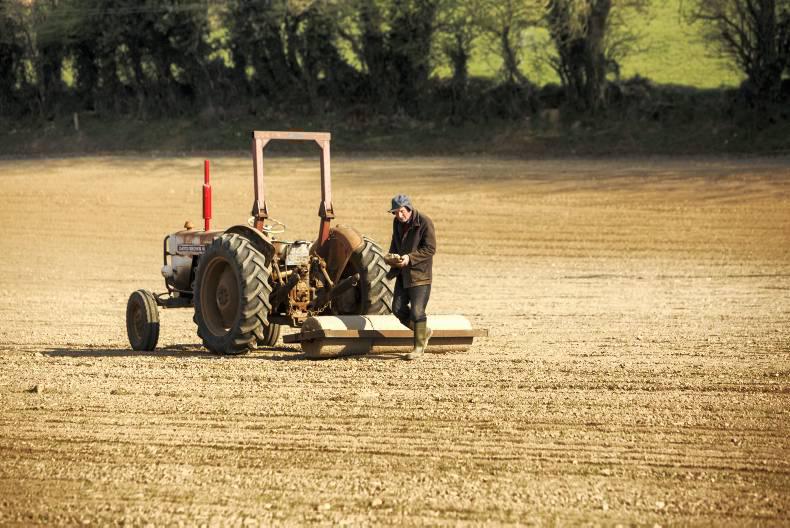
There has been a lot of work done on the land over the past month. Crops continue to be planted while many others are now at different stages of establishment. But despite the reasonably good recent field conditions, the unevenness in emerging fields is very evident. This is generally caused by wheel sinkage and it gives rise to uneven planting depth across the drill width. This is not the best start for any crop.
There is little doubt in my mind that furrow pressing or cracking are extremely useful practices when done at ploughing. A major deterrent is the inconvenience involved in moving a furrow press from field to field and when handling headlands. There is also the extra pull plus the added difficulty where more than one plough is being used in the same field.
Furrow pressing brings many advantages. The main advantage is that it makes good seedbeds easier to produce. The act of pressing during ploughing does an initial breakdown of the sods and this can be more or less useful depending on the type of soil. It also firms the soil during ploughing and this brings two main advantages.
The first is that firming helps make ploughed ground somewhat more weatherproof. Because ploughed land is loose and spongey it can be slow to dry out following rain and this can delay cultivation and planting. For this reason many opt to plough ahead of the drill which adds to the requirement for plough capacity but fresh ploughing does not make the best seedbeds. Pressed ground generally gives a two to three day access advantage.
Perhaps the biggest advantage on pressed ploughing is that you get less wheel sinkage because the ground is already firmed to some degree. Reduced wheel sinkage means less deep cultivation in order to loosen the wheel ruts. This makes for more uniform seedbeds that are more level, even with onepass drilling.
Pressing ticks a lot of boxes. It helps you get onto ploughed ground faster after rain, helps reduce wheel sinkage and cultivation depth, reduces diesel requirement during drilling and helps keep any weather tilth on the top.
These advantages must be balanced against the type of soil you have, your ability to pull the press and your farming system. Pressing brings even more benefit where winter ploughing is being done. It has one other questionable advantage in that it better defines when land is in good enough condition to plough. It is not good enough to press it is arguably not good enough to plough.
Many have tried pressing at some point in the past but have since consigned the press to a nettle shelter. Bigger ploughs make pressing more awkward. One can possibly argue that the biggest benefits of furrow pressing may belong to smaller farms and one-man systems. Because pressing does part of the cultivation, the job of planting tends to be faster and better. And it can also help make a better and more level seedbed.
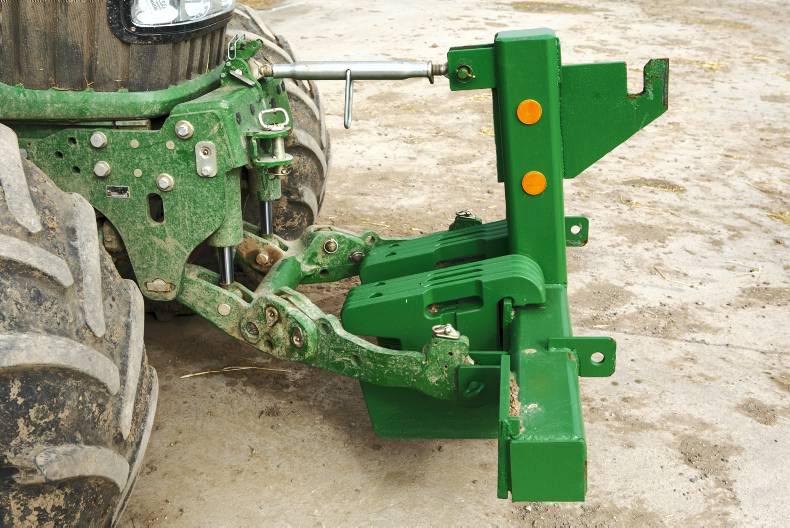
With the inconvenience of moving the press from field to field being a significant reason why so many farmers discontinued their use, I was interested recently to see how one grower had overcome this issue. John Dunne from Garryvoe in east Cork told me he had made a weight frame for the front linkage of his John Deere tractor which doubled as a hook to connect directly onto the press and lift and carry it from place to place.
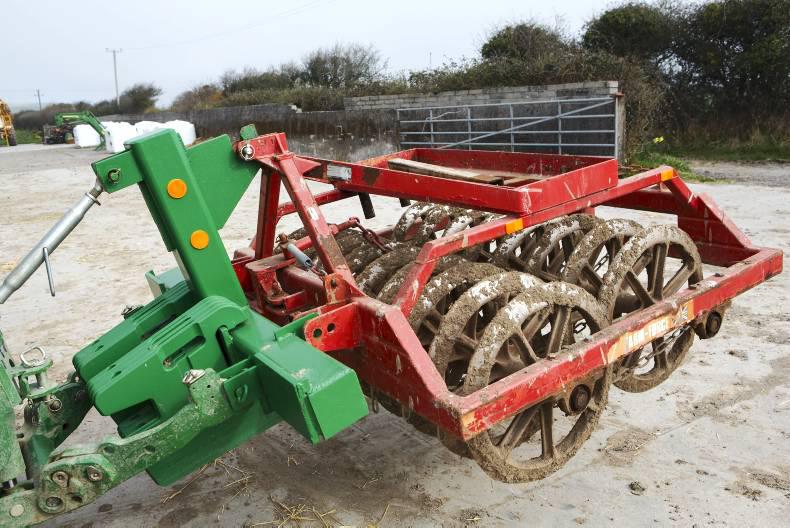
The press has the usual two sets of rings, designed to be trailed in the field and carried from field to field on the three-point linkage. So ordinarily this would mean disconnecting the plough and doing a separate run to pick up and drop off the press at the next location. Or else a second tractor and possibly a second driver would be required.
This linkage unit allows John to just drive up to the press, pick it up using the link hook, lock it in place using the lower links and drive to the next destination. The linkage unit also saves the hassle of having to use a strap or chain to drag it about in a field.
John initially build the unit to double as a frame to carry wafer weights on the front linkage of his John Deere and also to attach to and carry the furrow press. In the design he built the holding frame for the wafer weights to face the tractor, with the option of mounting them either side of the front linkage arms. In the picture wafers are only fitted between the tractor arms because that is all the weight that is currently needed for ballast. This design freed up the front face of the weight frame to allow it to connect directly to the furrow press.
Coupling
A heavy duty coupling and lifting hook was welded to the top of the frame, opposite the top-link mounting. This is made from one-inch plate, which is strong enough to pick up the one-tonne press by the top link pin. And the hook is visible from the tractor cab so connection can take place without leaving the cab. A pair of pins can then be slipped into the lower link couplings for extra security when transporting the press on the road.
The frame itself was made from heavy-duty materials to allow for all the weights and stresses involved. The picture shows the additional wafer weight capacity to the right and left of the frame should additional weights be needed if a bigger plough is used in future.
John said that the coupling device has removed the only downside of pressing for him.
He is a relatively recent convert to furrow pressing but would not now consider ploughing without the press. You get so much more of the job of good establishment done in just one pass with the plough. And there are no more weights to be lifted on and off either!


SHARING OPTIONS