


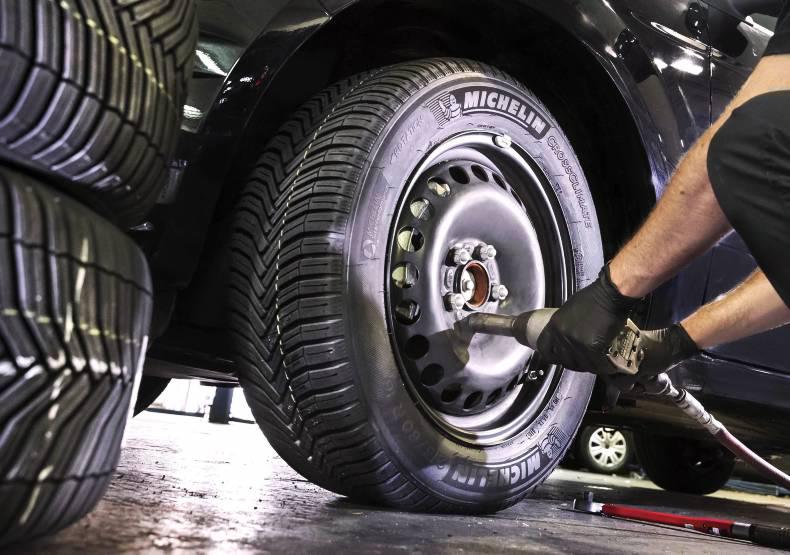
The Department of Transport, Tourism and Sport has joined with the Road Safety Authority (RSA) and An Garda Síochána to launch a major tyre safety awareness campaign following on from a report that has revealed that vehicle factors played a role in one in eight (101) fatal collisions in the period 2008 to 2012. To highlight the dangers of driving with defective tyres, the RSA has launched a powerful new TV, radio, cinema and online advertising campaign entitled Grip. The purpose of the ad is to make people aware that tyres are the one point of contact their car has with the road.
This new report “Pre-Crash Report on Vehicle Factors in Fatal Collisions” analysed An Garda Síochána forensic collision investigation reports in order to identify the main contributory factors in collisions on Irish roads.
Defective tyres were the most significant accident causing factor. Defective tyres were a factor in 71 road deaths between 2008 and 2012. Poor brakes were also a factor and contributed to 18 deaths and six serious injuries in that period.
The report showed that 983 fatal collisions occurred on Irish roads between 2008 and 2012, claiming the lives of 1,077 people. The forensic details of 867 fatal collisions were analysed to identify the cause of the collision, of these, 858 involved a motorised vehicle. Vehicle factors, such as defective tyres, brakes, steering or suspension, were found to have contributed to 101 of these fatal collisions, in combination with behavioural factors such as speeding, alcohol or drug use.
Defective tyres were the most significant factor, representing almost two-thirds (64.1% or 66) of all vehicle factors identified as contributory to the collision. The highest proportion of drivers with defective tyres were in Donegal (18.2%), followed by Cork, Kerry and Wexford (9.1% each). Defective tyres were more prevalent in single-vehicle crashes (74.1%) when compared to multiple vehicle crashes (57.6%).
The report also found that over half (51.5%) of the tyres on the 66 vehicles with defective tyres were excessively or dangerously worn and 10.6% were underinflated, some dangerously low. 6% were a combination of excessively worn, underinflated, the wrong size or fitted in the wrong direction.
The report also found that defective brakes were also a contributory factor in road collisions between 2008 and 2012, contributing to 18 deaths and 6 serious injuries in collisions where a vehicle had defective brakes.
It is recommended that tyres are checked at least once a month and not just a visual check. If your tyres are worn, under or over-inflated, the wrong size, or damaged in any way, they won’t respond properly in an emergency, or poor weather conditions.
The RSA and An Garda Síochána are advising road users to get their tyres checked regularly at Irish Tyre Industry Association (ITIA) and SIMI-registered garages and give themselves the peace of mind that their tyres are roadworthy.
Some tyre dos and don’ts for motorists:
Choose the right tyres
Choose tyres that are right for the vehicle and the type of driving you do. Talk to a tyre specialist to get advice on the tyres you need. Most tyre manufacturers recommend placing the tyres with the best grip at the rear of the vehicle. Fitting tyres with less grip at the rear of your vehicle can cause over-steer and loss of control. Correctly balanced wheels will ensure smooth and vibration-free drive which will also extend your car’s suspension and steering components.
Check the tyre depth
Make sure the tyre has plenty of thread and is above the legal limit of 1.6mm, check around the whole circumference of the tyre. The tyre is the only part of the vehicle that is in contact with the road. The more thread you have, the greater grip the vehicle has on the road and the safer you’ll be. All tyres have tread-depth indicators set into them that are at a depth of 1.6mm. Use this block to see if the tyre has worn to the same level or lower. It is easy to check your tyre depth. The RSA has a handy pop up gauge that can assist you or call into a local garage and get help. Remember to check the depth in different locations on the tyre.
Keep your tyre at the correct tyre pressure
Tyres naturally lose air pressure over time so it’s worth checking your tyres every month. Having the correct tyre pressure helps improve safety, car handling and fuel consumption. You can find your correct tyre pressure on the inside of the fuel door or in the vehicle’s handbook. Don’t forget about the spare wheel or space saver – make sure they are inflated to the correct pressure too.
Use space-saver tyres only in an emergency
Keep space saver tyres inflated to the pressure indicated on the wheel label and only use over short distances to get your car to a tyre repair centre. Don’t drive more than 80km/h and be prepared for the car handling to be different when one is fitted on your vehicle.
Replacing tyres
If your tyre has come into contact with a pothole or kerb and/or you have noticed uneven wear on your tyre, please go to a tyre specialist to have it examined. Your wheel and axles need to be fully aligned to ensure safe driving and that the car is handling correctly. You may need to replace the tyre. Car manufacturers recommend that replacement tyres be the same type as those originally fitted to maintain all-round driving performance. Part worn tyres have been previously used and you do not know the road history which that tyre has travelled. Consider carefully whether you are getting real value for money.


SHARING OPTIONS