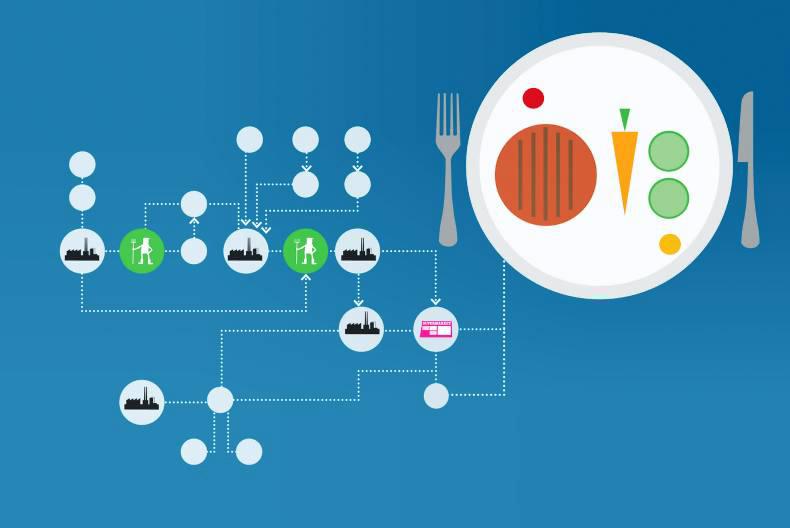
Consumers’ worries about food safety are reinforced by scandals across the global food industry. More of them are asking where their food comes from, how it’s produced and whether it is healthy. Food production in the industrialised world has undergone a massive transition over the last 50 years. For example, in 1954, one in three farms in Britain kept a few pigs and sold them locally. Today only one in every 150 farms keeps a lot of pigs and sells them all over the world. Suspicious consumers do not fully understand the structure of the food sector, they are sceptical of control systems, and they have a desire to know more about how their food is produced and where it comes from.
A series of meat scandals, including the use of meat that is well past its sell-by date in pre-prepared fast foods, the presence of dioxin in chicken feed and horsemeat marketed as beef don’t help matters. While there is no excuse, such crimes come from increasing economic pressure as well as complex, globalised supply chains and are a consequence of lack of controls.
It is no wonder that demand for organic produce is rising, but such products are expensive compared with conventional food. In big cities in emerging economies, new retail chains and organic food sections in supermarkets are appearing. In India, a fivefold increase from $190m in 2012 to $1bn in 2015 is expected in organic product lines. Meanwhile, at home there is a growing trend towards local and provenance.
ADVERTISEMENT
Read more from the 2015 KPMG/Irish Farmers Journal Agribusiness report here.
Register for free to read this story and our free stories.
This content is available to digital subscribers and loyalty code users only. Sign in to your account, use the code or subscribe to get unlimited access.
The reader loyalty code gives you full access to the site from when you enter it until the following Wednesday at 9pm. Find your unique code on the back page of Irish Country Living every week.
CODE ACCEPTED
You have full access to the site until next Wednesday at 9pm.
CODE NOT VALID
Please try again or contact support.
Consumers’ worries about food safety are reinforced by scandals across the global food industry. More of them are asking where their food comes from, how it’s produced and whether it is healthy. Food production in the industrialised world has undergone a massive transition over the last 50 years. For example, in 1954, one in three farms in Britain kept a few pigs and sold them locally. Today only one in every 150 farms keeps a lot of pigs and sells them all over the world. Suspicious consumers do not fully understand the structure of the food sector, they are sceptical of control systems, and they have a desire to know more about how their food is produced and where it comes from.
A series of meat scandals, including the use of meat that is well past its sell-by date in pre-prepared fast foods, the presence of dioxin in chicken feed and horsemeat marketed as beef don’t help matters. While there is no excuse, such crimes come from increasing economic pressure as well as complex, globalised supply chains and are a consequence of lack of controls.
It is no wonder that demand for organic produce is rising, but such products are expensive compared with conventional food. In big cities in emerging economies, new retail chains and organic food sections in supermarkets are appearing. In India, a fivefold increase from $190m in 2012 to $1bn in 2015 is expected in organic product lines. Meanwhile, at home there is a growing trend towards local and provenance.
Read more from the 2015 KPMG/Irish Farmers Journal Agribusiness report here.
If you would like to speak to a member of our team, please call us on 01-4199525.
Link sent to your email address
We have sent an email to your address. Please click on the link in this email to reset your password. If you can't find it in your inbox, please check your spam folder. If you can't find the email, please call us on 01-4199525.
ENTER YOUR LOYALTY CODE:
The reader loyalty code gives you full access to the site from when you enter it until the following Wednesday at 9pm. Find your unique code on the back page of Irish Country Living every week.







SHARING OPTIONS