


Since Andre was encouraged to “put a bit of butter on the spuds”, Irish butter has never looked back.
Today, over 350m retail packs of Kerrygold are sold globally across 90 countries.
With the aim to get beyond the commodity market in the UK and achieve a higher market price that could be returned to farmers, Dr Tony O’Reilly, who was CEO of An Bord Bainne at the time is credited with coming up with the name.
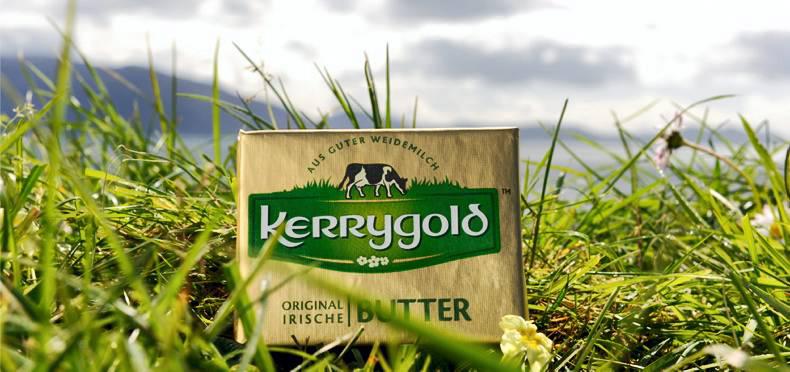
This year Kerrygold, the Irish dairy industry’s iconic brand, is on track to become Ireland’s first billion dollar brand in terms of retail sales.
It is the No 1 butter brand in Germany, and the No 1 imported brand in the US. It also holds the third largest position in the US.
Ornua’s €38m investment in a state of the art butter production and packing facility ensures its future position.
History
Butter making has always been central to Ireland’s dairy sector. For a period in the 19th century, Ireland was the largest butter trader in the world. It also controlled a large slice of the UK market. This position was eroded by European competition in the late 19th century, as the continentals had a lower salt content than Irish butter and embraced the movement towards new ways of packaging butter.
The lack of a co-ordinated approach to the marketing of exports was a problem. Previous attempts had failed due to lack of support from creameries. It wasn’t until the creation of the Irish Dairy Board in 1961 that exports of Irish butter would be revived. But the challenge facing the industry was to guarantee a quality, premium product 365 days of the year. To this day, quality and consistency remain key to the brand.
Increased Butter demand
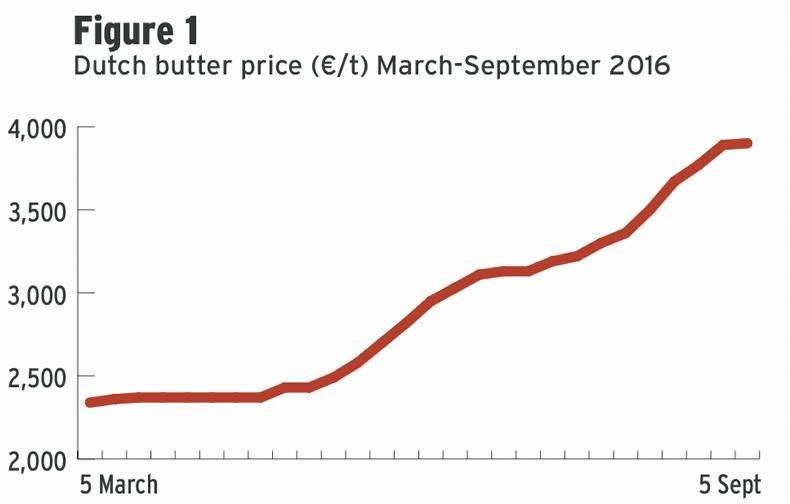
European butter prices have soared over 70% since March, as resurgent fat demand from both European and US consumers has helped to lift prices.
In 2014, Time magazine published a front cover encouraging their readers to “eat butter”.
There is a clear trend in the market that butter is back. In addition to the nutritional benefits associated with sustainably produced butter, consumers state clearly that there is a taste difference and that it is better to cook and bake with.
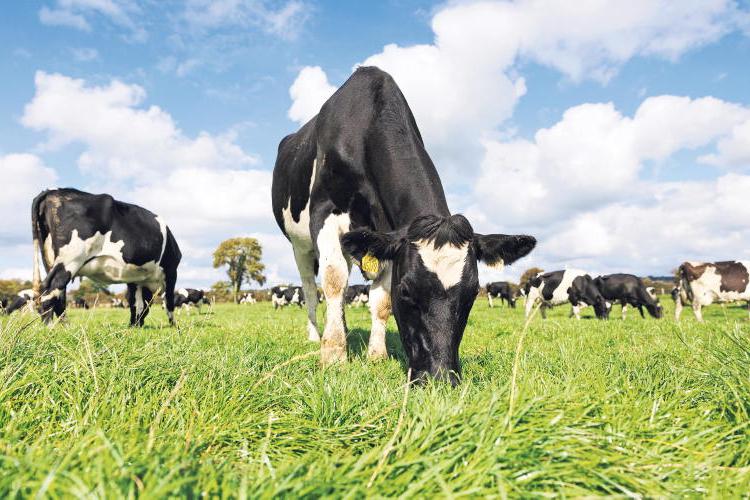
Ornua refers to it as “the grass -fed difference” and it is key to the increasing popularity of Kerrygold Irish butter.
In the past decade, US butter consumption has jumped 25%. Last year, US per capita butter consumption was at its highest levels in around 40 years, as consumers favour butter over margarine and other processed spreads.
Per capita butter consumption has gone from five pounds in 2010 to more than 5.6 pounds last year. With 350m Americans each using an additional 0.6 of a pound, it is no surprise that butter usage has skyrocketed.
Amazingly, another major stimulus for butter consumption in the US has been the new initiative by fast-food chain McDonald’s to offer an all-day breakfast option at its outlets.
Since 2013, US butter exports have fallen by 80% to 17,000t last year. The US is a net importer of butter, and Ireland accounted for 43% of all butter imports into the US last year. However along with exporting less and importing more, the US is also itself producing more. Coupled with a strong price, it points to a market with very strong demand.
Germany remains key
Since its launch in 1973, Kerrygold has become the No 1 butter brand in Germany, with an overall market share of 17% and a share of over 50% of all branded sales. This amounts to more than €300m in sales.
In 2014, Ornua invested €10.5m in a state of the art facility in Germany to produce Kerrygold Extra, the spreadable butter. Last year Kerrygold volumes grew by a further 14%. The challenge for Ornua is to replicate the success of Kerrygold in Germany to other markets.
Ireland’s butter
Last year, butter production increased 20% to reach almost 190,000t, with eight key producers. After Germany and France, Ireland is the third-largest butter producer in EU. The EU produced 2.31m tonnes of butter last year, almost three times the amount produced in the US, and four times production in New Zealand.
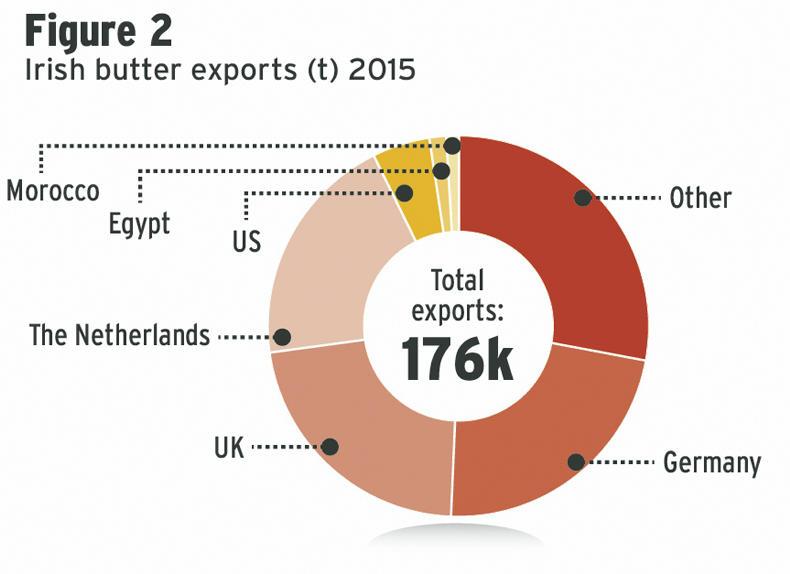
The value of Irish butter exports last year was €544m. Six countries account for 90% of butter exports. Germany is the largest market in volume terms.
The UK accounts for a quarter of export value, Germany 20%, followed closely by the Netherlands 18%, Belgium 11% and France 10%. The US has been the major success story where exports have increased threefold since 2013 to reach €35m or almost 10,000 tonnes last year.
The EU exported 135,000t in 2015, with 20% from France, 16% from the Netherlands and 16% from Ireland. Intra-EU trade is important. After the Netherlands, Ireland is the largest exporter across EU markets at 134,000t last year.
Russia is still the largest global importer, followed closely by China which has grown rapidly in recent years, despite having no tradition of using dairy fats.
In the year to end of May, Chinese butter imports have grown by more than a third in volume terms, close to 37,500t.
Interestingly, the EU accounts for more than 11,000t of this product, making China the largest buyer of EU butter so far this year, an increase of almost 350% year-on-year.




SHARING OPTIONS