Bord Bia’s annual Export performance and prospects report for 2025-26 shows Irish food and drink exports achieving another record year with the value reaching €19bn, a 12% increase on 2024. (See below).
They report that much of the increase in 2025 was price led, “reflecting tight global supply conditions and sustained demand across key markets.”
Meat and live export values passed €5bn for the first time and were 18% higher than they were in 2024. Beef was the top performing category and Irish cattle prices reached double the levels of five years ago.
Global dairy markets were particularly strong in the first half of the year and 2025 will also be remembered for favourable livestock farming conditions which led to higher milk output from dairy farms.
The combined effect of these favourable circumstances is reflected in the value of Irish dairy exports, increasing by 14% compared with 2024 to €7.3bn.
The value of Prepared Consumer Foods (PCF) increased by 9% to €3.7bn while exports of drinks were worth €2bn, a marginal increase on the previous year.
Tillage farmers don’t need reminding that 2025 was a forgettable year for prices and the value of Horticulture and Cereals exports at €330m reflects a slightly higher value for mushroom exports and a lower value for cereals.
Seafood exports were worth €635m with higher volumes offsetting lower market values.
In addition to the €19bn of food and drinks exports, the value of non-edible by-products from the sector were estimated by the Department of Agriculture, Food and the Marine to be worth a further €2.2bn in 2025.
A combination of strong market prices especially in the first half of the year and ideal production conditions in Ireland, producing a record 8.8bn litres of milk, meant a new record in the value of Irish dairy exports. See Figure 1 for details.
The star performer continues to be butter with export value increasing by €380m in 2025, to over €2bn, a 24% increase on 2024.
Wholesale butter prices were high until the middle of the year, but by the final quarter of the year they had fallen by over €2,000 per tonne. This didn’t particularly impact the 2025 figures as they came after the peak months for milk production and butter sales but are a cause for concern going into 2026.
It was also an exceptional year for cheese exports with the value increasing by 19% to €1.7bn. As with butter, the prices were strong in the first half of the year and European prices averaged €4,710 per tonne, 19% up on the first half of 2024. They fell back in the second half of the year and again there is concern as we head into the new year.
For milk powders, 2025 was a mixed year. Fat-filled milk powder exports increased by 16% on 2024 levels to be worth €975m and skim milk powder exports increased by 30% to €530m. Whey export values increased by 20% to €360m while casein exports increased by 9% to €470m. However, the export value of specialised nutritional powders was down an estimated 25% compared with 2024 to €630m while whole milk powder exports fell by 25% to €95m as processors opted to use their milk pool for other products.
Dairy Markets
The Irish dairy and drinks categories were the most exposed to potential US import tariffs on EU exports to the US. Fortunately, an agreement was reached between the US and EU that meant the tariff on Irish dairy exports to the US was no worse than previously.
This mattered particularly for butter exports as it is the largest market for both volume and value and Kerrygold butter remains the second most popular butter brand in the country.
Overall EU markets accounted for €3bn or 42% of Irish dairy exports in 2025, a 20% increase in value on 2024. Exports to the UK were up 18% year on year to €1.2bn which is 17% of total dairy exports while the US market increased by 15% on the previous year to €930m, taking 13% of all Irish dairy exports.
Sales to African countries were similar to the previous year overall at €700m though there was considerable movement in trade with individual African countries. The Asian market recorded a marginal increase in 2025 to €725m while sales to the Middle East were up 7% to €315m.
Meat and livestock up 18% (€5bn)
Beef up 24%, €3.4bn
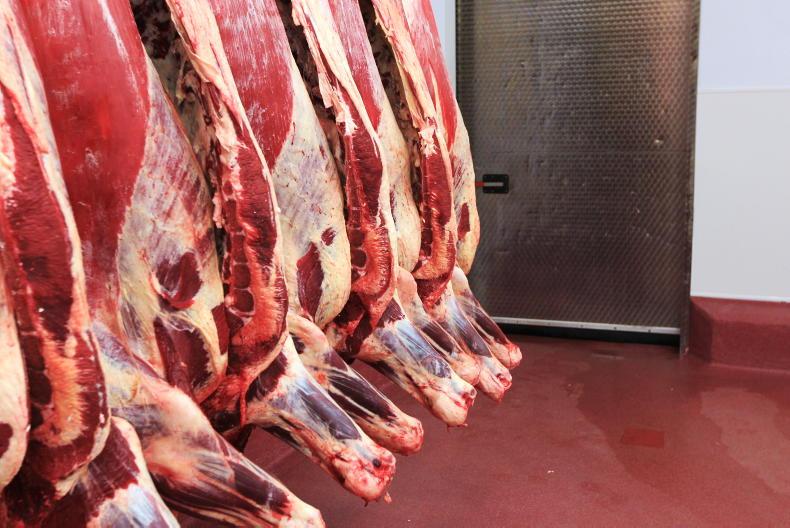
Farm gate beef prices reached exceptional levels in 2025 and this translated into a healthy 24% increase in export value to €3.4bn plus a further €155m when the value of offal exports is added. This was achieved despite a significant 5% fall in the volume of beef exported to 474,000 tonnes. The number of cattle processed in Irish factories was down around 200,000 head, caused by a combination of increased live cattle exports in the previous year plus a reduction in the cow herd. The decline in cattle numbers was offset somewhat by an average carcase weight increase of 1.5kg and a stock carryover at the end of 2024 into 2025. Prices paid to farmers increased by 37% to €7.10/kg for the R3 steer grade.
Ireland wasn’t alone in reduced beef production in 2025 as overall EU production was down 2.5% due to falling cow herd and the impact of bluetongue on animal breeding in many areas. Bord Bia report that EU beef consumption declined by just under 1% while beef imports from outside the EU increased by 5% in 2025.
The UK remains a critical beef export market with €1.6bn of sales, a 25% increase on 2024 value. Beef exports to the EU were also worth €1.6bn which means that exports to countries outside Europe were just €135m, the lowest in recent years. China was closed to Irish beef for all of 2025 and other Asian markets are well supplied by Australia and New Zealand while the US market for Irish beef has never really taken off. Live exports were an important part of the Irish cattle trade in 2025, worth €390m – a 40% increase in value on 2024 with the numbers similar or slightly below the previous year.
Sheepmeat down 10%, €360m
The value of Irish sheep meat exports fell for the third consecutive year, down 10% from 2024 to €360m.
This is because, despite unit prices increasing by 6%, the volume exported fell by 15% to 51,000 tonnes, the lowest total since 2016. Reduced flock numbers combined with lower levels of sheep imported from Northern Ireland are the cause of reduced production.
Falling sheep meat production is a Europe-wide issue and the supply deficit was met by imports from Australia and New Zealand, particularly in the first half of the year when there was a considerable price differential.
France remains Ireland’s main export market for sheep meat and they, along with other EU countries, took €310m of Ireland’s sheep meat exports in 2025 with just €30m or 9% going to the UK.
Pigs and pigmeat down 3%, €475m
Despite an increase in production volume in 2025 of 5% to an estimated 325,000 tonnes and export volume increasing by 3% to 205,000 tonnes, the value of pigmeat exports fell by 3% to €475m. Pigs also made a significant contribution to live exports in 2025 with approximately 450,000 going to Northern Ireland for processing, valued at €85m.
Sales to China had been going well until the final quarter of the year when China introduced anti-dumping tariffs on imports from the EU. However, it remains a major market for Irish pigmeat, worth €95m while sales to other Asian markets and Australia also increased
The loss in value was also reflected in farm gate prices which averaged €1.91/kg (ex vat), 10% down on prices paid in 2024. Exports to the UK increased by 8% to €165m sales to the EU were down 20% to €85m.
Sales to China had been going well until the final quarter of the year when China introduced anti-dumping tariffs on imports from the EU. However, it remains a major market for Irish pigmeat, worth €95m while sales to other Asian markets and Australia also increased.
Poultry up 18%, €165m
Chicken represented 96% of all Irish poultry meat exports in 2025 with the remainder made up of duck and turkey exports. Throughput at processors was up 6% compared with 2024 at 120m birds.
The UK is the main export market at €105m in 2025, a 20% increase on the previous year while €35m of export sales were to the EU, an increase of 12% and €25m of poultry meat was exported to international markets, a 21% increase on 2024.
Horticulture and cereals up 2%, €330m
Poor prices made 2025 a particularly difficult year for tillage farmers. This was also reflected by a 10% decline in the value of cereals exports to €80m on similar volumes. Higher mushroom prices offset a 4% decline in volume exported and meant a marginal increase in value to €155m.
Until the final quarter, 2025 had been a very positive year for Irish dairy farmers and exporters. Increased global milk supply has led to a sharp reduction in commodity prices especially butter in the latter months of 2025 and this is expected to continue into 2026. However, Bord Bia are confident that the “diversified nature of the Irish dairy industry across products and markets, combined with its agility and sustainability credentials, positions it well to navigate an uncertain global market in 2026”.
For beef, Bord Bia take the view that “the ongoing tightness in beef supplies across the EU, combined with resilient consumer demand, will help support a positive market environment for Irish beef in 2026”.
Despite lower prices in 2025, Bord Bia believe that lower feed prices “helped to offset some cost pressures in 2025, supporting producer margins and providing a more stable foundation,” and they expect this trend to continue this year.
The position with sheep meat is complex in that tighter supply supports higher producer prices but it is difficult to recover this from the market when faced with competition from the UK and southern hemisphere suppliers. Overall, Bord Bia foresee a “relatively stable outlook for the Irish sheep meat sector for 2026”. The outlook for poultry is positive in that consumer demand continues to grow but the threat of avian influenza remains a constant threat to poultry meat production.
Bord Bia’s annual Export performance and prospects report for 2025-26 shows Irish food and drink exports achieving another record year with the value reaching €19bn, a 12% increase on 2024. (See below).
They report that much of the increase in 2025 was price led, “reflecting tight global supply conditions and sustained demand across key markets.”
Meat and live export values passed €5bn for the first time and were 18% higher than they were in 2024. Beef was the top performing category and Irish cattle prices reached double the levels of five years ago.
Global dairy markets were particularly strong in the first half of the year and 2025 will also be remembered for favourable livestock farming conditions which led to higher milk output from dairy farms.
The combined effect of these favourable circumstances is reflected in the value of Irish dairy exports, increasing by 14% compared with 2024 to €7.3bn.
The value of Prepared Consumer Foods (PCF) increased by 9% to €3.7bn while exports of drinks were worth €2bn, a marginal increase on the previous year.
Tillage farmers don’t need reminding that 2025 was a forgettable year for prices and the value of Horticulture and Cereals exports at €330m reflects a slightly higher value for mushroom exports and a lower value for cereals.
Seafood exports were worth €635m with higher volumes offsetting lower market values.
In addition to the €19bn of food and drinks exports, the value of non-edible by-products from the sector were estimated by the Department of Agriculture, Food and the Marine to be worth a further €2.2bn in 2025.
A combination of strong market prices especially in the first half of the year and ideal production conditions in Ireland, producing a record 8.8bn litres of milk, meant a new record in the value of Irish dairy exports. See Figure 1 for details.
The star performer continues to be butter with export value increasing by €380m in 2025, to over €2bn, a 24% increase on 2024.
Wholesale butter prices were high until the middle of the year, but by the final quarter of the year they had fallen by over €2,000 per tonne. This didn’t particularly impact the 2025 figures as they came after the peak months for milk production and butter sales but are a cause for concern going into 2026.
It was also an exceptional year for cheese exports with the value increasing by 19% to €1.7bn. As with butter, the prices were strong in the first half of the year and European prices averaged €4,710 per tonne, 19% up on the first half of 2024. They fell back in the second half of the year and again there is concern as we head into the new year.
For milk powders, 2025 was a mixed year. Fat-filled milk powder exports increased by 16% on 2024 levels to be worth €975m and skim milk powder exports increased by 30% to €530m. Whey export values increased by 20% to €360m while casein exports increased by 9% to €470m. However, the export value of specialised nutritional powders was down an estimated 25% compared with 2024 to €630m while whole milk powder exports fell by 25% to €95m as processors opted to use their milk pool for other products.
Dairy Markets
The Irish dairy and drinks categories were the most exposed to potential US import tariffs on EU exports to the US. Fortunately, an agreement was reached between the US and EU that meant the tariff on Irish dairy exports to the US was no worse than previously.
This mattered particularly for butter exports as it is the largest market for both volume and value and Kerrygold butter remains the second most popular butter brand in the country.
Overall EU markets accounted for €3bn or 42% of Irish dairy exports in 2025, a 20% increase in value on 2024. Exports to the UK were up 18% year on year to €1.2bn which is 17% of total dairy exports while the US market increased by 15% on the previous year to €930m, taking 13% of all Irish dairy exports.
Sales to African countries were similar to the previous year overall at €700m though there was considerable movement in trade with individual African countries. The Asian market recorded a marginal increase in 2025 to €725m while sales to the Middle East were up 7% to €315m.
Meat and livestock up 18% (€5bn)
Beef up 24%, €3.4bn
Farm gate beef prices reached exceptional levels in 2025 and this translated into a healthy 24% increase in export value to €3.4bn plus a further €155m when the value of offal exports is added. This was achieved despite a significant 5% fall in the volume of beef exported to 474,000 tonnes. The number of cattle processed in Irish factories was down around 200,000 head, caused by a combination of increased live cattle exports in the previous year plus a reduction in the cow herd. The decline in cattle numbers was offset somewhat by an average carcase weight increase of 1.5kg and a stock carryover at the end of 2024 into 2025. Prices paid to farmers increased by 37% to €7.10/kg for the R3 steer grade.
Ireland wasn’t alone in reduced beef production in 2025 as overall EU production was down 2.5% due to falling cow herd and the impact of bluetongue on animal breeding in many areas. Bord Bia report that EU beef consumption declined by just under 1% while beef imports from outside the EU increased by 5% in 2025.
The UK remains a critical beef export market with €1.6bn of sales, a 25% increase on 2024 value. Beef exports to the EU were also worth €1.6bn which means that exports to countries outside Europe were just €135m, the lowest in recent years. China was closed to Irish beef for all of 2025 and other Asian markets are well supplied by Australia and New Zealand while the US market for Irish beef has never really taken off. Live exports were an important part of the Irish cattle trade in 2025, worth €390m – a 40% increase in value on 2024 with the numbers similar or slightly below the previous year.
Sheepmeat down 10%, €360m
The value of Irish sheep meat exports fell for the third consecutive year, down 10% from 2024 to €360m.
This is because, despite unit prices increasing by 6%, the volume exported fell by 15% to 51,000 tonnes, the lowest total since 2016. Reduced flock numbers combined with lower levels of sheep imported from Northern Ireland are the cause of reduced production.
Falling sheep meat production is a Europe-wide issue and the supply deficit was met by imports from Australia and New Zealand, particularly in the first half of the year when there was a considerable price differential.
France remains Ireland’s main export market for sheep meat and they, along with other EU countries, took €310m of Ireland’s sheep meat exports in 2025 with just €30m or 9% going to the UK.
Pigs and pigmeat down 3%, €475m
Despite an increase in production volume in 2025 of 5% to an estimated 325,000 tonnes and export volume increasing by 3% to 205,000 tonnes, the value of pigmeat exports fell by 3% to €475m. Pigs also made a significant contribution to live exports in 2025 with approximately 450,000 going to Northern Ireland for processing, valued at €85m.
Sales to China had been going well until the final quarter of the year when China introduced anti-dumping tariffs on imports from the EU. However, it remains a major market for Irish pigmeat, worth €95m while sales to other Asian markets and Australia also increased
The loss in value was also reflected in farm gate prices which averaged €1.91/kg (ex vat), 10% down on prices paid in 2024. Exports to the UK increased by 8% to €165m sales to the EU were down 20% to €85m.
Sales to China had been going well until the final quarter of the year when China introduced anti-dumping tariffs on imports from the EU. However, it remains a major market for Irish pigmeat, worth €95m while sales to other Asian markets and Australia also increased.
Poultry up 18%, €165m
Chicken represented 96% of all Irish poultry meat exports in 2025 with the remainder made up of duck and turkey exports. Throughput at processors was up 6% compared with 2024 at 120m birds.
The UK is the main export market at €105m in 2025, a 20% increase on the previous year while €35m of export sales were to the EU, an increase of 12% and €25m of poultry meat was exported to international markets, a 21% increase on 2024.
Horticulture and cereals up 2%, €330m
Poor prices made 2025 a particularly difficult year for tillage farmers. This was also reflected by a 10% decline in the value of cereals exports to €80m on similar volumes. Higher mushroom prices offset a 4% decline in volume exported and meant a marginal increase in value to €155m.
Until the final quarter, 2025 had been a very positive year for Irish dairy farmers and exporters. Increased global milk supply has led to a sharp reduction in commodity prices especially butter in the latter months of 2025 and this is expected to continue into 2026. However, Bord Bia are confident that the “diversified nature of the Irish dairy industry across products and markets, combined with its agility and sustainability credentials, positions it well to navigate an uncertain global market in 2026”.
For beef, Bord Bia take the view that “the ongoing tightness in beef supplies across the EU, combined with resilient consumer demand, will help support a positive market environment for Irish beef in 2026”.
Despite lower prices in 2025, Bord Bia believe that lower feed prices “helped to offset some cost pressures in 2025, supporting producer margins and providing a more stable foundation,” and they expect this trend to continue this year.
The position with sheep meat is complex in that tighter supply supports higher producer prices but it is difficult to recover this from the market when faced with competition from the UK and southern hemisphere suppliers. Overall, Bord Bia foresee a “relatively stable outlook for the Irish sheep meat sector for 2026”. The outlook for poultry is positive in that consumer demand continues to grow but the threat of avian influenza remains a constant threat to poultry meat production.
SHARING OPTIONS