


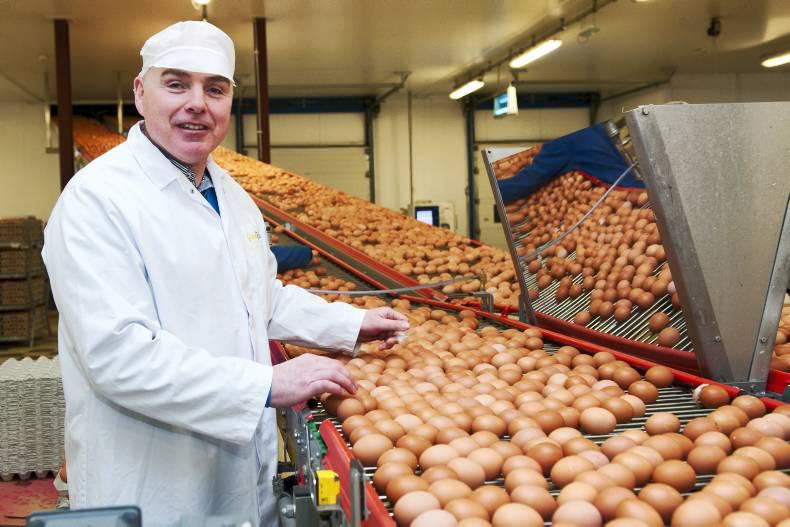
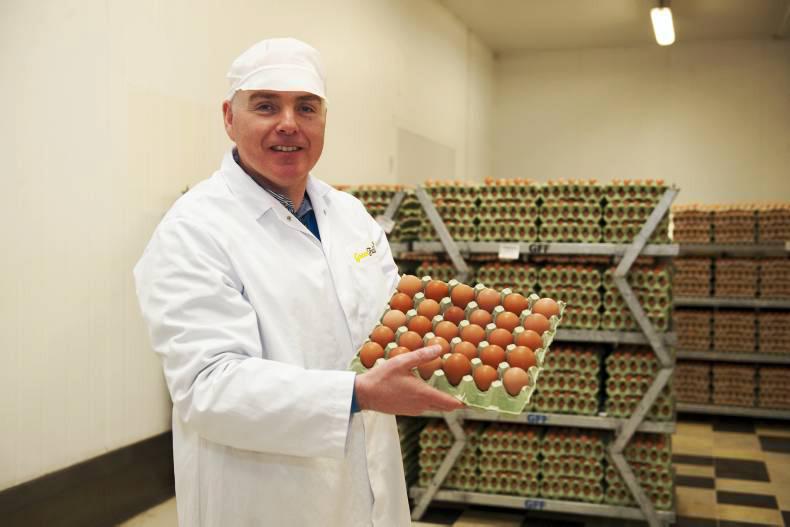
“These eggs were laid this morning and will be in an egg McMuffin by tomorrow morning,” explains Greenfield Foods managing director John Mohan as he takes the Irish Farmers Journal through the company’s state-of-the-art egg packing plant. Through an investment in excess of €2.5m a number of years ago, the business has grown to become Ireland’s largest egg-packing centre.
The family-run business is over 40 years old and in 1998, through an amalgamation with the neighbouring Meadow Farm Eggs, Greenfield Foods was born. In a bid to remain competitive, the Government backed consolidation to drive rationalisation. “As the margins came down, it was simple – we were forced to get bigger,” says John. Another trend he has seen in recent years is the growth of private label. Up to 90% of eggs are now sold this way.
Greenfield Foods has come a long way from selling 100,000 eggs per week at the start to where it is today – grading, packing and distributing almost five million eggs weekly. Located in Smithboro, Co Monaghan, Greenfield employs 90 people and sources its eggs from 60 farms. John says: “We have developed to where we are today because of the support of the family farmers.”
He says that the McDonald’s contract is very important to the business. They have been working in partnership with the fast food restaurant chain for over 20 years, and the standards McDonald’s has implemented have been a key driver of growth and have helped secure other contracts, such as Tesco back in 1997.
John says: “McDonald’s has always been at the forefront of introducing the highest quality standards of food safety and animal welfare into its supply chain and this has been very beneficial to us as a business as we have developed.”
To ensure the highest quality products, Greenfield controls all aspects of the process, including control of hens from a day old, management of feed and breed selection. All the eggs come from surrounding counties produced under the Bord Bia Egg Quality Assurance Scheme.
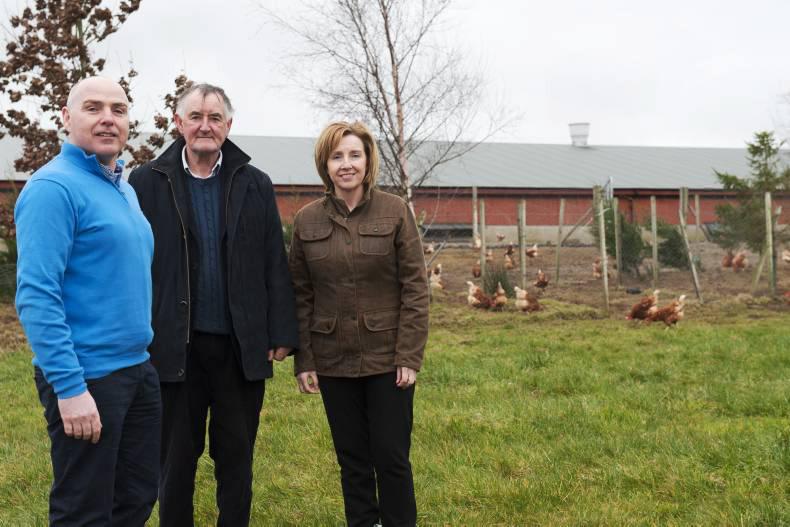
McDonald’s looks for a medium-sized free range egg, with a strong yellow yolk that is Bord Bia quality-approved, says John. It is also concerned about the animal welfare of the bird. Aware of the risks to the global brand, McDonald’s is big on traceability and food safety. Greenfield recognises this and supports farmers through ranch enhancement, which includes the planting of trees to improve the welfare of the birds outside.
Food safety is probably the key challenge and risk for the industry according to John and he is reminded of the salmonella outbreak of the late 1990s which almost wiped out the industry and got a lot of smaller units into trouble. At that time, Ireland went a different route to Britain, but he says this has been to our advantage in that we now have some of the best hygiene and health practices in Europe and customers like McDonald’s recognise this.
Through innovation and forward thinking, Greenfield has grown from its humble beginnings of 800 birds and a small packing store, to a production base of a million birds and the modern, state-of-the-art facility that it is today. The next challenge will be trying to drive growth and Greenfield has ambitions beyond these shores with sights set on reaching some of the 60 million people in Britain.
It’s a hen’s life
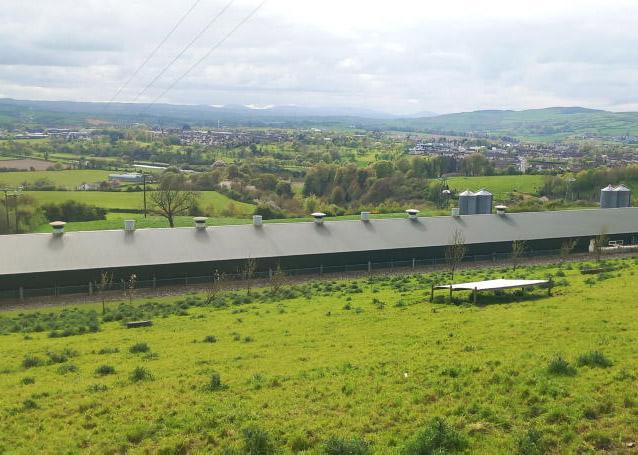
An egg McMuffin starts life as a Lohmann brown hen that roams outside by day and eats a strict diet of wheat, barley and maize. The birds are housed in houses, where part of the floor is covered in straw. The bird goes into a nest box every morning around 5am to lay her eggs. The final part of the journey sees over 40,000 eggs make their way to McDonald’s every week where they are poached and placed on the McMuffin.


SHARING OPTIONS