



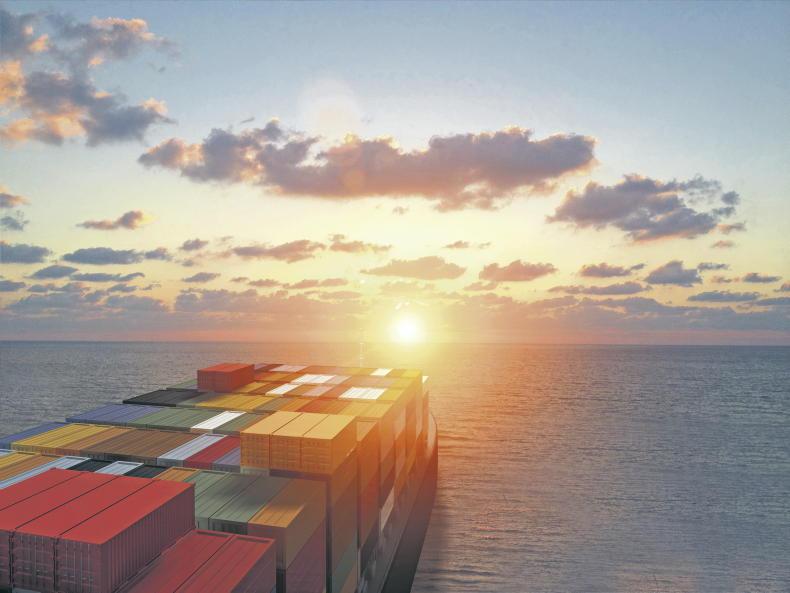
The value of Irish food and drink exports fell by 3% in the first half of 2026, to €8.697bn. Despite the drop, the figures for the first half of this year are the second highest on record and are €876m higher than the third highest that was achieved in the first half of 2023. See Figure 1.
The biggest drop came from the dairy sector, where the value of exports fell by €157.3m to just over €3.2bn (Figure 2), despite an increase in volume of 9.1% to 887,056t.
This reflects the falling value of global dairy markets, that began in the second half of last year and continued into 2026.
The value of beef exports also declined, down by €69.4m to €1.601bn, but the major factor in this decline was the sharp drop in beef export volumes, down 10.4% to 221,624t.
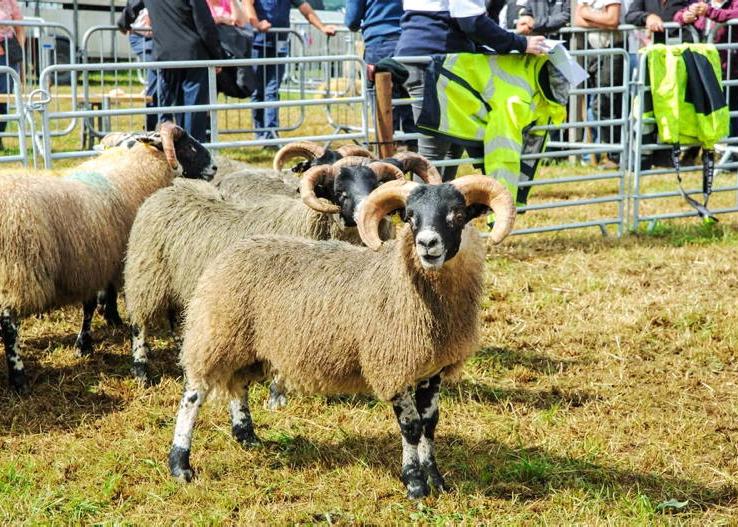
The value of Irish sheepmeat exports was also down in the first half of the year, falling by 2.6% to just over €209m. The year-on-year downward trend on sheep meat volumes continued, down 8.1% to 26,339t.
Pigmeat exports were worth €216.2m, a 9.2% decline year on year, and the value of poultry exports also declined, down 10% to €67.4m.
A sharp decline in the value of mushroom exports is reflected in the 14.8% drop in the value of horticulture and cereals exports to €143.8m.
It was in the middle of last year that international dairy markets began a downward trend that was first reflected in milk prices in September. Since then, butter in particular and to a lesser extent cheese markets have been in the doldrums, and it has meant that even though Irish processors exported more product in the first half of this year, there was less revenue.
The value of Irish butter exports fell by almost €156m in the first half of the year, while the overall value of Irish dairy exports fell by €157m to €3.214bn.
Despite the 17% drop, butter remains Ireland’s highest value dairy export at €760.3m during the period ahead of cheese, whose export value was €731.2m for the first half of the year, a 1.6% decline on the same period in 2025. The value of fat filled milk powders (FFMP) was marginally lower at €453m, while the value of infant formula was almost 10% lower at €314.8m.
Destinations for dairy exports
There was also substantial switching in the destination of Irish dairy exports in the first six months of this year. Sales to the EU were down by 14% or €208.5m to €1.283bn, with most of this loss coming from a drop in sales to Germany, down by €81.2m and sales to France down €61.5m. There was an 11% decline in the value of dairy sales to the UK, down by €69m to €534.7m.
Sales to Asian markets also fell, down by 11.2% to €297.7m though there was an increase of €22m to €320.8m in the value of exports to African countries.
However the most positive result for Irish dairy exports in the first half of 2026 was the €83.1m increase in the value of sales to the US compared with last year. Irish butter exports to the US have been in the news recently and they accounted for the majority of this growth in value, rising by €55.9m to €288.7m for the first half of 2026.
The story of Irish beef exports in the first half of the year is that despite exporting 25,716t less, a 10.4% decline on the same period the previous year, the value dropped by just 4.2% or €69.4m. This is largely explained by the fact that there were fewer cattle for processing and factories may be carrying some stocks of beef. While cattle prices increased rapidly in the early months of 2025, the value of beef exports increased at a slower rate over a longer period of time.
The destination for Irish beef exports is predictable with the main market being the UK, while most of the rest goes to EU countries. Despite considerable efforts by the Government in securing access to markets in the US and Asia and work by Bord Bia, just over 5% of Irish beef was exported to markets outside Europe in the first six months of the year, a similar proportion to what it was a decade ago.
Competition in UK
The UK remains the largest export market for Irish beef by a considerable distance with sales to that market worth €758.3m in the first six months, down 5.7% on the same period last year while the volume of sales fell by 11.4%. This reflects both the fact that Ireland had less beef to export overall and that the UK market has become more competitive with both Australia and New Zealand increasing their share of the market. France is the next largest market by both value and volume, generating sales of €199.6m on 30,955t of beef. The Italian market accounted for €135.1m of sales for 15,312t of beef, followed by Netherlands €128.8m (15,845t), Sweden €90.5 (12,729t), and Germany €78.9m (9,569t).
Ireland exported just 26,339t of sheepmeat in the first half of 2026, the lowest total for the first half of the year in the past decade.
The decline over the past three years has been particularly sharp as volumes had reached 37,563t in the first half of 2023.
This reflects the fact that farmers are keeping fewer sheep and also fewer farmers are keeping any sheep at all.
Ironically, the decline is happening at a time when market prices for sheepmeat have been relatively strong. While the volume is down just 7% compared with a decade ago, the value is 70% higher.
Comparing with last year, 2,307 fewer tonnes was exported in the first half of this year, with the export value down €5.6m to €209m.
France is the main market at €65.8m, followed by Germany on €31m, with the UK in third place on €29.1m.
As is the case with beef, sales beyond the EU and UK are negligible.
The value of Irish pigmeat exports fell by €22m to €216.2m in the first half of the year compared with 2025, with the volume of exports down 2,403t to 101,842t in total.
The UK is the highest value pigmeat market, worth €66.7m, with €27.2m of this accounted for by cross border exports to Northern Ireland.
Even accounting for a €9.9m decline in value, China remained the second highest value market in the first half of the year at €38.5m.
However despite exporting 3,265 fewer tonnes of pigmeat to China, it remains the largest volume market for Irish pigmeat, taking 25,805t with the UK in second place for volume at 20,729t.
There are also significant volumes of Irish pigmeat exported to Australia, the United States and Japan.
The value of Irish horticulture and cereals fell by almost 15% in the first half of the year to €143.8m, despite the volume of exports increasing by 10,444t to 189,513t. The value of this category is dominated by mushroom sales to the UK and in the first half of this year, the value of these fell by 29.9%, or €29m to €67.9m. There was a 17.7% increase in the volume of cereals exported to 147,722t, with the value increasing by €13.6% to €41m. Vegetable export values fell by €2m to €7.9m, while potatoes fell by €987,947 to €4.7m.
Poultry exports were down 10% or €7.5m in the first half of the year to €67.4m, with more than half of this decline accounted for by the €4m drop in the value of egg exports.


SHARING OPTIONS