



The European Parliament is seen as the last chance to stop the Mercosur trade deal. Those hopes, always slim, were dashed over the weekend by President Donald Trump’s announcement of fresh tariffs.
While there was some opposition in the parliament to the deal, the chances of getting the simple majority needed to reject it among the more-than 700 MEPs now seem vanishingly small.
Due to Trump’s threat of 10% tariffs against some EU member states over their support of Denmark and Greenland, the parliament session this week will be dominated by trade relations with the US.
It had been expected that the so-called Turnberry deal between the EU and US would be approved in a vote this week, but the liberal Renew Europe group said on Sunday that they would join the European People’s Party and the Socialists in delaying ratification of the deal.
There is also a vote this week on submitting the Mercosur trade deal to the European Court of Justice for an opinion on whether the deal is compatible with EU treaties. There had been some hope among MEPs opposed to Mercosur that there would be sufficient support for that motion which would have at least led to a delay in ratification of the deal.
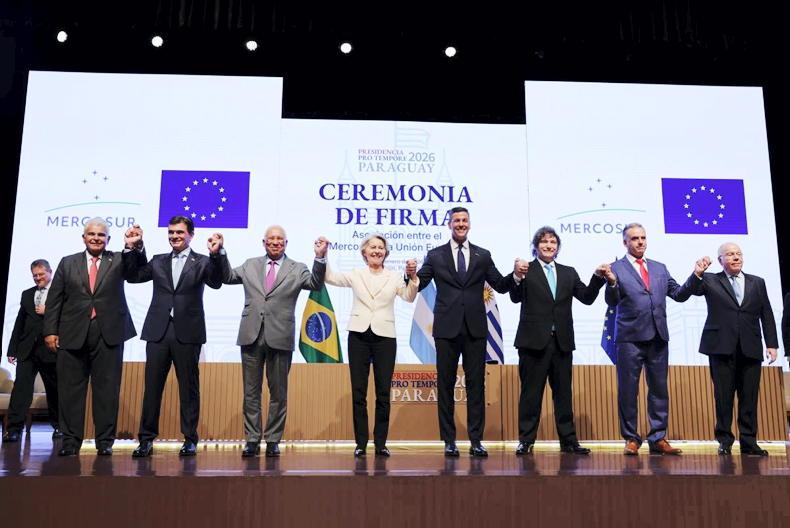
There had been some discomfort among MEPs that president Ursula von der Leyen had signed the agreement on Saturday, ahead of the parliament vote. This, added to the bloc of MEP who oppose the deal outright was seen as improving the chances of success of the vote to refer the deal to the Court of Justice.
However, the change in mood in the wake of Trump’s threats means that it will be much more difficult to get undecided MEPs to delay Mercosur.
Trump’s actions have renewed the focus in Brussels on making a success of the deal, despite any misgivings about how it has been implemented. The mood-music has shifted against the Turnberry deal and in favour of supported multilateral trade away from the US, taking with it any chance of delaying Mercosur.





SHARING OPTIONS