



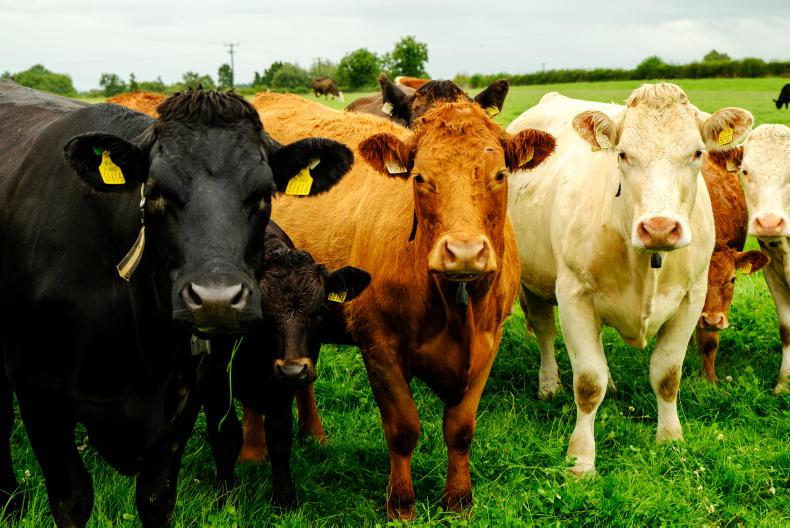
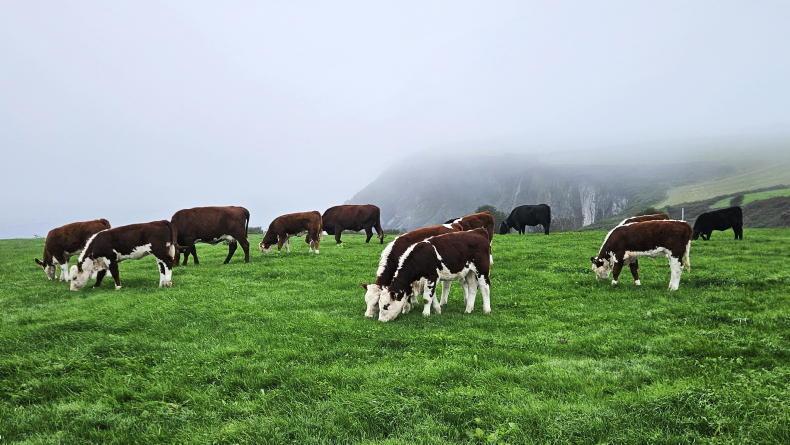
Last week all spring-born cow-and-calf pairs where brought to the yard to be weighed and performance analysed.
Weighing calves mid-summer and at approximately 200 days of age is a good indicator of performance of both the cow and calf. Up until this stage, the calves are depending heavily on the milk ability of the cow to satisfy their dietary requirements.
No concentrates are fed to calves in the first six months of life on Tullamore Farm. A weight at this stage will also paint a clear picture on how management in terms of health and decisions made around sire and dam selection are paying off.
Background
The suckler herd on Tullamore Farm is a high maternal index-based herd, with a focus being put on cows that milk well on a grass-based system which will drive weight gain into weanlings with minimal inputs.
The average Eurostar index of the herd is €134, €34 above the national average of €100. The herd also performed relatively well on a key performance indicator (KPI) basis, achieving a 370-day calving interval, zero per cent mortality at birth in 2025, 0.97 calves/cow/year and a six-week calving rate of 81%.
Performing well on these fronts should have a positive effect on calf performance given that calves will be of even age and size allowing for treatment up to weaning from a health and nutritional aspect being more streamlined. The farm puts a huge focus on both herd health and grassland management with both these aspects being identified as key drivers of cow/calf performance.
Calves are vaccinated at an early age against pneumonia, Pi3 virus, IBR and clostridial disease. Avoiding health issues reduces the incidence of sickness and poorly thriving animals.
Seventy-one calves where weighed on farm last week: 44 female calves and 27 male calves. The farm uses a lot of sexed semen hence the higher number of female calves versus male.
Analysing performance
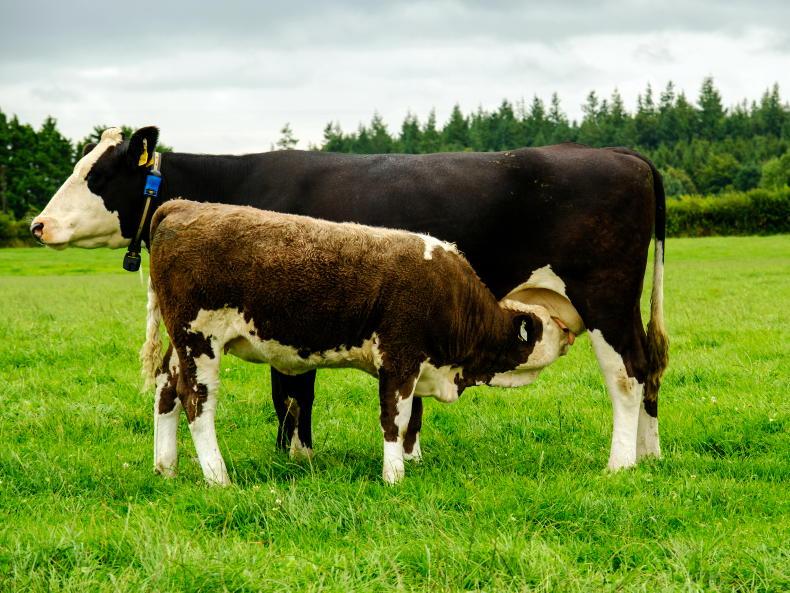
Heifer calves on the farm are weighing heavier on average by 2kg compared to bull calves. Heifers are running 44kg over their target weight and bulls are 8kg behind. This is most likely caused by a majority of female calves on the farm being born from mature cows due to a higher use of sexed semen on these compared to heifers.
It is to be expected that calves born from first-calved heifers will perform poorer compared to mature cows and, with a higher number of bulls born from this group, the picture on bull calf performance is somewhat skewed and pulled below the average daily gain (ADG) of heifer calves on the farm.
That being said, the five top-performing bull calves are ranging from 319kg-365kg with ADG ranging from 1.37kg-1.61kg/ day.
The five top-performing heifer calves on the farm are ranging from 345kg-379kg and ADG ranges from 1.51kg-1.66kg/day. It is equally as important to look at poorer-performing animals in the herd and ask the question, why? Are there underlying problems with poorer-performing calves such as health issues or poor dam milk ability?
Bulls
When we look at the five poorest-performing bull calves on the farm, two calves are being reared as twins weighing 250kg and gaining 1.05kg/day; one calf can be traced back to having a naval issue and developing joint ill in the first month after birth, this calf weighs 230kg and gaining 0.93kg/day, 0.41kg/day less than the average of the group. This certainly reiterates the importance of our focus on animal health.
A naval infection is a relatively common health issue among newborn calves, it’s easily treated and calves generally make a full recovery. However, in this case the only rational explanation for the poor performance of this calf is the fact he encountered this problem at an early age and may not have been treated on time to offset an effect on lifetime performance. The five poorest-performing female calves in the herd are all born from first-calved heifers except for one calf that was born one month premature and was expected to be lighter.
As the farm uses 100% artificial insemination (AI) a range of bulls is used across the herd and after weights are taken it is important to identify bulls that are performing well and bulls that are not, to help make informed decisions for future breeding seasons.
Bulls are ranked in Table 2 based on the average 200-day weight of their progeny. The majority of bulls used on the herd are selected with maternal traits in mind and their availability in sexed semen.
All bulls have performed relatively well with the top six bulls being on or over target for 200-day weights on bulls and heifer calves. The bottom three bulls are slightly under target for bull calves, but still at least 30kg above heifer target weight of 250kg.
Two bulls ranking in the bottom three were used on first-calving heifers only, with one bull (LM9577) having 100% sexed semen used and produced female calves only.
The majority of these bulls have been used again in the 2025 breeding season.
Management update
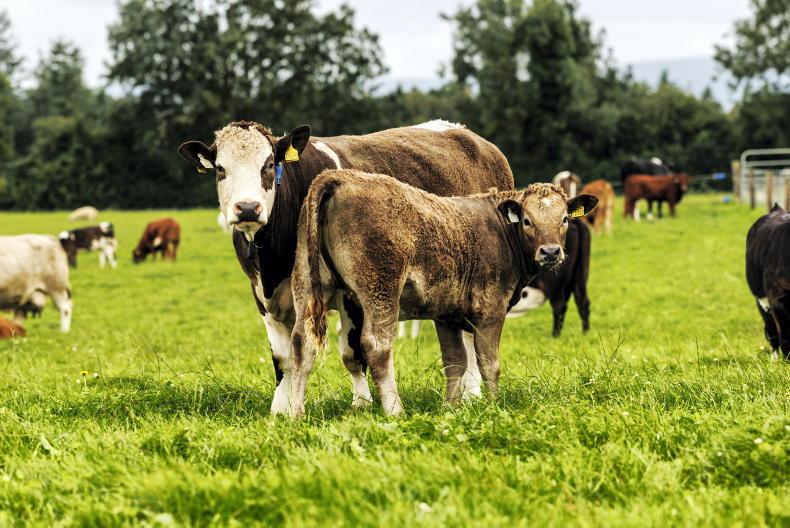
Bull and heifer calves have now been split and are running in two separate groups. Creep feed has been introduced to bull calves to try and push on weight gain with the aim to selling these calves as weanlings. There is ample grass on the farm with the average farm cover (AFC) now sitting at 844kg DM/ha with a growth rate of 52kg and demand currently sitting at 32kg. We aim to build covers into the middle of September before growth dips off to ensure plentiful grass to extend the grazing season for as long as possible.
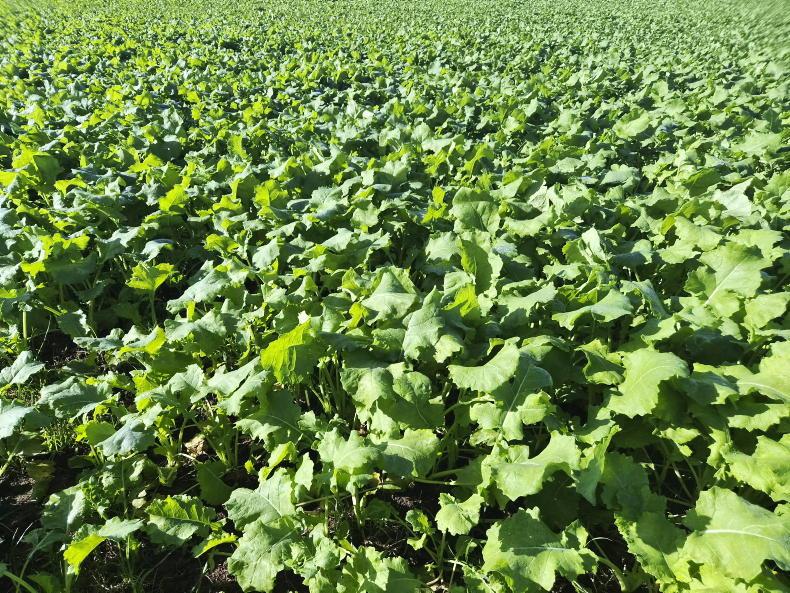
Lamb drafting continues to move swiftly, with a further 34 lambs drafted last week with no concentrates yet introduced. Nine acres of spring barley were grown on the farm this year to try guarantee straw supplies, the crop was cut on Friday last and yielded 3t/ac. Whole-crop silage (barley, oats and peas) was also harvested last week at 12 bales/ac. A crop of forage rape has been direct drilled into the stubbles after whole-crop with a view to grazing this with cattle or sheep over winter.
SCEP weighing reminder
Suckler Carbon Efficiency Programme (SCEP) participants must weigh at least 80% of eligible animals born on the holding of the yearly reference number in each scheme year and their dams and submit weights to ICBF.
Calves born between 1 July 2024 and 30 June 2025 are eligible for the 2025 scheme payment year. Each live calf must be unweaned and weighed with its dam on the applicants holding on the same day.
Where a calf dies before five months of age or it’s dam, this must be recorded on AIM and the 80% does not include such pairs.
All calves being submitted for weighing must have been born in the herd within each scheme year. The calf must be a minimum of 50 days old before it is eligible to be weighed. Weights should be submitted within seven days of weighing and no later than 1 November annually.
Weights must be completed using a scales.
ICBF monitors weights on a regular basis and looks for unusual trends or similar weight gains over time.
Discrepancies could trigger an inspection and a delay in payment being made in December 2025.



SHARING OPTIONS