



Teagasc survey results have shown that one in three farmers have not applied any lime in the last three years, which is a startling figure. With increased N, P and K prices and limitations on their use, we are seeing a gradual fall off in grass growth compared to five years ago.
A survey result like this could be part of the answer, with correct soil pH leading to increased utilisation of the valuable nutrients we apply in both chemical and organic fertilisers.
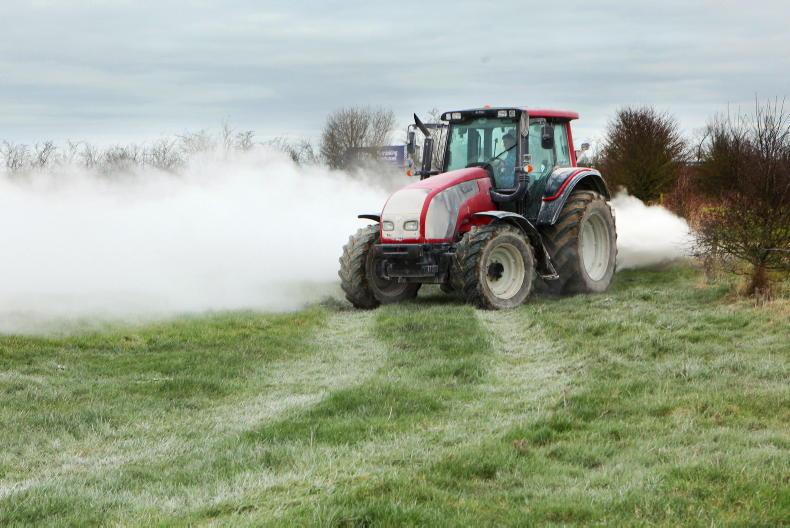
Lime can be spread any time of the year, but there are some issues that farmers face which make now a better time than most in the calendar year.
Spreading on to grazing ground and lime sticking on to grass that is to be ingested by cattle can lead some farmers to be fearful of cattle’s stomach pH being messed with by the alkaline product, while a similar fear also exists regarding the preservation of silage where lime remains on the grass leaf.
Grazed and closed off paddocks and silage ground that are trafficable now prove the ideal area in which to spread lime, provided there is a known requirement there for it.
William Treacy – Hackballscross, Co Louth
We haven’t housed any cattle bar the feeding bulls and cull cows that were housed earlier in the year. We have also delayed weaning of spring born calves as I need enough grazing power to get through some heavy covers before weaning can commence and cows are restricted.
Both spring and autumn calving cows are grazing some heavy covers of silage ground, with 24-hour allocations being given. I am cautious of tetany and have been feeding some small amounts of rough silage which is affecting clean out.
Beef heifers are still at grass on no concentrates and seem to have gained some compensatory growth having gone slightly stale in the summer. I intended to spread some lime post drought but grass just took off, so I’m hopeful I might still be able to when we clean off paddocks.
System Suckler to beef
Soil Type Variable
Farm cover (kg/DM/ha) 1,089
Growth (kg/DM/ha/day) 41
Demand (kg/DM/ha/day) 40
Mark Maxwell – Ballinagore, Co Westmeath
Demand is high for us for this time of year and it was hard to build cover, though growth remains good. We began closing paddocks two weeks ago for spring grazing and these already have a nice cover on them owing to the warm conditions.
We will start housing this week, with forward store cattle, most of which will hopefully be gone for Christmas, heading indoors alongside the spring calvers and their weanlings which will be weaned this week.
I will likely turn cows back out again and hold weanlings in as they are more settled and content indoors.
We are still killing cattle off grass, with a batch to go on Monday next. These have been receiving up to 6kg of meal due to the low dry matter of grass alongside some silage. The bull is out with the autumn calvers the last week.
System Suckler to beef
Soil Type Variable
Farm cover (kg/DM/ha) 530
Growth (kg/DM/ha/day) 43
Demand (kg/DM/ha/day) 36
Sasha Lavin – Newford Herd, Co Roscommon
All calves have now been weaned. Anti suck paddles were put in weanlings Tuesday week and calves allowed to graze with their mothers up until this Tuesday, after which weanlings were moved in to their own sperate mob.
They continue to receive 2kg concentrates/head/day. Cows have remained out and grass supplies should see them stay out for an additional three weeks weather depending.
Cull cows will be removed and housed before this for further feeding. We would be hopeful to keep weanlings out until late November/early December.
Yearling bullocks remain at grass and are receiving 2kg/head/day of concentrates. There are 18 heifers remaining indoors on a diet of high DMD silage plus concentrates. We slaughtered 14 heifers last week, with an average carcase weight of 310kg, averaging R-.
System Suckler to beef
Soil Type Variable
Farm cover (kg/DM/ha) 1,024
Growth (kg/DM/ha/day) 23
Demand (kg/DM/ha/day) 33



SHARING OPTIONS