



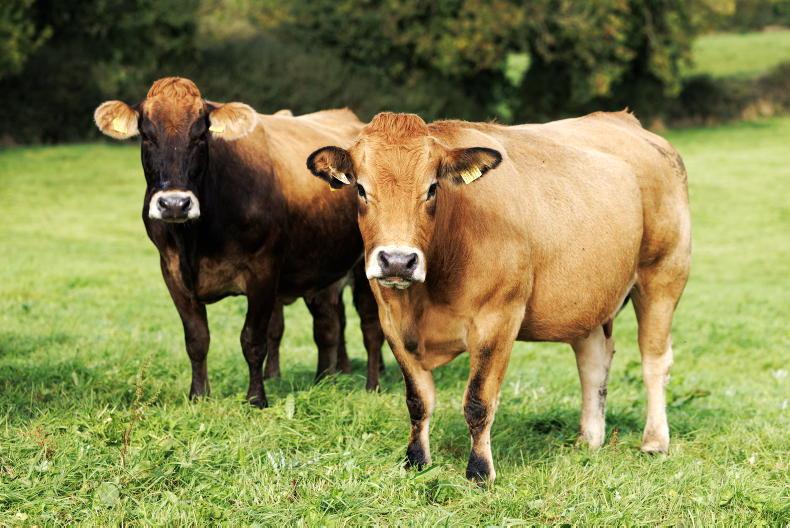
While some cattle have been heading indoors over the last 10 days, ground conditions for the most part have been playing ball and farmers in the west and northwest are now in what they call “bonus territory “once they have cattle out past mid-October.
Farms in the east and south have several more weeks of grazing ahead of them, with ground conditions allowing for good graze outs to be achieved. Hopefully the heavy rain over the next few days won’t scupper this.
For farmers approaching the last week to 10 days of grazing, if ground conditions allow, the heaviest ground on the farm or those paddocks that are the most awkward or far away to get to in spring should now be grazed.
These will have a heavy cover on them come the beginning of April, but by that time you should have the grazing power to get through them.
With strong regrowth on paddocks in the last two weeks owing to above average soil temperatures, paddocks with clover in the sward may need a recheck to ensure that too heavy of a cover is not carried on them, which would smother out the clover.
Niall O’Meara – Killimor, Co Galway
Cows are coming in for a few hours a day on silage to ease the transition indoors, with all cows and calves set to be housed by 1 November.
I find it really useful to have silage introduced due to breeding commencing on 7 November. All bulling heifers have received a high iodine and copper boluses ahead of breeding, with cows due to receive theirs in the next few weeks.
We closed up five paddocks close to the yard earlier in September for calves to graze, and I have 20 more paddocks closed out of a total of 45. Due to the strong late growth, I’m conscious this year of leaving covers on grass clover swards over the winter, having invested in establishing clover heavily over the years. I will look at running some lighter yearling heifers on some paddocks in to November to get these grazed off.
System Suckler to weanling
Soil Type Variable
Farm cover (kg/DM/ha) 667
Growth (kg/DM/ha/day) 28
Demand (kg/DM/ha/day) 30
Shaun Diver – Tullamore Farm, Co Offaly
Growth is still solid, and we have made up a lot of lost ground from where we were in the drought. All calves have been weaned and cows are cleaning up swards after weanlings. Weanlings are receiving ration each day, with bull weanlings now housed by night and offered concentrates and hay on straw bedded pens due to the low grass dry matter. Cull cows have been housed for further feeding.
Rams were turned out with ewes last week, with this being earlier than normal for the farm. We were anxious to ensure that there was sufficient high-quality grass there for ewes for the first two cycles of mating.
Ewes have been turned out in batches of roughly 30 ewes per ram, with single sired mating being undertaken as is normal. Replacement ewe lambs will join after the first cycle is complete.
System Suckler to beef
Soil Type Variable
Farm cover (kg/DM/ha) 812
Growth (kg/DM/ha/day) 39
Demand (kg/DM/ha/day) 30
Jack Spillane – Tipperary Farm, Co Tipperary
We are housing another 105 yearling cattle this week, with these animals being clipped and treated with a levacide pre-housing. This leaves just 30 yearling cattle plus our 2026 calves out, so we should see demand drop back well now with these cattle housed.
There were 37 cattle slaughtered last week, with heifers averaging 274kg, and bullocks 307kg.
We should see these figures rise as more of the larger framed, weight carrying cattle come forward for sale. Another draft of similar numbers will be completed this week.
Calves are still at grass and will remain out, with ground conditions being excellent up until recently.
Grass dry matter is very low and calves are receiving 1.5kg/head/day of ration. Silage stocks are looking good ahead of housing.
System Dairy calf to beef
Soil Type Variable
Farm cover (kg/DM/ha) 911
Growth (kg/DM/ha/day) 22
Demand (kg/DM/ha/day) 22



SHARING OPTIONS