



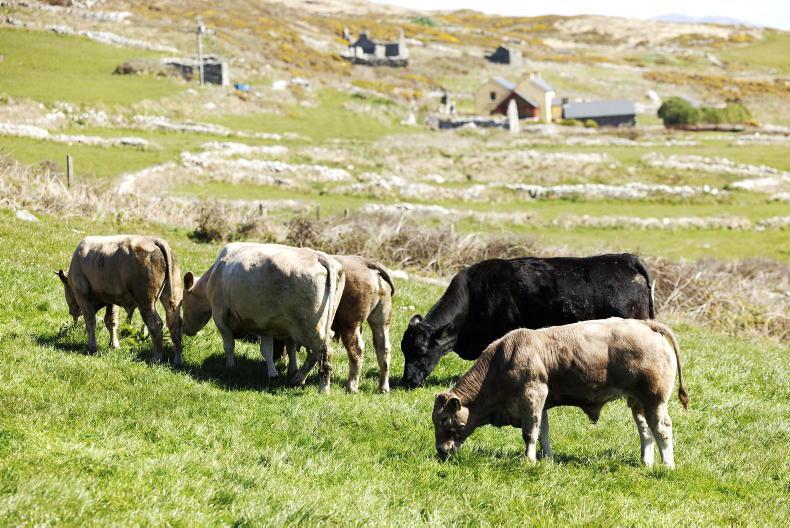
It’s been a lack lustre spring and early summer, when we should really be looking at a surplus of grass.
Farmers east of the Shannon were in a bad place with a lack of rainfall until the last week or so, with a huge recovery seen in recent days with heavy showers hitting them.
This moisture combined with the incoming heat should see growth rates rocket, and surplus paddocks should hopefully be a thing once more.
On the western front, it’s a different story. Cold and wet do not lead to good growing conditions and combined together they have left many farmers extremely tight on grass. The main issue seems to be in recently grazed paddocks which are extremely slow to bounce back. With an application of fertiliser and the incoming heat, the pendulum should swing in favour of more optimal growing conditions.
Clonbollogue, Co Offaly
I didn’t graze paddocks as tight this spring and it seems to have aided hugely in recovery. Recently reseeded paddocks in particular have been quick to bounce back, but even with the older swards with a butt to them, I was able to get an additional grazing with the autumn-calving cows, which has helped to stretch things out. First-cut grass silage will be harvested towards the end of next week. It’s looking a little light but I’m hoping it will bulk with the warmer weather towards the weekend. I usually cut the first week of June, but having doubled my acreage of peas, oats and barley this year, I think a lighter, better quality of first-cut will serve me better. First-cut has been completed on the red clover ground, yielding 110 bales from 12 acres, with a 24-hour wilt; 2,000 gallons of slurry were spread afterwards for second-cut.
Millstreet, Co Cork
Ground has been extremely cold and grass simply hasn’t been growing. Anything with a cover on it hasn’t been too bad, but the regrowth on anything grazed has been very poor and I’ve been eating into my farm cover instead of building it. I’ve had to supplement cows with silage to slow down the rotation, and with an inch of rain fallen on Monday, I actually housed some cows temporarily to avoid doing excessive damage. These will hopefully go back out again this evening (Wednesday) or Thursday morning. I’m hopeful that the forecasted heat towards the weekend will turn things around. Older paddocks have been hardest hit. Silage ground is looking good considering, with the cover of grass on this aiding in growth. The trafficability of it is an issue, but I am hoping to cut some of the drier ground towards the weekend.
Ballinagore, Co Westmeath
We had been in a tight spot for grass with a combination of cold and dry; ground was in bad need of rain. We weaned off some of the autumn calvers and housed these, which helped to take the pressure off grass, and this combined with the recent rainfall has seen growth jump in the last week.
We would be hopeful that the incoming heat will drive it on further.
Most of the farm has been spread with fertiliser in the last two weeks, with a mixture of CAN + S and 23-2.5-10+ S used on paddocks which should help push on growth as well.
The last of the cattle were slaughtered out of the shed last week, and I will begin picking off cattle at grass for slaughter in two weeks’ time as well.
First-cut silage will hopefully be harvested on the first week of June.


SHARING OPTIONS