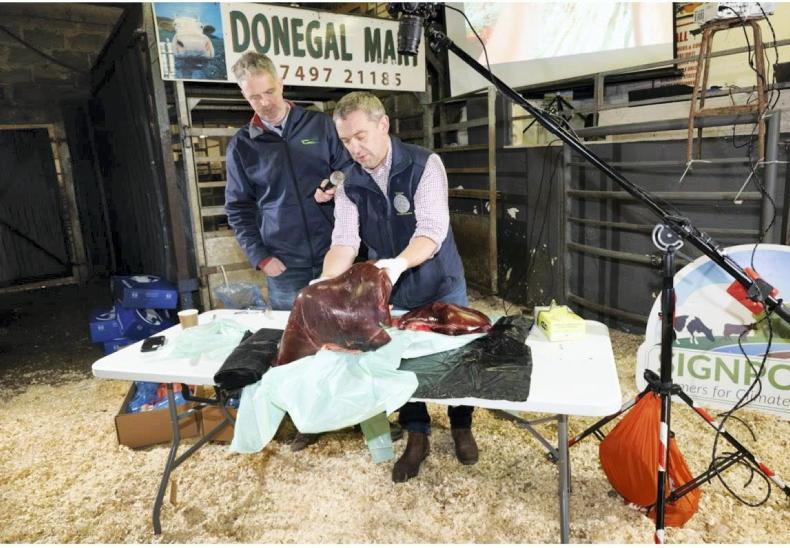
Severe fibrinous pleuropneumonia due to Mannhaemia haemolytica.
ADVERTISEMENT
Animal Health Ireland, together with Teagasc, has brought out a Beef HealthCheck series of videos on key health aspects farmers should consider around housing.
This week’s video outlines the importance of minimising the risk of pneumonia in cattle around housing time. Damage caused to lungs is often irreparable and can cause lifelong issues in affected cattle.
ADVERTISEMENT
There are three main causes of pneumonia in cattle; lungworm, viral pneumonia or bacterial pneumonia. Frank outlines the benefit of preventative measures that farmers can take to reduce the chances of infection. These include vaccinations as well as having animals tested and treated for lungworm where required.
These treatments should take place prior to a stressful period such as when animals are bought in or around housing time.
Register for free to read this story and our free stories.
This content is available to digital subscribers and loyalty code users only. Sign in to your account, use the code or subscribe to get unlimited access.
The reader loyalty code gives you full access to the site from when you enter it until the following Wednesday at 9pm. Find your unique code on the back page of Irish Country Living every week.
CODE ACCEPTED
You have full access to the site until next Wednesday at 9pm.
CODE NOT VALID
Please try again or contact support.
Animal Health Ireland, together with Teagasc, has brought out a Beef HealthCheck series of videos on key health aspects farmers should consider around housing.
This week’s video outlines the importance of minimising the risk of pneumonia in cattle around housing time. Damage caused to lungs is often irreparable and can cause lifelong issues in affected cattle.
There are three main causes of pneumonia in cattle; lungworm, viral pneumonia or bacterial pneumonia. Frank outlines the benefit of preventative measures that farmers can take to reduce the chances of infection. These include vaccinations as well as having animals tested and treated for lungworm where required.
These treatments should take place prior to a stressful period such as when animals are bought in or around housing time.
If you would like to speak to a member of our team, please call us on 01-4199525.
Link sent to your email address
We have sent an email to your address. Please click on the link in this email to reset your password. If you can't find it in your inbox, please check your spam folder. If you can't find the email, please call us on 01-4199525.
ENTER YOUR LOYALTY CODE:
The reader loyalty code gives you full access to the site from when you enter it until the following Wednesday at 9pm. Find your unique code on the back page of Irish Country Living every week.






SHARING OPTIONS