


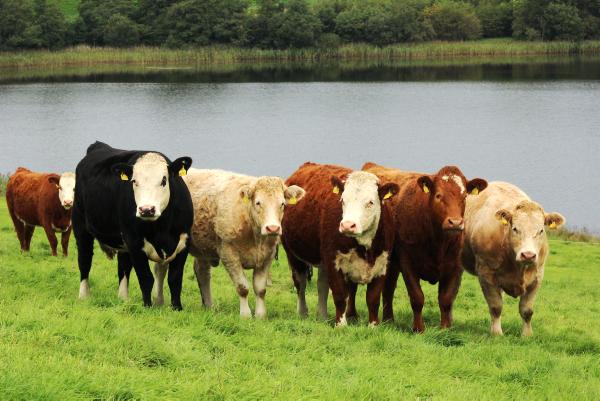
Weather conditions have been far from summer-like in recent weeks with regular rainfall. Heavy and persistent rain has made ground conditions extremely difficult to manage for farmers operating on heavier land.
I have talked to several farmers recently who may need to re-house some cattle, should there be further spells of heavy rain.
Hopefully there will be an upturn in weather sooner, rather than later, which will help to dry out grazing ground and take the pressure off beef farmers operating on heavier soils. Coping with difficult ground conditions at present requires a pro-active and reactive approach to management.
Taking steps to prevent heavy poaching from occurring ahead of periods of rain and being quick to react when animals do start to cause damage will minimise any reduction in grass growth over the remainder of the year.
Another factor to remember when working with livestock on ground that has become overly wet is to be flexible. Your plans can change within a day. It is important to make the right decision for managing your land and your cattle at the right time. In some cases this will require a brief housing period.
Following some of the steps will hopefully help to prevent ground damage from grazing animals in the short term, until both weather and ground conditions improve.
Step 1
WORK IN SMALLER GRAZING AREAS
This may seem counter-productive by confining cattle to smaller grazing paddocks, as they are likely to do more damage in a small paddock. If the ground is wet, cattle will cause damage regardless of the size of grazing area.
Take a large 10 acre grazing field, when cattle become unsettled they will be able to travel over the entire field, following hedges and fences. Therefore, they will cause severe poaching damage in several areas of the field.
However, if the same 10 acre field is split with temporary wire into five smaller paddocks measuring 2 acres in size, you can confine these animals to one smaller paddock during a short wet spell.
This way, only 20% of the field will be damaged. It will be easier to repair this smaller area, compared to the damage caused in the first scenario when cattle had access to the full field.
Step 2
TWICE PER DAY STRIP GRAZING
This option is similar to Step 1 in trying to control the area cattle are grazing on. By using a strip wire to control grazing intake, moving the fencer in the morning and evening will offer cattle fresh grass twice a day, which will help to keep animals settled.
Working with the normal two- or three-day paddock is fine, but during wet conditions, cattle can spoil a lot of grass as they become unsettled. Using the strip wire, you can prevent spoilage of the sward.
Do not make the one cardinal mistake by giving cattle too small a grazing allocation. Cattle will become unsettled if they get hungry, increasing the chances of them breaking through the fence. Try to move the fence at the same times each day.
During wet spells with frequent rainfall, the location of the water trough is less important, as cattle will take in water through grazing, reducing drinking activity from troughs.
Step 3
KEEP GRAZING AREAS SQUARE AND USE A BACK FENCE
Believe it or not, cattle will walk less in a square grazing area than in a long, narrow paddock or where a strip wire is used to pull a long temporary fence across a field. Set up your paddocks to be as square as possible. The less walking cattle do, the less damage they cause.
Using a back fence will prevent additional damage to grazed areas from occurring, which will help ground to recover. Again, try to keep the back fence as square as possible. Buying a few extra fencing reels will cost less than a bag of grass seed, so it is money well spent.
Step 4
USE ON/OFF GRAZING
This option will not be practical for every farmer. But I have met plenty of suckler farmers operating on heavy land who have good handling pens on outfarms, or good infrastructure for moving animals in and out of the main farmyard.
Having access to hardcore stand-off areas such as laneways, handling pens or the main farmyard can be crucial to managing heavy or wet grazing land. Bringing cattle in and out of pens, or the yard every day can be a hassle. But if it prevents the ground from being damaged, it is time well spent.
Allowing cattle out to graze for a period of three hours and then removing them back to a hardcore area, handling unit or farmyard will make best use of grass. Cows will rarely graze for more than a three-hour period from a hungered state.
Step 5
DON’T BE AFRAID TO RE-HOUSE IF NECESSARY
There is no shame in having to bring some cattle back indoors. It should be viewed as a good management to prevent damage. Be selective in which animals to house. Be careful with young weanlings, as there may be a risk of pneumonia with these animals.
Similarly, cows that are just coming into heat should remain at grass if possible, as stress and the change in diet and environment may affect conception rates negatively.
Instead, pick spring-calving cows that are in-calf or have not shown any sign of repeating since the breeding season began. Autumn-calving cows can be easily housed, as they present less risk.
Young bulls can be more difficult to manage when ground becomes wet and tender. Splitting a group of yearling bulls for rehousing can increase the level of aggression when housed and returned to grass.
Treat grazing bulls as one group. If housing, house them all as one group and return to grass as one group on the same day.
Listen to grassland management advice from Teagasc's Gary Fisher in our podcast below:




SHARING OPTIONS