




Drought conditions and a resultant collapse in grass growth has forced the Tipperary dairy calf-to-beef demonstration farm located in Ballyvadin to change plans in a bid to conserve grass supplies.
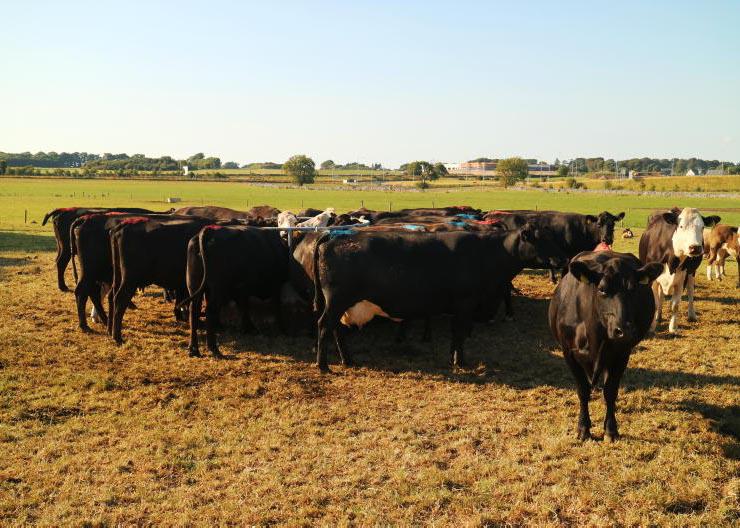
Farmers attending last week’s open day on the farm run by Dawn Meats, Shinagh Estates and Teagasc were told that 130 cattle had been moved to a finishing diet in the previous week.
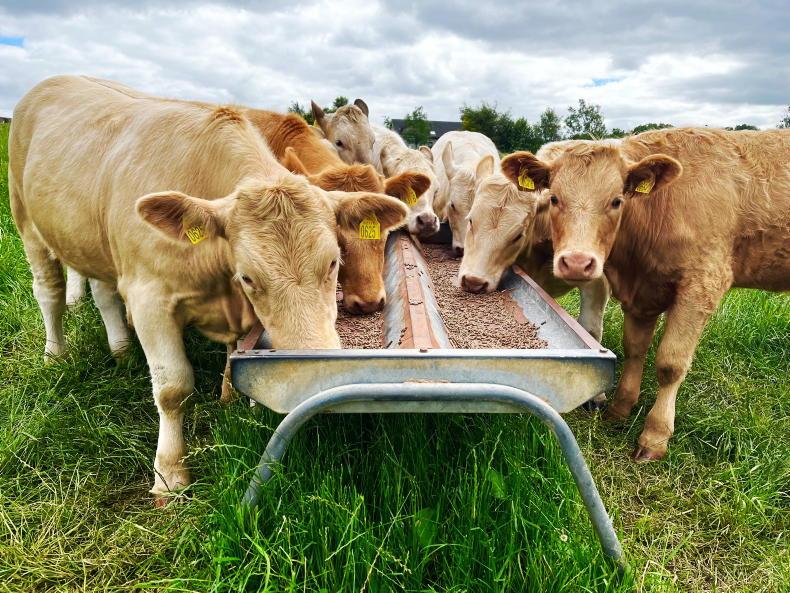
While these animals are still outdoors they have been removed from the grazing rotation and are being offered ad lib silage and 6.5kg concentrates daily.
Matthew Murphy, Dawn Meats agricultural manager for Ireland advised farmers faced with a similar challenge to think carefully about the decisions being taken to contend with tighter grass supplies and to select the most suitable animals to transfer on to a finishing diet.
While in theory smaller-framed cattle and animals already possessing a cover of flesh could be pushed on to slaughter quicker, he said doing so may result in animals being slaughtered at light weights that do not meet the desired minimum carcase weight of upwards of 250kg.
Instead Matthew advises selecting larger-framed animals, which also typically have a higher grass intake, allowing smaller-framed animals a greater opportunity to mature and develop a frame before finishing.
The aim at present is to sustain store cattle on a grass-only diet but with grass covers diminishing fast there may be no other option but to add more animals to the finishing group while depending on grass supplies, concentrates may be introduced at a lower rate to lighter cattle if grass reserves continue to diminish.
The approach taken mimics the finishing strategy on the farm where the aim is to align finishing dates of cattle to take account of tight shed space.
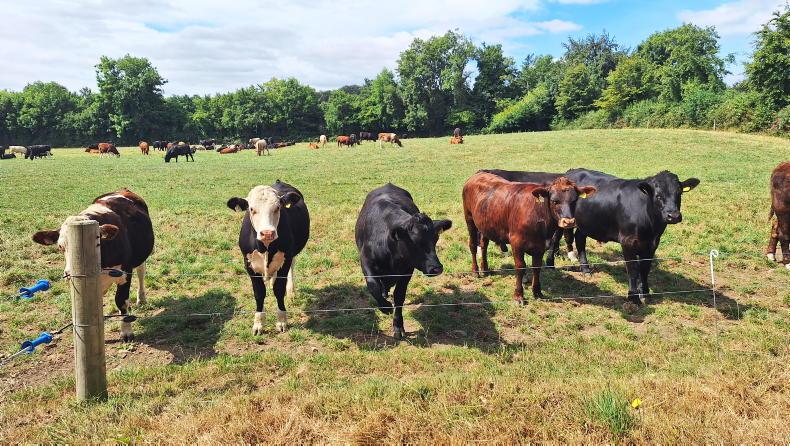
There is only sufficient housing available to cater for a few hundred animals at a time. As such a percentage of yearling cattle are retained outdoors on deferred grazing until all cattle are drafted for slaughter.
The profile of calves purchased broadly aligns with these constraints with 60% early maturing breeds including Aberdeen Angus, Hereford and possibly a percentage of Aubrac-sired cattle and 40% late-maturing breeds such as Limousin, Salers and Holstein Friesian bullocks.
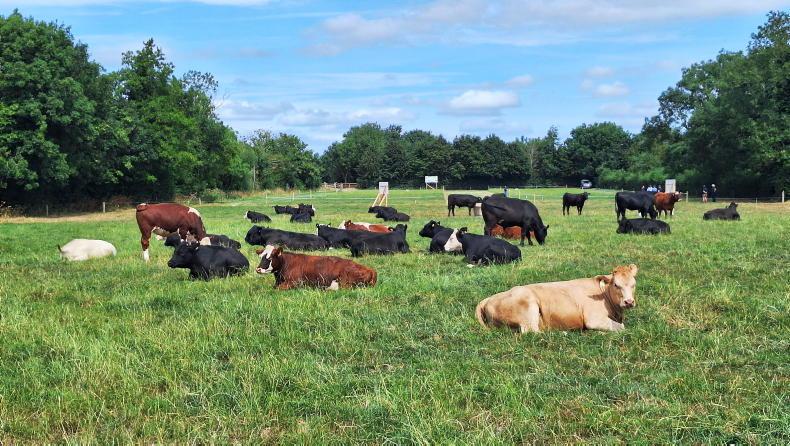
Criteria used to select animals for transferring on to a finishing diet include gender, maturity, liveweight and body condition score. Matthew told farmers that the focus is to draft animals for slaughter once they hit a fat score of three commenting that there is no benefit in the system in feeding animals in to a fat score of four.
He said that the genetics of different breeds limits their carcase weight potential and that some individual animals will inevitably be finished at a lighter carcase weight.
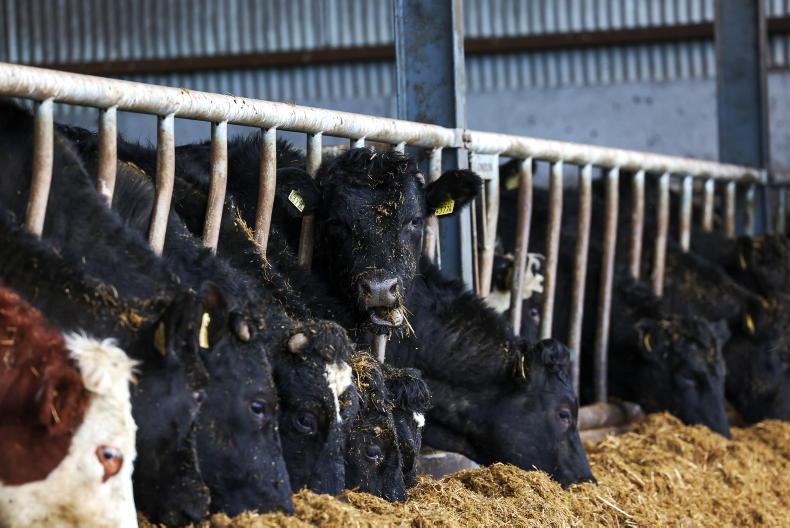
The level of concentrate supplementation offered depends on silage quality. Where excellent-quality silage with a dry matter digestibility (DMD) of upwards of 75% is available the volume of concentrates offered is in the region of 4kg to 5kg per head daily.
This increases to 5.5kg to 6.5kg daily where silage quality averages 70% DMD and 7kg to 8kg where offering lower-quality silage of 65% DMD.
Matthew said such feed allocations should be sufficient for animals to gain in the region of 1kg liveweight daily.
The typical finishing period for early-maturing animals is 60 to 80 days, extending to 100 to 120 days for late-maturing animals.
He added that having staggered finishing dates with animals drafted fortnightly also lends itself to a more balanced cash flow with sales for up to eight months of the year.



SHARING OPTIONS