



James Madigan farm walk review
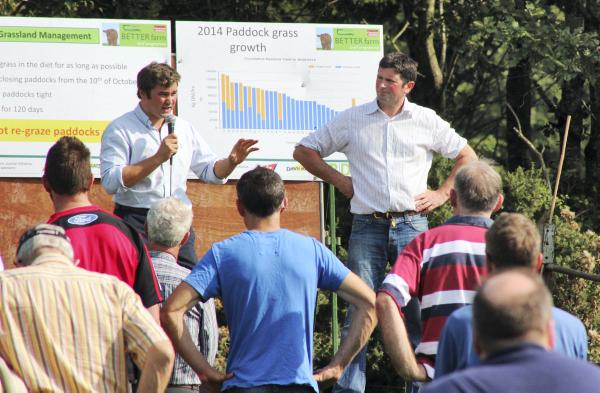
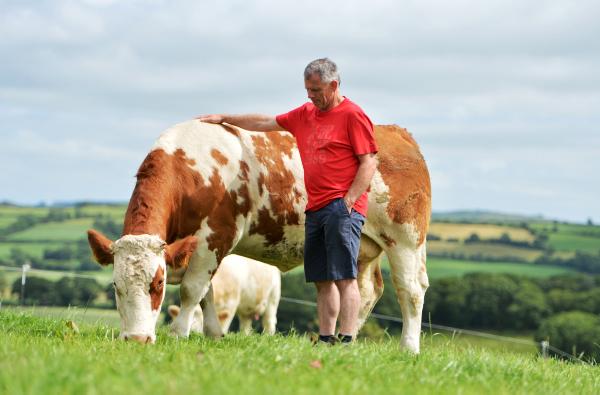
Reseeding will keep you in business – a simple message from James Madigan to the crowd of 400 farmers at last week’s BETTER farm autumn walk. For those who attended, the message was clear to be seen on James’s 64ha farm near Ballyhale, Co Kilkenny. Grassland management is first-class across the whole farm, as is stock quality.
While the programme and local Teagasc advisers offered plenty of practical advice on managing swards, getting to hear the experiences from the farmer himself and being able to see it at first-hand left those in attendance clear on how much more potential there is to improve cattle performance from grass.
James farms part-time with assistance from his wife Ann-Marie. He works full-time off-farm and is therefore focused on a simple, streamlined farming system. He does not have time to be duplicating jobs, such as dosing, de-horning and spreading fertilizer.
Split calving
Before joining the BETTER farm programme, the farm carried a suckler herd of 62 cows, split between spring and autumn calving. The herd has increased, with 74 cows calving in 2014 and plans for 80 cows next year, which is the farm’s limit.
The spring herd calves from late January to early April, while the autumn cows calve in August and September.
The time demand from his job made him realise how important it was to have a compact calving period and that routine management tasks needed to be carried out on one day.
“We calve cows in two herds because it eases management and suits our facilities better. Both herds are managed as two separate groups. Cows do not slip between herds,” said James.
“If the herd was completely spring-calving, we would have to run them in two groups, so the split calving is similar.
“It is also better for cashflow, especially with an expanding herd and the investment being made with fencing, reseeding and housing. We have cattle to sell at two or three times during the year, rather than selling everything in one go.”
Reseeding
The entire farm has been reseeded inside seven years and this year, eight acres of the oldest paddocks have been reseeded because James was not happy with how they were performing. The farm consists of 15 fields and a different field will continue to be reseeded each year.
“Reseeded grass will grow earlier in spring so you can get stock out early. It gives better yields, carries more stock and cattle perform better,” said James.
One field on view was reseeded in autumn 2013 and has yielded over 13.5t/ha of dry matter up to the beginning of September, roughly the equivalent of 27t/acre of grass in fresh weight. The national average yield on livestock farms is a little over 5t/ha of dry matter.
Programme adviser Peter Lawrence outlined how paddock grazing and grass budgeting has facilitated the increase in stocking rate from 1.86LU/ha in 2011 to 2.15LU/ha in 2014.
Peter stated that regular grazing and resting with paddocks encouraged perennial ryegrass to out-compete any unproductive weed grasses trying to establish in the sward.
“Ryegrass loves regular applications of nitrogen and a high stocking rate. Frequent grazing encourages tillering, which prevents weed grasses from becoming established and produces more ryegrass so yields will increase,” said Peter.
He added that, like barley or wheat, grass is a crop and should be maintained as such, with proper soil fertility management and spraying to control docks. Grass is then harvested with cattle to produce liveweight gain.
Steer system
Cattle born on-farm are finished as steers at a target carcase weight of 400kg at 22 to 24 months, with heifers killed at 330kg at 22months.
James and his local B&T adviser Austin Flavin gave an overview of the importance of getting store cattle out to grass early in spring and getting 200kg of liveweight from a grass-only diet.
Store cattle went to grass this spring on 5 March, which was later than planned, but persistent rainfall in February prevented an earlier turnout.
The farm is dry in nature, which is a natural advantage that James has on other farms around the country. However, there are plenty of farms that operate on similar ground that are not making the most of this advantage.
“The earlier I get them to grass, the cheaper it becomes to put on weight, compared with feeding indoors. I let a pen out at a time and if they have to be re-housed, then they are re-housed. It is no big deal. Cattle have to get early grass to stand any chance of making money on them,” said James.
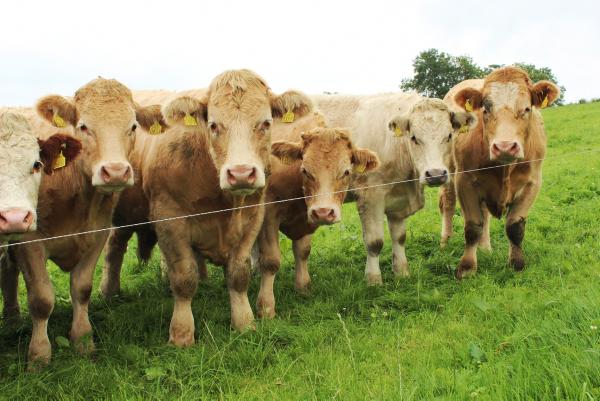
Steers are mainly Charolais bred from Simmental cross Friesian cows. Heifers are sourced from a neighbouring dairy herd, allowing James to concentrate on using two terminal sires to produce cattle suited to finishing.
Austin Flavin outlined that by improving herd output from better fertility, the herd was producing more live calves per cow per year.
In 2014, the herd will wean 0.95 calves/cow compared with the national average, which has now fallen below 0.8 calves/cow.
When combined with improving calf performance on an annual basis from a grass-based system, the farm has seen gross margin increase by 35% from €535/ha in 2011 to €720/ha in 2013. The farm is on track to improve gross margin again this year to at least €800/ha, with further potential if beef prices eventually improve this winter.


SHARING OPTIONS