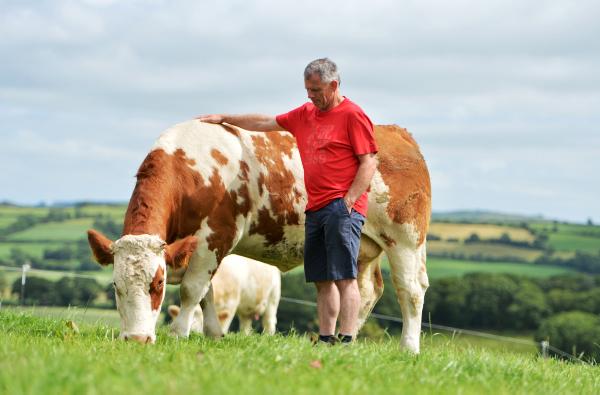
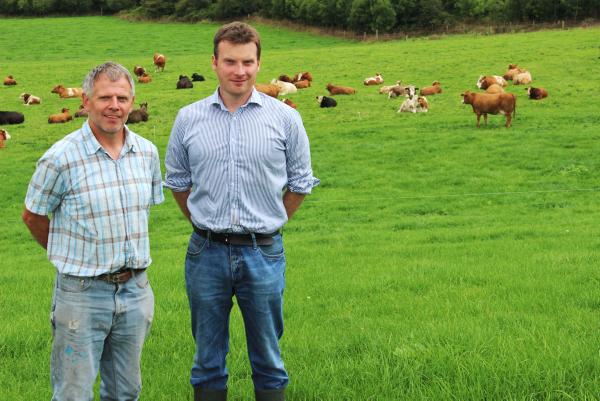
Since joining the BETTER farm programme, increasing output from a grass-based system has been the priority on Ger Dineen’s farm.
Ger operates a herd of 49 spring-calving suckler cows, currently on 31.2 adjusted hectares of grassland. The farm is split into two blocks, with 22ha on the home farm and the remainder located two miles away.
This herd has been built up from 35 cows in 2012 and the farm plan is to increase to 55 cows by next year.
All bulls are finished under 16 months of age, with 55% of last year’s bulls finished under 14 months of age at an average 413kg carcase weight.
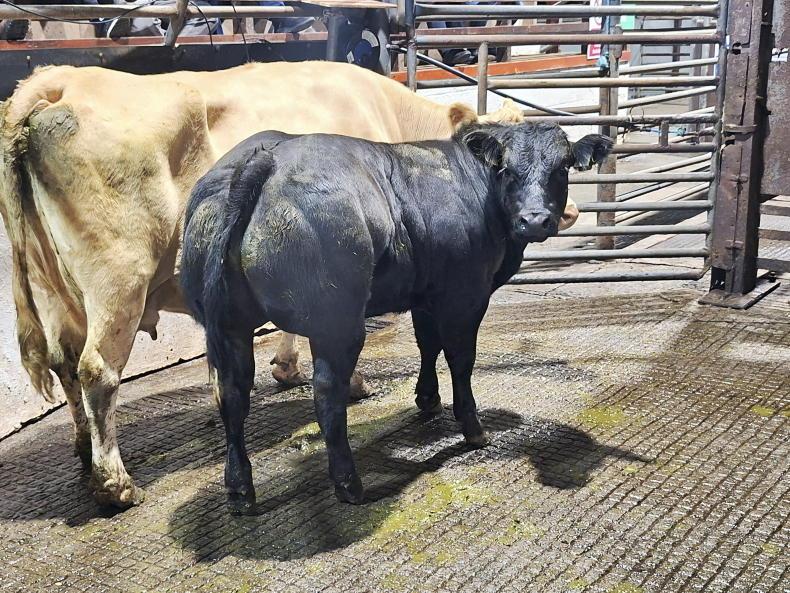
All bulls were U or E grades, which is a fantastic performance considering all cows are bred to maternal sires.
As the main focus is on maternal sires, Ger has a market built up locally for replacement heifers. All surplus heifers are sold off-farm at 12 months of age. These heifers and dams are 100% AI-bred to top maternal Limousin and Simmental sires for almost 20 years.
In the last two years, Ger has experimented with other breeds to get the benefits of hybrid vigour.
In 2013, heifers were inseminated with mainly Salers sires and, in 2014, some Angus sires have been used.
The main idea behind using the Angus is to reduce the size of the cow slightly, while maintaining milk volume and ease of calving in the herd.
Profitability
Gross margin on Ger’s farm has remained relatively static at just over €550/ha during the first two years of the BETTER farm programme.
Poor weather through 2012 and the spring of 2013 led to large increases in feed costs in the form of bought-in ration, hay and straw.
Ger’s herd output was low also, as he was stocked at less than 1.7 LU/ha. This has since increased to over 2.2 LU/ha, leaving Ger in a better position in terms of output.
Grassland costs increased in 2012 and 2013, as low soil fertility was being corrected with compound fertilizers, such as 10:10:20 and 18:6:12.
Higher soil fertility and improved grassland management has allowed the farm to produce and utilise more grass to sustain the higher stocking rate. The end result is that the farm is on course to make the target €1,000/ha gross margin in 2015.
Grassland
Grassland management has improved significantly since joining the programme. Ger now measures grass on a weekly basis and records data on Pasturebase Ireland.
Having spent money addressing phosphate (P) and potash (K) levels and soil pH last year, along with more reseeding, the farm has already yielded over 11t/ha of grass dry matter per hectare this year.
This is approximately 22t/acre of fresh grass, or 25 round bales (900kg).
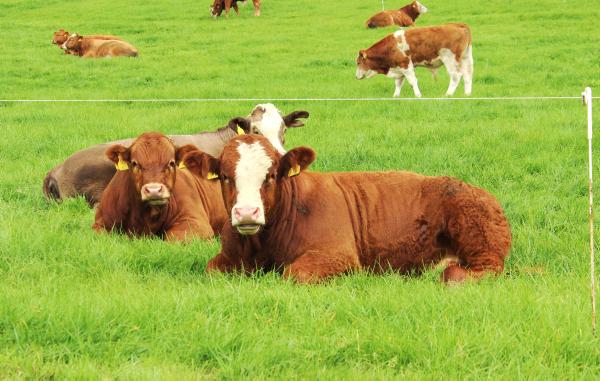
These are the levels that need to be achieved to carry the higher stocking rate. Ger grazes the cows and replacement heifers in blocks, with calves allowed to creep graze ahead of cows. Cows and calves are separated at grass during the breeding season in May.
Inseminations are carried out by Ger. Breaking the maternal cow-calf bond is essential to achieving high conception rates in spring-calving cows.
Many farmers see this process as being laborious, but Ger has devised a cheap and simple system to separate cows and calves and this will be on display at the farmwalk.
Performance and breeding
All calves repeatedly display impressive growth rates when they are on the cow and post-weaning. Bulls typically gain 1.45kg/day and heifers 1.31kg/day up to weaning with no meal fed. During the finishing period last winter, bulls gained an average of 1.87kg/day over 150 days.
They were built up from 5kg/day of ration plus silage in early winter to 12kg/day of ration plus straw during the final ad-lib feeding period. Heifers gained 0.8kg/day on silage plus 2kg/day of ration last winter.
The herd currently has a 374-day calving interval. This spring, all the cows and heifers were calved in an eight-week period during February and March, with 0% mortality, leading to 1.02 calves per cow in 2014.
Ger finds that such a compact calving spread is essential when carrying out spring AI and reducing overall workload on the farm.
A selection of the main AI sires used over the past few years includes TSO, GZP, OZS and SEV.
Featured on the day
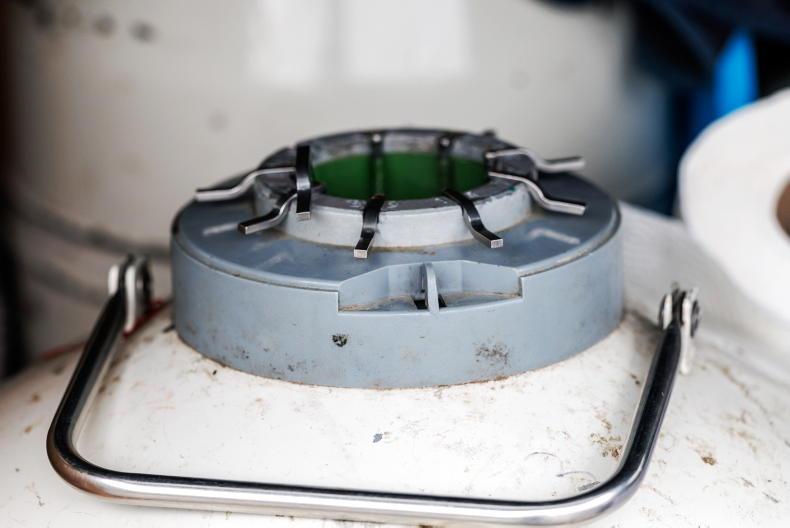
All stock will be on show with cows, calves and replacement heifers. The system Ger uses to separate cows and calves at grass for AI with an explanation of how it works.Managing autumn grassland management and setting up for spring turnout.Sire selection and using AI.Comparing the calf performance from high index to low index cows, as well as their reproductive performance.
Since joining the BETTER farm programme, increasing output from a grass-based system has been the priority on Ger Dineen’s farm.
Ger operates a herd of 49 spring-calving suckler cows, currently on 31.2 adjusted hectares of grassland. The farm is split into two blocks, with 22ha on the home farm and the remainder located two miles away.
This herd has been built up from 35 cows in 2012 and the farm plan is to increase to 55 cows by next year.
All bulls are finished under 16 months of age, with 55% of last year’s bulls finished under 14 months of age at an average 413kg carcase weight.
All bulls were U or E grades, which is a fantastic performance considering all cows are bred to maternal sires.
As the main focus is on maternal sires, Ger has a market built up locally for replacement heifers. All surplus heifers are sold off-farm at 12 months of age. These heifers and dams are 100% AI-bred to top maternal Limousin and Simmental sires for almost 20 years.
In the last two years, Ger has experimented with other breeds to get the benefits of hybrid vigour.
In 2013, heifers were inseminated with mainly Salers sires and, in 2014, some Angus sires have been used.
The main idea behind using the Angus is to reduce the size of the cow slightly, while maintaining milk volume and ease of calving in the herd.
Profitability
Gross margin on Ger’s farm has remained relatively static at just over €550/ha during the first two years of the BETTER farm programme.
Poor weather through 2012 and the spring of 2013 led to large increases in feed costs in the form of bought-in ration, hay and straw.
Ger’s herd output was low also, as he was stocked at less than 1.7 LU/ha. This has since increased to over 2.2 LU/ha, leaving Ger in a better position in terms of output.
Grassland costs increased in 2012 and 2013, as low soil fertility was being corrected with compound fertilizers, such as 10:10:20 and 18:6:12.
Higher soil fertility and improved grassland management has allowed the farm to produce and utilise more grass to sustain the higher stocking rate. The end result is that the farm is on course to make the target €1,000/ha gross margin in 2015.
Grassland
Grassland management has improved significantly since joining the programme. Ger now measures grass on a weekly basis and records data on Pasturebase Ireland.
Having spent money addressing phosphate (P) and potash (K) levels and soil pH last year, along with more reseeding, the farm has already yielded over 11t/ha of grass dry matter per hectare this year.
This is approximately 22t/acre of fresh grass, or 25 round bales (900kg).
These are the levels that need to be achieved to carry the higher stocking rate. Ger grazes the cows and replacement heifers in blocks, with calves allowed to creep graze ahead of cows. Cows and calves are separated at grass during the breeding season in May.
Inseminations are carried out by Ger. Breaking the maternal cow-calf bond is essential to achieving high conception rates in spring-calving cows.
Many farmers see this process as being laborious, but Ger has devised a cheap and simple system to separate cows and calves and this will be on display at the farmwalk.
Performance and breeding
All calves repeatedly display impressive growth rates when they are on the cow and post-weaning. Bulls typically gain 1.45kg/day and heifers 1.31kg/day up to weaning with no meal fed. During the finishing period last winter, bulls gained an average of 1.87kg/day over 150 days.
They were built up from 5kg/day of ration plus silage in early winter to 12kg/day of ration plus straw during the final ad-lib feeding period. Heifers gained 0.8kg/day on silage plus 2kg/day of ration last winter.
The herd currently has a 374-day calving interval. This spring, all the cows and heifers were calved in an eight-week period during February and March, with 0% mortality, leading to 1.02 calves per cow in 2014.
Ger finds that such a compact calving spread is essential when carrying out spring AI and reducing overall workload on the farm.
A selection of the main AI sires used over the past few years includes TSO, GZP, OZS and SEV.
Featured on the day
All stock will be on show with cows, calves and replacement heifers. The system Ger uses to separate cows and calves at grass for AI with an explanation of how it works.Managing autumn grassland management and setting up for spring turnout.Sire selection and using AI.Comparing the calf performance from high index to low index cows, as well as their reproductive performance.
SHARING OPTIONS