


There are a number of reasons that can prevent a farm from progressing and expanding into a business capable of sustaining a viable income. For instance, a lack of money for investing in the farm, a lack of labour and a limited land base are just some reasons that will prevent farm expansion.
For Jamie Kealy, land availability is the factor that is curtailing his farm plans. Having come into farming as recently as 2003, the skills he has developed over the past decade as both a stock man and grassland manager are first class and comparable to some of the best farmers in the country.
These skills, combined with a positive attitude to farming, have seen him make great strides forward since joining the BETTER Farm programme. Jamie is also an active participant in two discussion groups – one dairying group and one beef group – as he is eager to learn new tips and techniques to benefit his farm. He works closely with his local Teagasc adviser Hugh Mahon and his programme adviser, Peter Lawrence, for the best advice at key stages throughout the year.
“When I joined the programme I was farming 24ha and keeping 20 suckler cows. By renting more ground, I hope to build my suckler herd to 40 cows. Getting land is the biggest issue for me. It can be very frustrating to see some good farms of land being under utilised when you consider the potential that the ground has.”
Farm details
Having come from a non-farming background, Jamie got into livestock production in 2003 by buying small parcels of land and stocking them with store heifers to finish at 20 months. In 2008, he started to keep suckler cows and has since built his herd up to 20 cows on 24ha of which 12 hectares are owned. Land is good, free draining soil that is capable of carrying stock for 10 months of the year, but it is very fragmented.
||PIC2||
Cows are a mix of 25% spring (February –March) and 75% autumn calving but Jamie plans to move them to 100% autumn calving, starting in September and finishing by late November. Replacements are purchased annually, but some heifers are retained from the best milking cows in the herd.
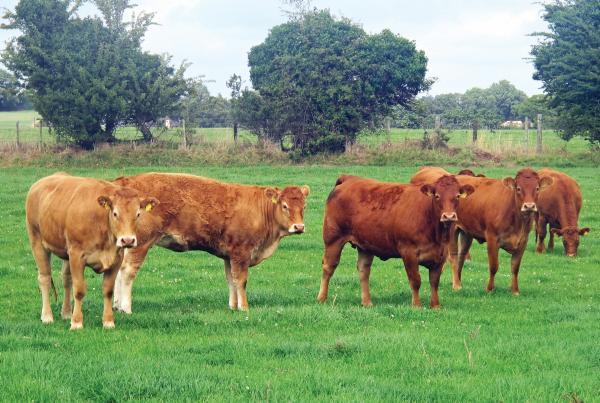
Cows are predominantly Limousin and served with a Limousin stock bull, although some AI is occasionally used. The herd has a calving interval of 366 days, which highlights the high level of management with regards to fertility and grazing.
In 2012, the farm gross margin per hectare was €407 and was stocked at 1.81LU/ha. Output per LU was 304/kg, which is excellent and clearly shows that each LU is performing well. However, output of beef produced per Ha is relatively low at 549 kg/Ha which is largely due to stocking rate. As this farm is still in its development stage Jamie hope’s to increase his cow herd and subsequent stocking rate per ha of land farmed during the course of the programme. Jamie’s target is to produce 900 kg of beef/ha and keep his variable costs between 45-50% of his gross output value. A combination of working to a plan, focussing on maximising weight gain from grass, good grassland management coupled with good herd health, maintaining his cow breeding performance and using superior genetics will potentially increase his farm GM/ha to the target of €1,000/ha by the end of the programme.
Marketing
Weanlings are normally sold at 10 to 11 months of age in local marts with live exporters regularly buying these cattle. Additional heifers are purchased annually as weanlings (300-350kg) in autumn. They are grazed as a group to sell for breeding at 15 to 16 months. This has proven to be a highly successful venture, with heifers selling last year at an average 500kg at €1,400 per head (€2.80/kg).
Jamie weighs his cattle regularly throughout the year. A group of purchased heifers born in March 2012 weighed an average of 497kg on 6 July. They have gained 0.95kg/day since birth and will be sold in September.
At a purchase price range of €600 to €750, they will have gained over 200kg since arriving on farm and it is mostly achieved from grass at a very low cost. This will increase the likelihood of leaving a profit margin once sold after deducting grazing and wintering costs, which were inflated this year due to the fodder crisis.
A group of 10 bull calves with an average birth date of 10 November 2012 will be sold in September. At their last weighing on 24 July shortly after weaning, the group averaged 380kg, with the heaviest bull weighing 502kg and the lightest animal weighing 311kg.
Daily liveweight gain since birth for the group is 1.31kg/day. The bulls are now being offered creep fed at a rate of 2kg/day in preparation for sale and are grazing top quality grass and silage aftermath. Last year, the bulls were sold at an average liveweight of 500kg at €1,400/head (€2.80/kg) with the top bulls making upwards of €1,500/head.
Their comrade heifers were sold at 10-11 months of age weighing on average 420 kg at €1,100 (€2.62/kg). This year’s autumn born heifers weighed 375 kg on 20 August and grew at 1.11 kg/day.
Future plans
As he works off farm in his own plant hire business, Jamie prefers the simplicity of the autumn calving and weanling trading system, but is open minded with regards to the sale of his cattle. Selling bulls at 16 months is being considered if the live trade is not providing a viable return.
With bulls usually weighing 500kg by late September, they would have a short finishing period of 100 days to reach slaughter weights of 650kg to 700kg. Some bull weanlings have previously been purchased by local farmers for finishing and feedback has indicated they achieved 59% to 60% kill out and 400kg to 420kg carcase weight at 16 months.
If the bull system were to be pursued, to reduce the concentrate feeding, the bulls would be offered high quality baled silage made from surplus grass. Silage analysis on the farm has shown that in most normal years, silage is around 72 to 74DMD. The wet summer in 2012 caused silage quality to drop to 65 DMD due to a delay in harvesting.
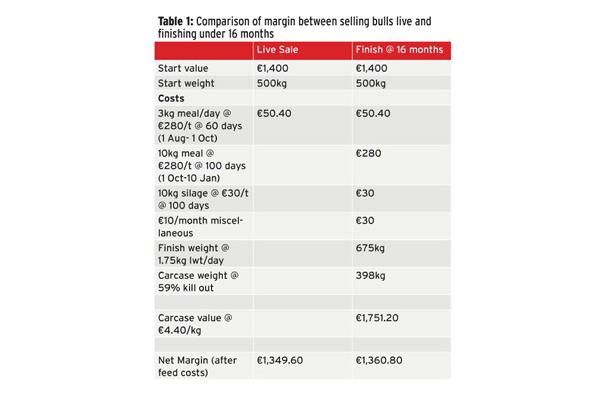
Table 1 outlines the cost difference in the finishing system compared with the current system of live sales. Finishing bulls at 16 months will coincide with a period when prices are rising but profit will be dependent on concentrate prices and achieving at least 500kg liveweight per animal before housing to keep the finishing costs under control.
The budget does not deduct any costs for keeping the suckler cow and conacre, which will be high on Jamie’ farm. At the costs outlined in the example, he is better off selling live due to the high price that the animals can generate in September before deducting other farm costs. If the live trade is poor, finishing may be the better option to follow.
Adviser comment
“When working on a limited land base, it is essential that you make the most of your own ground by investing in reseeding and soil fertility. There is little point in renting land if your own ground is not up to standard first. Using paddocks gives better utilisation of grass. Having the right type of cattle to suit your target market is also important to maximise output.”





SHARING OPTIONS